Govt backs CM’s statement: Is it actually true that evaporation causes Delhi’s water shortage?
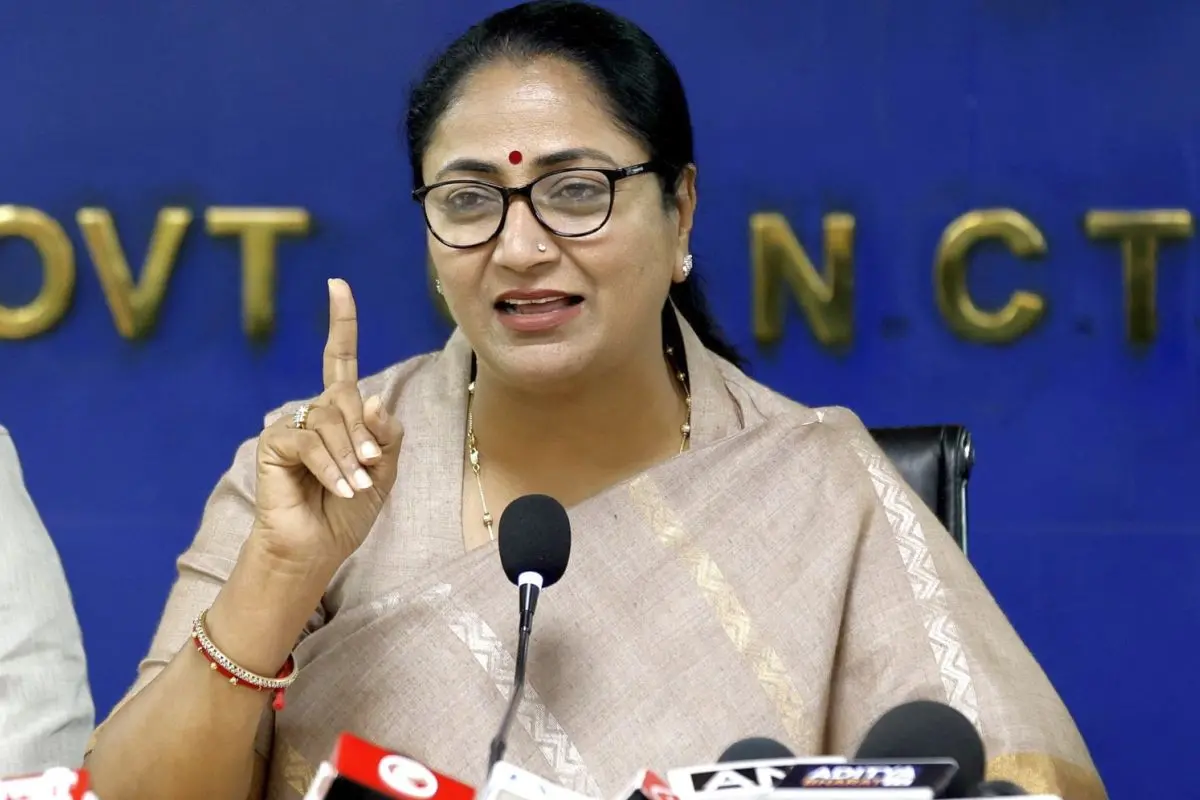
New Delhi: The controversy around Chief Minister Rekha Gupta’s remarks has focused on her explanation that part of Delhi’s water shortage during the peak summer season is linked to evaporation caused by extreme heat. The statement, which was later defended by the Delhi government, has drawn criticism from opposition parties who argue that it oversimplifies the capital’s water crisis.
Government representatives have maintained that the comment was based on scientific understanding of water loss in open systems, while critics have described it as misleading in the context of a large metropolitan water supply network.
What evaporation actually does in water systems
Evaporation is a natural physical process in which water changes into vapour due to heat. In warmer temperatures, this process accelerates, particularly when water is exposed directly to the atmosphere. This typically occurs in open water bodies such as reservoirs, ponds, lakes, and canals.
In water supply systems that rely on open channels or uncovered storage structures, evaporation can lead to measurable losses. These losses are more pronounced during heatwaves, when daytime temperatures remain high for prolonged periods. In such conditions, surface water can gradually reduce before it even reaches treatment plants or end users.
However, the extent of evaporation depends heavily on infrastructure design. Covered pipelines and pressurised distribution systems significantly reduce this form of water loss, limiting its impact in modern urban networks.
What studies and data generally indicate
Government sources have referred to research, including studies on urban water systems and hydrological balance, which suggest that water losses in open canal-based systems can include both seepage and evaporation. Some assessments indicate that such losses can be significant in poorly protected or older infrastructure systems.
These studies also highlight that climatic factors, including temperature and long-term rainfall patterns, are relevant in calculating water availability and groundwater recharge. This is why evaporation is included as one of several variables in hydrological modelling.
At the same time, most urban water management frameworks treat evaporation as only one part of a wider system of losses rather than a standalone driver of scarcity.
Why experts say it is not the main cause of Delhi’s shortage
Water experts generally agree that large cities like Delhi face shortages primarily due to structural and demand-related issues rather than evaporation alone. Delhi’s water supply depends on external river systems, inter-state allocations, and complex distribution networks, which makes it vulnerable to supply fluctuations.
A major factor is the mismatch between demand and supply. The city’s population and consumption patterns place continuous pressure on available water resources, especially during summer months when usage increases sharply.
Distribution inefficiencies also contribute to losses. Leakage in pipelines, unaccounted-for water, and uneven distribution across localities can significantly reduce effective supply. In addition, groundwater extraction has long been a concern, as overuse has led to declining water tables in several parts of the region.
Compared to these issues, evaporation from treated or piped water is generally considered a relatively small component of total losses in urban systems.
When evaporation becomes more relevant in practice
While not a primary cause of city-wide shortages, evaporation can become more relevant under specific conditions. These include systems that rely heavily on open canals, uncovered storage reservoirs, or temporary storage structures exposed to direct sunlight.
During extreme heatwaves, these systems can experience increased surface water loss. However, even in such scenarios, evaporation tends to be one of multiple contributing factors rather than the dominant reason for shortage.
In modernised urban supply systems with covered pipelines and regulated storage, evaporation-related losses are usually significantly reduced.
Overall assessment of the claim
Scientific understanding supports the idea that evaporation increases during heatwaves and can contribute to water loss in open systems. However, its role in large urban shortages such as those seen in Delhi is generally considered limited when compared to structural issues like supply constraints, distribution inefficiencies, and rising demand.
Therefore, the claim is partially accurate in a technical sense but incomplete as a standalone explanation for the city’s water shortage situation.