‘No forced E20’: Transport bodies announce August 4 Parliament march over fuel policy
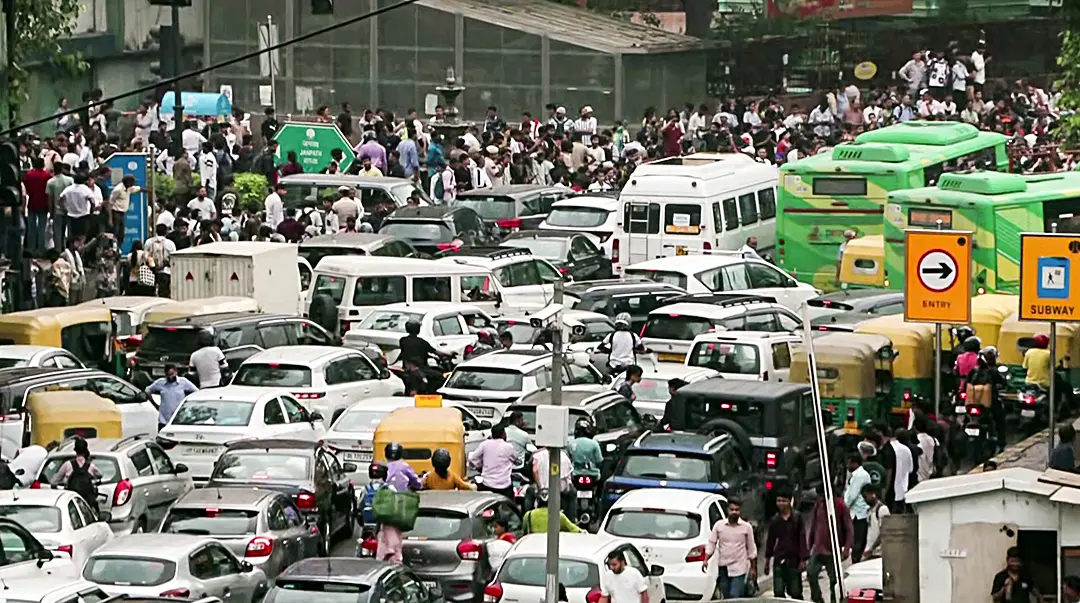
New Delhi: Delhi-based transport organisations are planning a protest march to Parliament on August 4 against the use of E20 petrol, a fuel blend containing 20 per cent ethanol and 80 per cent petrol.
The protest is being led by the Delhi Taxi and Tourist Transporters and Tour Operators Association along with other transport groups. The organisations have raised concerns over alleged vehicle issues linked to ethanol blending, including reduced mileage and possible engine-related problems.
Association president Sanjay Samrat said the march was intended to highlight concerns among vehicle owners and operators. He said transport bodies wanted to draw the attention of lawmakers towards complaints being reported from different parts of the country.
Transport groups distance themselves from political campaigns
The organisers clarified that the protest was not linked to the recently formed online "E-20 Janata Party" campaign or the Cockroach Janta Party (CJP), which had earlier led protests over examination issues.
Samrat said the transport groups did not want to turn the E20 fuel issue into a political matter and were not associated with any political party or online movement.
The clarification came after online discussions around E20 fuel gained attention, with some groups using social media platforms to raise concerns about the policy.
Harish Sabharwal, national president of the All India Motor Transport Congress, said the organisation was opposing the idea of making E20 petrol the only available option for consumers.
He said transport operators wanted customers to have a choice and raised concerns about the impact of ethanol-blended fuel on existing vehicles. However, he clarified that no strike call had been announced by the association.
Concerns around E20 fuel policy
The ethanol blending programme has faced criticism from sections of vehicle owners and transport operators who have raised concerns about mileage reduction, engine compatibility and long-term vehicle performance.
The government has maintained that E20 fuel is safe, cleaner and beneficial for reducing dependence on imported crude oil while supporting farmers through increased ethanol production.
The debate has intensified as India achieved the 20 per cent ethanol blending target during the 2025-26 Ethanol Supply Year, ahead of the earlier 2030 timeline.
In a written reply in the Rajya Sabha, Minister of State for Petroleum and Natural Gas Suresh Gopi said India's ethanol production capacity has reached around 2,000 crore litres annually and has been developed not only for E20 blending but also for possible future requirements.
The government said the expanded capacity is intended to support higher ethanol blends, flex-fuel vehicles and other biofuel applications if approved in the future.
The ministry said ethanol blending has increased significantly over the past decade, rising from 1.53 per cent in 2013-14 to 20 per cent during the current supply year due to policy measures, expanded feedstock options and increased production capacity.
Government says food security remains priority
Responding to concerns over the use of food crops for ethanol production, the government said ethanol is produced through multiple approved feedstocks, including sugarcane-based materials, maize, damaged foodgrains, broken rice and agricultural residues.
It said food security requirements, including the Public Distribution System and buffer stocks, remain the priority and only surplus foodgrains are allowed for ethanol production.
The government also highlighted efforts to promote second-generation ethanol made from agricultural waste and encourage diversification towards less water-intensive crops.
The planned August 4 march is expected to bring renewed attention to the debate around ethanol blending, with transport groups seeking changes to the policy while the government continues to support the programme as part of its energy and biofuel strategy.
The issue has emerged as a major discussion point among vehicle users, transport operators, policymakers and industry stakeholders as India expands the use of ethanol-blended fuel.