Delhi to get an ‘Iron Dome’? Understanding India’s ‘Indigenous Integrated Air Defence Weapon System’
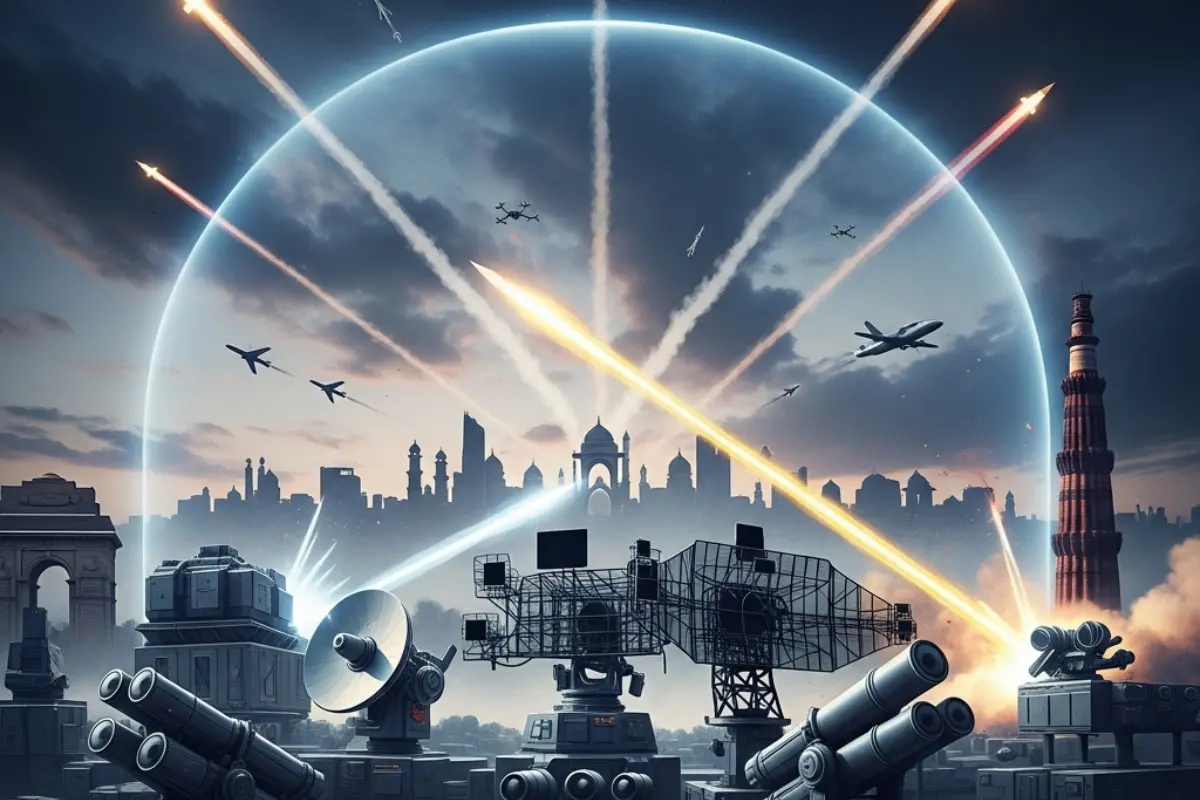
New Delhi: India is advancing towards the deployment of its first fully indigenous Integrated Air Defence Weapon System (IADWS) to shield the Delhi National Capital Region from hostile aerial threats, including missiles, drones and high-speed aircraft, in what marks a major stride in self-reliant security architecture.
Senior defence officials told ANI that the new multilayered IADWS will draw on a range of homegrown missile assets such as the Quick Reaction Surface-to-Air Missile (QRSAM) and Very Short Range Air Defence (VSHORAD) systems, supported by advanced radars, sensors and command-and-control networks.
The Defence Ministry has accelerated the project’s processing phase, particularly in the backdrop of Pakistan’s alleged attempt to target India during Operation Sindoor in May this year. Officials said the indigenous shield will replace earlier plans to procure the American NASAMS-II, a system used to protect Washington DC and the White House.
India and the US had initiated negotiations, but the deal stalled. According to sources, the Indian side decided not to move forward because “they were asking for a very high price.”
The proposed indigenous system will form a comprehensive security grid for the capital’s vital installations, falling under the Indian Air Force’s operational responsibility. The Defence Research and Development Organisation (DRDO) will collaborate with production agencies to integrate the system architecture, including advanced software-defined networking frameworks.
“Systems are required for such a complicated air defence system,” sources said.
DRDO has already delivered key air defence platforms such as the QRSAM and the Medium Range Surface-to-Air Missile (MRSAM). Work is ongoing on a long-range SAM under Project Kusha, aimed at strengthening high-altitude interception capabilities.
Meanwhile, India continues its acquisition of the remaining two squadrons of the Russian S-400 Sudarshan system. Officials confirmed that the country is also examining a Russian offer for additional S-400 units and the next-generation S-500 system.
The shift towards an indigenous IADWS, they added, represents a significant endorsement of India’s evolving defence ecosystem and technological self-reliance.