Explosives in Delhi blast more powerful than ammonium nitrate; majority suffered damage to eardrums, lungs
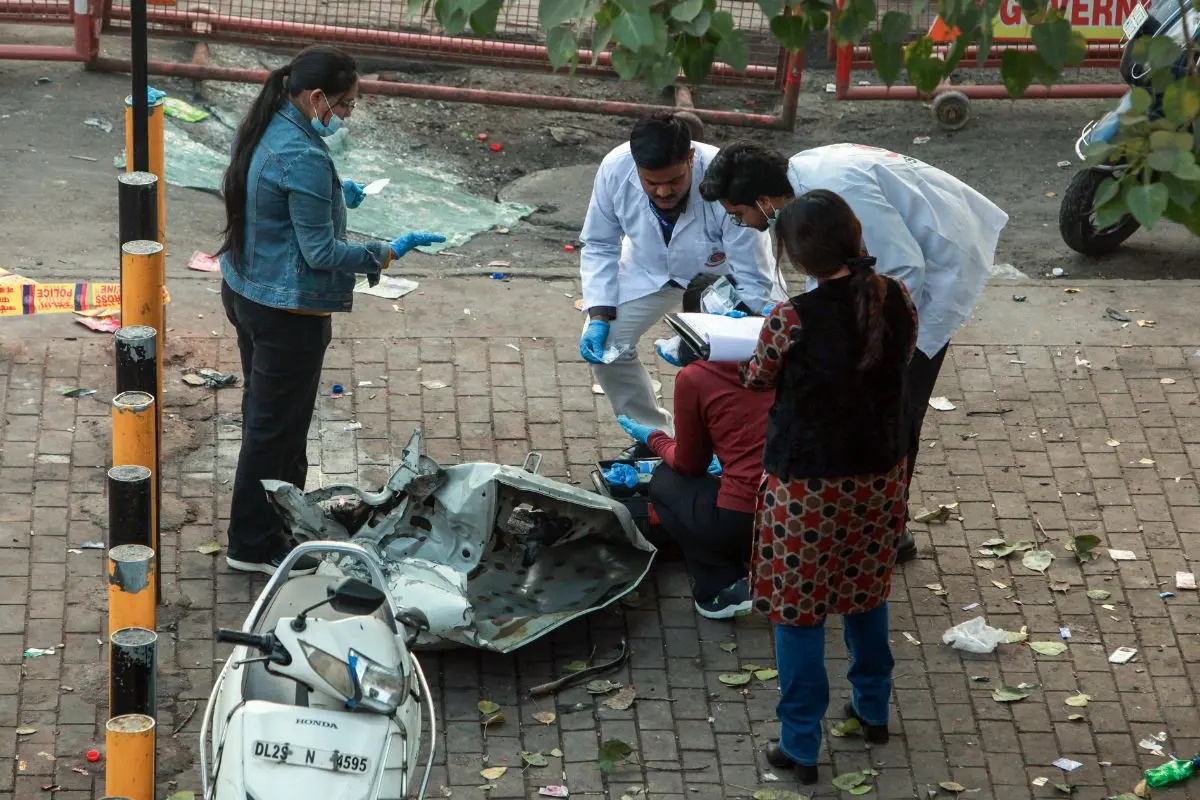
New Delhi: Forensic experts have revealed that the explosion near Delhi’s Red Fort Metro Station on Monday evening was likely caused by a new or modified explosive substance, more powerful than ammonium nitrate, as no traces of conventional materials were found on the victims or their clothing.
Post-mortem examinations conducted at Maulana Azad Medical College indicated that the majority of the deceased suffered ruptured eardrums and lungs—injuries consistent with a blast occurring at extremely close range. Additional trauma to the intestines and abdomen further supported this conclusion. The injuries were concentrated on the upper body, head, and chest, suggesting the victims were in close proximity to the epicentre of the explosion.
Nine people lost their lives in the incident, while 20 others sustained injuries. Six of the deceased have been identified, and their remains have been handed over to their families.
A distinctive cross-injury pattern was observed on several bodies, indicating that the force of the blast had hurled victims against walls or the ground. This resulted in multiple fractures and head injuries, forensic specialists confirmed.
Investigators have ruled out the use of standard explosives, noting the absence of any such fragments on the victims. Instead, preliminary findings suggest the use of a novel or improvised explosive device (IED). A senior official from the Forensic Science Laboratory (FSL) stated that ammonium nitrate was detected among the samples collected, along with another high-grade explosive whose composition is yet to be determined. In total, over 40 samples, including live ammunition and two cartridges, were retrieved from the scene for further analysis.
The explosion occurred at 6:52 pm on Monday, coinciding with the seizure of 2,900 kilograms of explosives in Faridabad, just 50 kilometres from the capital. Intelligence sources believe the suspected bomber, identified as Dr Umar Mohammad, may have panicked and detonated the device prematurely after two of his alleged associates—Dr Muzammil Shakeel and Dr Adil Rather—were apprehended earlier that day.
Initial assessments suggest the IED may have been improperly assembled, which could explain the blast’s limited impact compared to its intended destructive potential.