Delhi-NCR wakes to chilly rain, air quality persists in 'very poor' state | WATCH
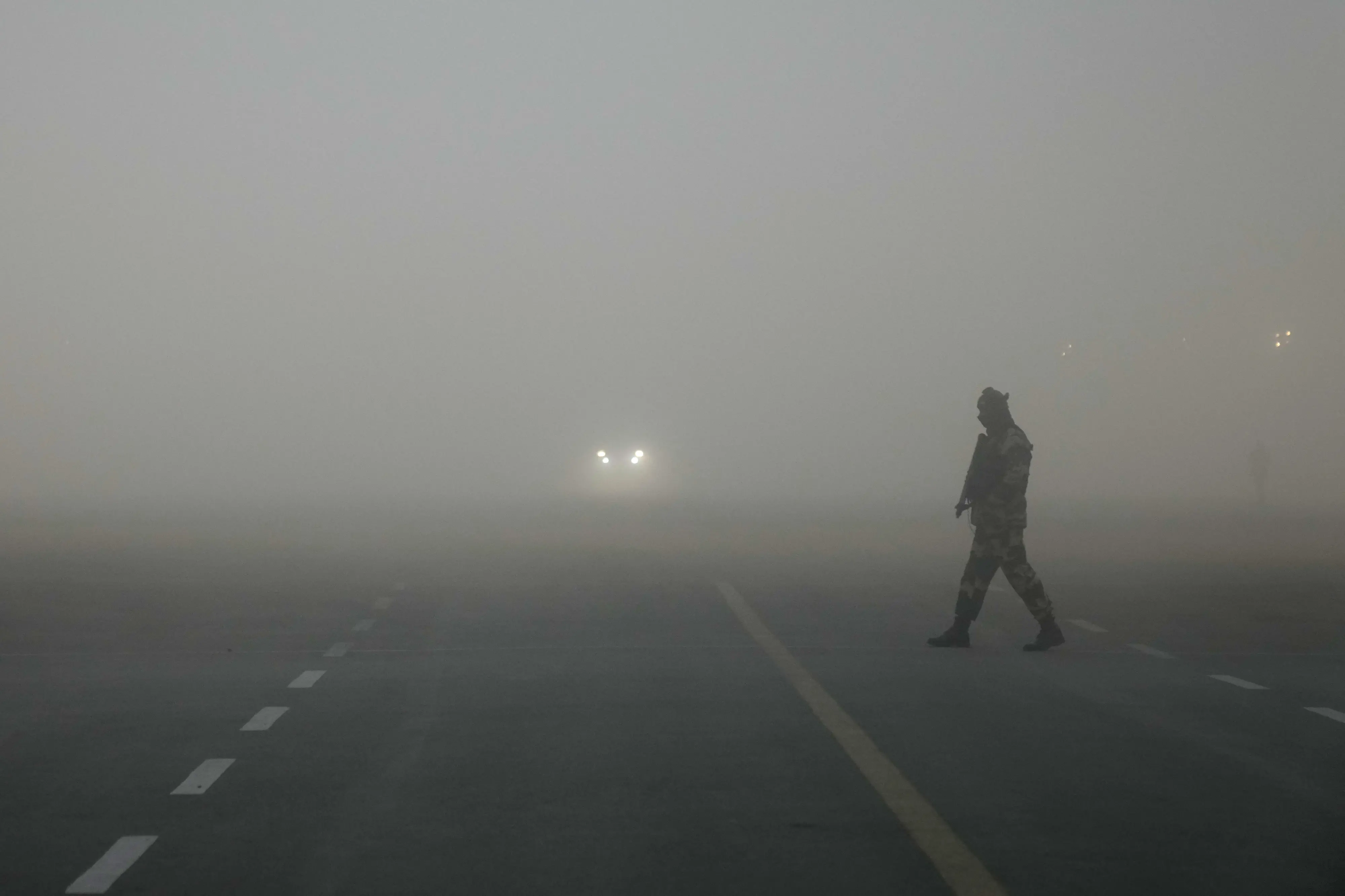
New Delhi: Delhi-NCR woke up to a chilly, rainy and overcast morning on Friday, with several areas receiving moderate rainfall accompanied by thunderstorms. The sudden change in weather is expected to bring a sharp drop in temperatures and intensify winter conditions across the region, the India Meteorological Department (IMD) said.
The IMD has issued an orange alert for thunderstorms and rain in Delhi-NCR and parts of Punjab and Haryana, citing an active western disturbance affecting north-western India. A yellow alert has also been issued for Delhi, forecasting one or two spells of light rain, lightning and gusty winds of 30–40 kmph during the morning hours. Another spell of light rain is likely later in the afternoon or evening.
The weather shift comes a day after Delhi recorded its warmest January day in seven years, with a maximum temperature of 27.1°C on Thursday. However, the IMD said temperatures are set to drop sharply on Friday, with the maximum expected to fall to around 19°C and the minimum near 12°C.
Despite the rainfall offering brief relief, air quality across Delhi-NCR remains a major concern. Data from the Central Pollution Control Board (CPCB) and the Uttar Pradesh Pollution Control Board (UPPCB) showed only marginal improvement, with pollution levels still in the ‘very poor’ category across many areas.
Delhi’s overall Air Quality Index (AQI) stood at 302, placing it in the lower range of the ‘very poor’ category. Among the worst-affected areas were Bawana (342), Ashok Vihar (335), Chandni Chowk (326), Alipur (322), Anand Vihar (317) and the DTU area (312).
In the NCR, Ghaziabad recorded an AQI of 267 in Indirapuram and 290 in Sanjay Nagar, while Loni continued to report severe pollution levels with an AQI of 390. In Noida, AQI readings were 249 in Sector 62, 319 in Sector 125, 290 in Sector 1 and 296 in Sector 116.
Some pockets saw air quality improve from the red zone to the orange zone, offering limited respite. Weather experts said rainfall and strong winds are likely to lower daytime temperatures significantly, making the cold feel more intense even if minimum temperatures do not drop sharply.
IANS