Delhi blast: First images reveal suspect in Hyundai i20; car parked for three hours near Red Fort
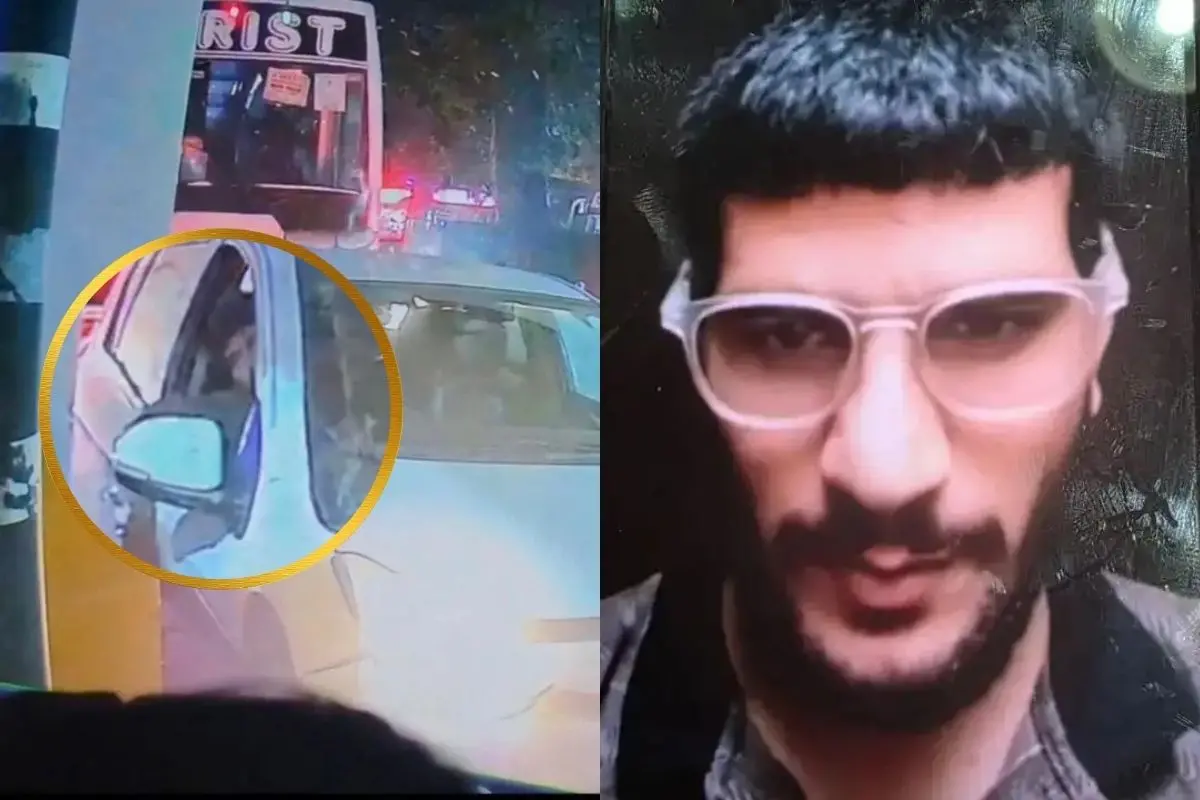
New Delhi: The first visuals have emerged from the deadly car explosion near Delhi’s Red Fort that killed at least nine people and left 20 others injured on Monday evening. CCTV footage shows the white Hyundai i20, later torn apart in the blast, entering a parking area close to Sunehri Masjid and remaining there for nearly three hours before the explosion.
According to police sources, the vehicle bearing registration number HR 26CE7674 was captured entering the lot at 3:19 pm and leaving around 6:48 pm. The blast occurred minutes later, at around 6:52 pm, near the Red Fort Metro Station.
Suspect captured in CCTV footage
Investigators have now identified the man seen in the CCTV footage as Dr Mohammad Umar, a suspected terrorist associated with the recently busted Faridabad terror module. According to India Today, Umar is believed to have planned the Red Fort blast with two accomplices, carrying out the attack in panic after a series of arrests in Faridabad earlier on Monday.
Sources said Umar and his associates placed a detonator inside the Hyundai i20 and detonated the explosive device during peak evening hours when the Red Fort area was crowded with visitors. Forensic teams have since confirmed that Ammonium Nitrate Fuel Oil was used in the explosion, indicating a high-intensity blast consistent with a planned terror strike.
In one of the newly surfaced images, the suspect can be seen driving the Hyundai i20 with one hand on the window as the car enters the parking area. Another frame shows the man wearing a blue and black T-shirt while seated in the driver’s seat. A third image captures the vehicle navigating a busy Delhi road before the explosion.
Delhi Police have obtained CCTV footage showing the suspect’s car entering and exiting the parking area. It remains unclear whether he was killed in the explosion or managed to flee the scene.
Police have confirmed that the case is now being investigated as a terror attack under sections 16 and 18 of the Unlawful Activities (Prevention) Act (UAPA), which deal with acts of terrorism and related offences. Additional charges have been filed under sections 3 and 4 of the Explosive Substances Act, along with murder and attempted murder counts.
Two detained as police trace car ownership
Investigators have traced the Hyundai i20’s ownership history through multiple transfers. Intelligence sources in Jammu and Kashmir revealed that the car was originally owned by Mohammad Salman, who was arrested on Monday night. Salman reportedly sold the vehicle to a man named Devender in March, who later passed it on to another individual, Aamir, on October 29.
Authorities have detained Aamir and are currently questioning him, along with a Pulwama resident named Tariq, who is believed to have been aware of the vehicle’s final handover to Umar.
Police and intelligence officials suspect that the Red Fort may not have been the original target, as CCTV footage showed the car travelling from the heritage site toward central Delhi before the explosion. Preliminary assessments indicate that a substantial quantity of ammonium nitrate — the same chemical seized in the Faridabad raids — was used to make the bomb that devastated the area near the Red Fort.
Explosion and aftermath
The powerful explosion left mangled bodies and wrecked cars scattered across the area near Red Fort Metro Station, one of the busiest intersections in the capital. Emergency teams rushed the injured to LNJP Hospital, located a few kilometres away.
Initial reports suggest the car was moving slowly and had stopped at a traffic signal when the explosion occurred. “Today, at around 6.52 pm, a slow-moving vehicle stopped at the red light. An explosion happened in that vehicle, and due to the explosion, nearby vehicles were also damaged. All agencies, FSL, NIA, are here... Some people have died, and some have been injured in the incident. The situation is being monitored,” Delhi Police Commissioner Satish Golcha said.
Police said there were three people inside the car at the time of the blast and that they were probing whether it could have been a suicide bomber attack. “The blast occurred in a moving Hyundai i20 car in which three people were sitting. We have not found any pellet or puncture in the body of the injured, which is unusual in a blast. We are investigating all angles,” a senior police officer said.
Terror link suspected
The Delhi Police have registered a case under sections 16 and 18 of the Unlawful Activities (Prevention) Act (UAPA), along with provisions of the Explosives Act and the Bharatiya Nyaya Sanhita, at the Kotwali Police Station. Officials say the inclusion of UAPA sections follows forensic findings and intelligence reports hinting at possible terror involvement.
A high alert has been sounded in Delhi and across major cities including Mumbai, Kolkata, Bengaluru, Jaipur, Hyderabad, and Lucknow, as well as in Haryana, Punjab, Uttarakhand, and Bihar, where polling was underway.
Linked raids in Haryana
The explosion came just hours after Haryana Police recovered a massive 2,900 kg of explosives from Faridabad, around 50 kilometres from the national capital. The seizure, made from the rented accommodation of a Kashmiri doctor, Dr Muzammil Ganaie, included ammonium nitrate, arms and timers.
The arrest of Dr Ganaie led to the exposure of what officials described as a “white collar” terror network spanning Kashmir, Haryana, and Uttar Pradesh. Eight people, including three doctors, have been taken into custody in connection with the discovery.
(With inputs from agencies)