Bihar Assembly Elections 2025: Multi-cornered battle heats up ahead of first phase polling on Nov 6
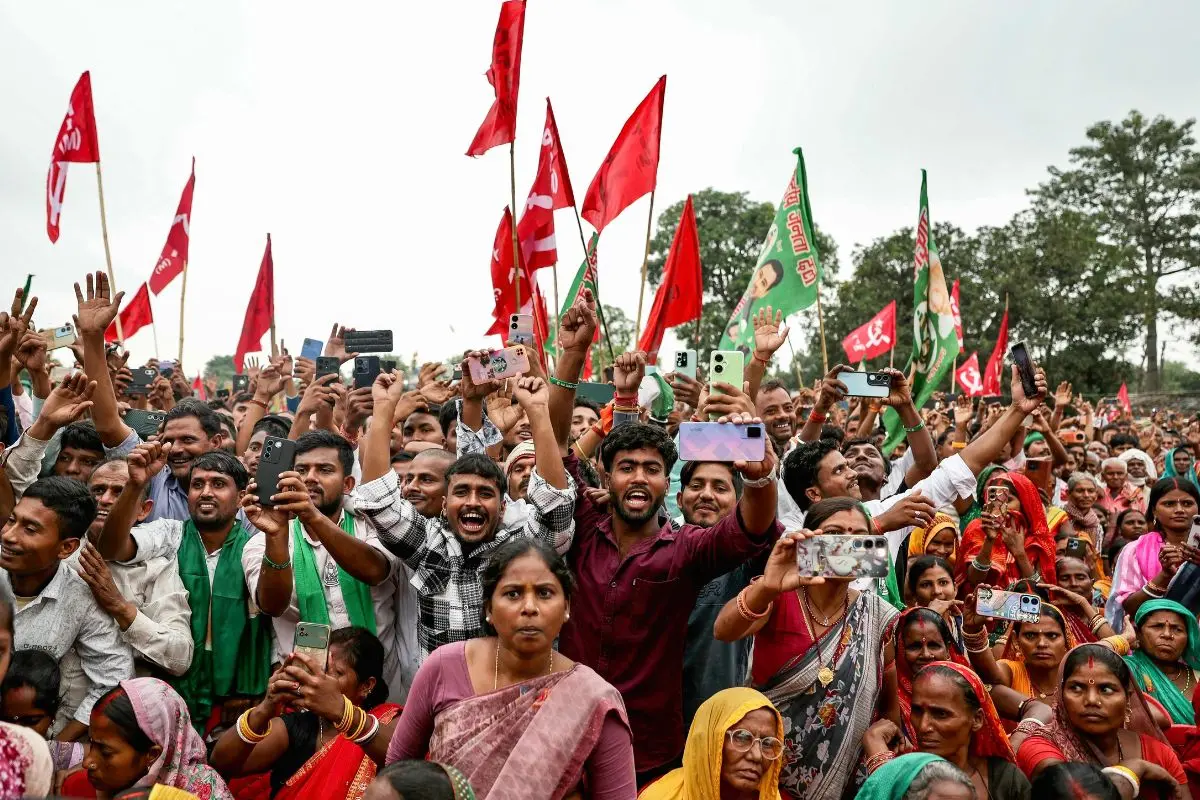
This year’s Bihar Assembly election is shaping up to be highly complex. Beyond the usual two-way contest, the entry of new parties and alliances has added layers of unpredictability to the state’s politics. The NDA front, led by the ruling BJP and JD(U), faces off against the Mahagathbandhan, led by the RJD and Congress, which has adopted a politics of no compromise with the BJP.
Meanwhile, the Grand Democratic Alliance, spearheaded by Majlis party leader Asaduddin Owaisi, is targeting Muslim voters, and the Jan Suraaj Party, led by election strategist Prashant Kishor, has fielded candidates in all constituencies, further intensifying the competition. In a state where even minor swings in vote share can shift political fortunes, the performance of these smaller parties could prove decisive in what is increasingly a multi-cornered contest.
Seat Strategies Take Centre Stage
Although the BJP leads the NDA nationally, in Bihar the dominant party in the alliance is Nitish Kumar’s JD(U). Out of 243 seats, JD(U) and the BJP are each contesting 101 seats, while Chirag Paswan’s party has 29, and HAM and Rashtriya Morcha have six each.
In the Mahagathbandhan, seat-sharing disputes remain unresolved, but RJD, as the lead party, is contesting 143 seats. The Congress is fielding candidates in 61, the Vikassheel Insaan Party in 15, CPI(ML) in 20, CPI in six, and CPI(M) in four seats. Around a dozen constituencies will see “friendly contests” due to disagreements over allocations.
Prashant Kishor’s Jan Suraaj Party is contesting all 243 seats in its debut election, while Owaisi’s Grand Democratic Alliance, formed with Chandrashekhar Azad’s Azad Samaj Party and Swami Prasad Maurya’s Apna Janata Party from Uttar Pradesh, is contesting 64 seats in total — 35 for the Majlis Party, 25 for the Azad Samaj Party, and four for the AJP. Owaisi previously surprised the Mahagathbandhan in 2020 by splitting votes in the Muslim-dominated Seemanchal region.
First Phase Key Contests
The first phase, scheduled for Thursday (November 6), will see polling in 121 constituencies across 18 of Bihar’s 38 districts. Many of these constituencies are heavily influenced by backward, minority, and Dalit politics, particularly in Seemanchal and Mithilanchal. Areas such as Samastipur, Saharsa, Madhepura, Darbhanga Rural, Darbhanga, Muzaffarpur, Gopalganj, Siwan, Raghunathpur, Manjhi, Chhapra, Hajipur, Raghopur, and Begusarai will be crucial battlegrounds.
In 2020, the Mahagathbandhan had a slight edge in this region. For JD(U), which won 23 of the 57 seats here last time, boosting its seat count is essential to retaining power. Key leaders whose fates will be closely watched include RJD chief ministerial candidate Tejashwi Yadav, his brother Tej Pratap Yadav (who is contesting independently), BJP leaders and Deputy Chief Ministers Samrat Choudhary and Vijay Kumar Sinha, and JD(U) state president Umesh Kushwaha.
Campaign Slogans and Key Issues
The campaign slogans largely reflect traditional political narratives. While concerns over voter list revisions and electoral malpractice were expected to dominate discussions, local issues such as unemployment, labour migration, the prices of agricultural produce, livelihoods like machhi-paan-makhana (fish, betel leaf, and fox nut), and alcohol prohibition have taken centre stage.
The Mahagathbandhan has promised one government job per family, while the NDA has pledged one crore jobs. Both alliances have also rolled out freebie schemes aimed at women and common citizens. By keeping unemployment at the forefront of public debate, the RJD and Prashant Kishor’s party have put the ruling alliance on the defensive. To counter this, the NDA has highlighted the development projects implemented under Nitish Kumar’s tenure.