As Bihar awaits election results, Tejashwi emerges as CM favourite and Rahul Gandhi alternative
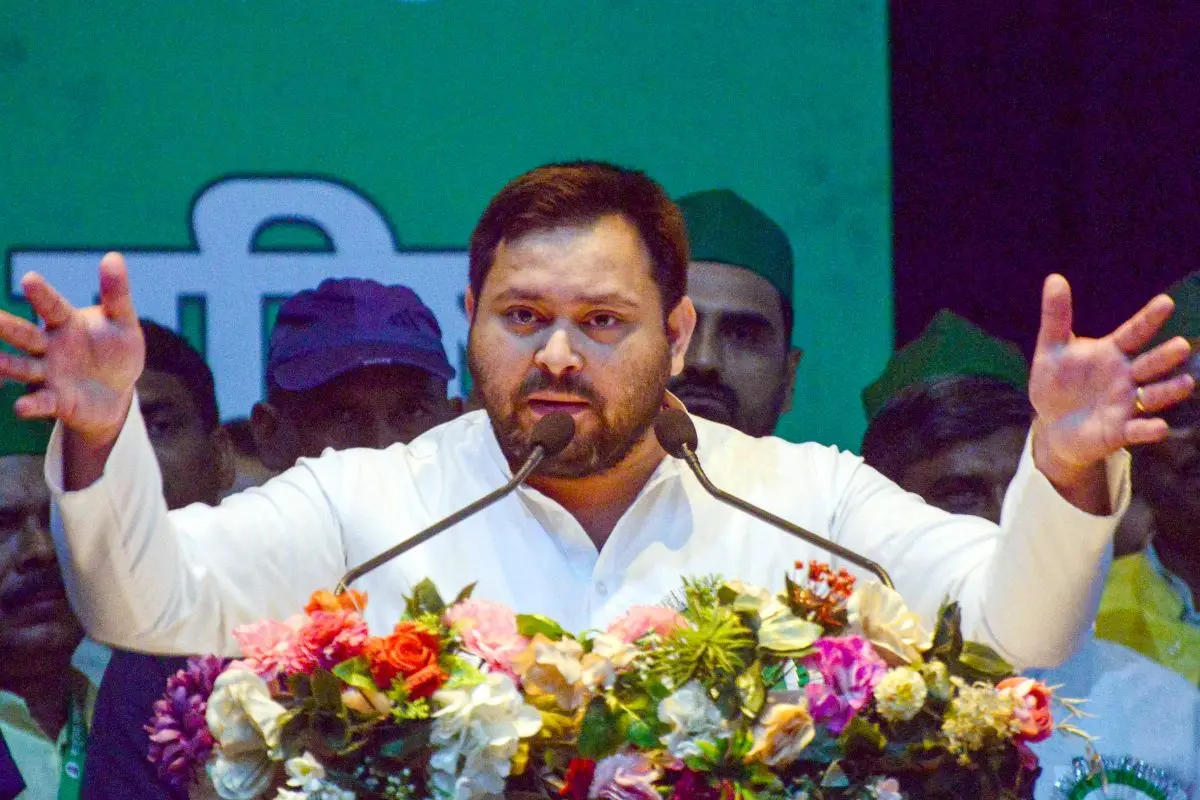
As Bihar waits for the election results tomorrow, Friday, November 14, the final tally may yet favour the National Democratic Alliance (NDA), as predicted by most exit polls. However, regardless of whether the Mahagathbandhan (MGB) clinches the victory, Tejashwi Yadav has secured a seismic win. The 36-year-old leader has rebranded the Rashtriya Janata Dal (RJD), cemented his leadership, and established himself as the most formidable challenger to Nitish Kumar’s long-standing dominance.
Tejashwi has positioned himself as the new voice of Bihar’s youth, focusing relentlessly on jobs, migration, and law and order. He steered the RJD through a crucial electoral period, despite the formidable presence of the NDA and the absence of his father, Lalu Prasad Yadav, due to incarceration. For the RJD, this election was not just about regaining power; it was an effort to redefine the party’s very image under his leadership.
Most preferred CM
Despite forecasts predicting a clean sweep for the NDA, Tejashwi Yadav has emerged as the clear public favourite for the Chief Minister’s chair.
According to exit poll results released by Axis My India, the MGB chief ministerial candidate garnered 34 per cent support among respondents. This figure is significantly higher than that received by the incumbent Chief Minister, Nitish Kumar, who polled 22 per cent. Even though exit poll results have often proven wrong, this level of personal popularity underscores his established political appeal.
Consolidating power within RJD
Tejashwi’s biggest success lies within his party. Earlier this year, the RJD’s national executive in Patna granted him the power to “alter the party’s name and symbol”. This rare authority, previously held only by Lalu Prasad Yadav, shows the trust the party has placed in him. By officially taking charge as RJD supremo, Tejashwi has gained near-complete control over the party’s direction while staying true to its roots.
Reviving the RJD’s strength
Supporters credit Tejashwi with reviving the RJD’s fortunes. The party rose from 22 seats in 2010 to 81 in 2015 and 75 in 2020. While the 2015 success came through an alliance with Nitish Kumar’s JD(U), Tejashwi proved his leadership in 2020 by leading the campaign and connecting with voters. His “1 million jobs” promise struck a chord with young people, helping the RJD reach beyond its traditional Muslim-Yadav base.
The ‘Triple M Factor’: Muslims, Mahila, and Most Backward voters
This year, Tejashwi focused on what he calls the ‘Triple M Factor’—Muslims, women (Mahila), and Most Backward voters—three crucial groups in the Bihar election.
Tejashwi has officially strived to expand his appeal among women voters, a demographic long cultivated by Nitish Kumar’s targeted welfare schemes.
• His proposed ‘Mai-Behan Maan Yojana’ promises eligible women a monthly stipend of Rs 2,500.
• Other pledges include a Rs 2,500 monthly pension for all women, Rs 5 lakh insurance cover and a Rs 2,000 monthly allowance, and a Rs 30,000 monthly salary and regularisation for 1.32 crore Jeevika Didis.
These welfare promises are a calculated attempt to erode Nitish Kumar's entrenched rapport with this critical constituency.
Reaching marginalised castes
Tejashwi’s tenure as Deputy Chief Minister showcased his potential to broaden the RJD’s appeal among the peripheral Other Backward Classes (OBCs) and Extremely Backward Classes (EBCs). His ambitious plan to gain further ground included elevating Mukesh Sahani, a leader from the Nishad community, as the Mahagathbandhan's Deputy CM face.
Furthermore, he promised a Rs 5 lakh interest-free entrepreneurship fund for traditional working-class castes such as barbers, potters, and carpenters. The challenge for the RJD remains converting this expanded reach into loyal support, balancing its legacy with the necessity of growth beyond its traditional base.
National importance for opposition bloc
Regardless of the Bihar outcome, the election has cemented Tejashwi’s importance within the national opposition. Bihar holds significant emotional and political weight for the INDIA bloc, and the campaign was largely built around his leadership. Tejashwi has already recalibrated his equation with the Congress by meeting Rahul Gandhi, leader of the Opposition in the Lok Sabha. Rahul reassured him of the Congress’s unwavering commitment to a united front. A strong performance, even in opposition, will elevate Tejashwi’s stature within the national opposition space, providing the alliance with a fresh, youthful voice. A win led by him could establish him as one of the alliance’s key future leaders, helping to bridge the generational gap. He could become a figure like Rahul Gandhi, but, being younger, he has more time to reinvent and experiment with his political career.
Carving his own political space
Tejashwi Yadav has shown he can lead the RJD confidently. By focusing on aspirations, governance, and development, he has moved the party beyond its past image. Win or lose, he has proven that he can carry forward the RJD’s legacy while connecting with a new Bihar.