Bihar Assembly Election 2025: 5 strategic blunders that sank the Mahagathbandhan
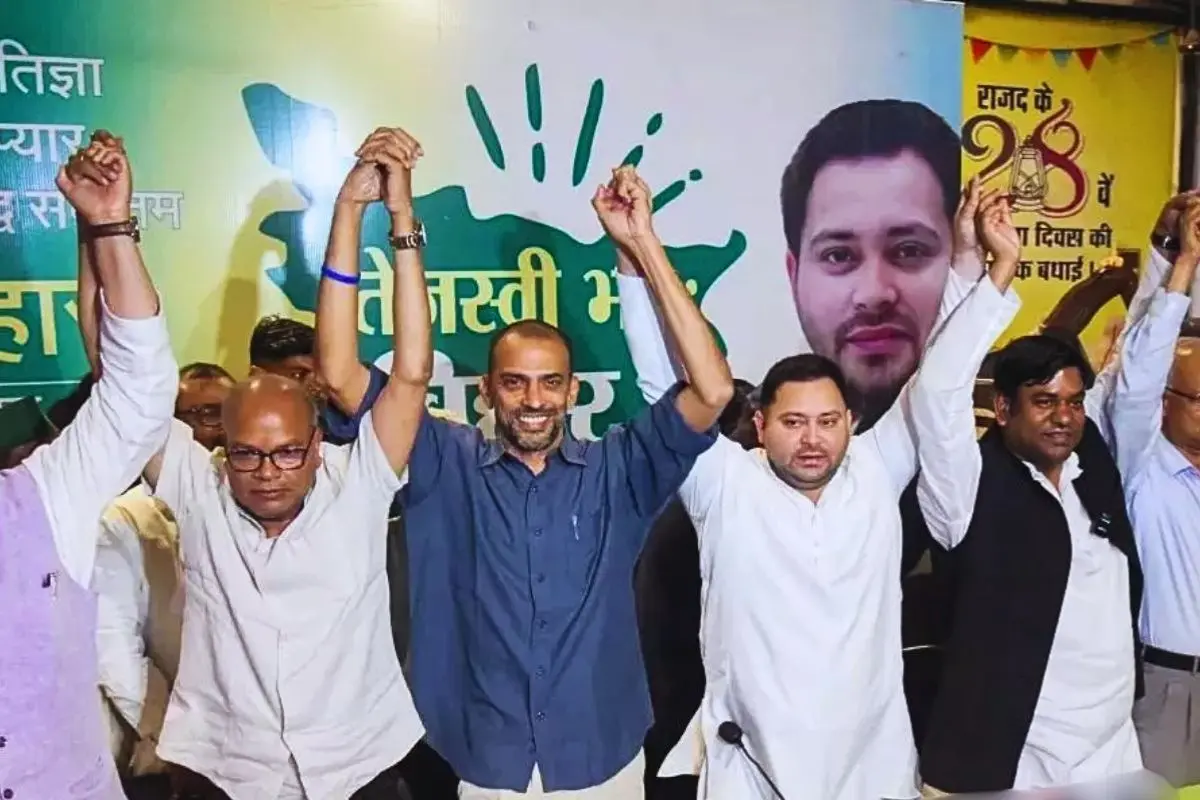
In a dramatic turn of fortunes in the 2025 Bihar Legislative Assembly election, the alliance led by Tejashwi Yadav’s Rashtriya Janata Dal (RJD) — the so-called “Mahagathbandhan” (comprising RJD, Indian National Congress, and Left parties) — has suffered a sweeping rejection from the electorate.
By the morning of 14 November, early trends showed the National Democratic Alliance (NDA) crossing some 185 seats, while the Mahagathbandhan appeared stuck around 50–60.
Even more startling: Tejashwi himself found himself trailing in his stronghold constituency at one stage. Here’s a fresh look at the principal strategic failures that brought down the alliance.
1. Over-reliance on Yadav candidates
The RJD’s decision to field 52 Yadav candidates (over a third of its total slate) was intended to cement its traditional base but instead deepened the perception of caste-driven politics. The “Yadav first” posture reinforced old anxieties around a return of “Yadav Raj,” which alienated non-Yadav voters – especially upper castes and many EBC (Extremely Backward Class) groups – who shifted decisively to the NDA.
The gamble, rather than broadening the appeal, narrowed the footprint and gave the opposition a potent counter-narrative to exploit.
2. Neglecting coalition partners, undermining the front
What was sold as a “grand alliance” increasingly looked like an RJD-monopoly. Seat-sharing disputes, little visible recognition of partners (Congress, Left) beyond token inclusion, and an alliance manifesto dubbed as “Tejashwi’s Pledge” all signalled weak collective ownership.
Such a top-heavy, RJD-centric campaign impaired vote-transfer across the alliance and amplified cracks. Meanwhile, the NDA portrayed itself as cohesive, disciplined and ready to govern — a stark contrast in optics.
3. Big promises, weak execution plan
Tejashwi’s manifesto promised sweeping things: a job for every household, new pension schemes, liquor-ban review, among them. But voters expected credible, detailed delivery paths — and found none.
Repeated deferrals (“the plan will come in two days”) and absence of cost/implementation clarity made the campaign seem aspirational rather than actionable. In an era where voters ask for realism, the “grand promise, no blueprint” strategy cost trust.
4. Letting the ‘pro-Muslim’ narrative dominate the discourse
In parts of the campaign, the Mahagathbandhan appeared to reinforce the perception that its politics were more about consolidating Muslim votes than broad-based social justice. The opposition made the most of old speeches (such as those by Lalu Prasad Yadav) and the “Waqf Bill” controversy to frame the alliance as exclusive.
This narrative hurt even within the Yadav community and among aspirational middle-class voters who feared identity politics at the expense of development. The result: a backlash that cut across caste lines.
5. Struggling with the legacy of Lalu Yadav
Tejashwi tried to walk a tightrope: embrace his father Lalu’s social-justice legacy, while distancing himself from the “Jungle Raj” taint. But the mixed signals did more harm than good. Minimising Lalu’s visibility while invoking his agenda looked contradictory — and the NDA seized on it.
Prime Minister Narendra Modi’s jibe about “hiding the sins of your father” landed because the optics betrayed confusion, not renewal.
Conclusion
The 2025 Bihar verdict is not simply a loss of seats — it’s a diagnosis of deeper strategic failures. A coalition that failed to unite, a leader who promised big but lacked operational clarity, a narrowing of caste-appeal at the expense of wider reach, and an alliance unclear about its own legacy all contributed.
For Tejashwi Yadav and the Mahagathbandhan, the message is loud: broad-based politics, credible execution and inclusive outreach now matter more than ever in the changing terrain of Bihar politics.