Amit Shah’s big Bengal promise: Can Darjeeling be fixed without Gorkhaland?
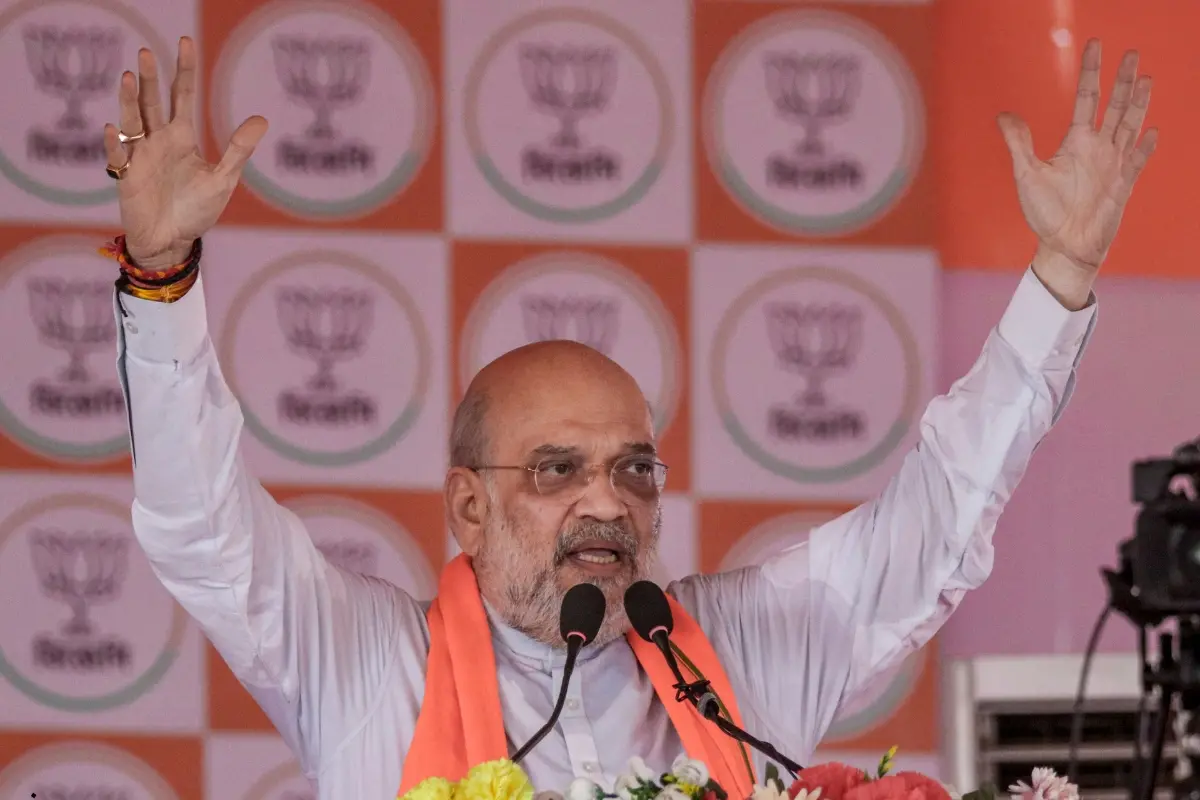
Kolkata: Amit Shah has promised a “permanent political solution” for the hill regions of Darjeeling, Kurseong and Kalimpong, stating that the issue will be resolved without separating the region from West Bengal.
Speaking at an election rally, he said the concerns of the Gorkha community would be addressed if the Bharatiya Janata Party comes to power in the state.
However, Shah did not outline a concrete roadmap for achieving this solution, even as the core demand from sections of the region remains the creation of a separate Gorkhaland state.
Background: Decades-old Gorkhaland demand
The demand for Gorkhaland dates back several decades and is rooted in issues of identity, autonomy and development. The hill regions of North Bengal, largely inhabited by Gorkha communities, have seen repeated agitations calling for a separate state carved out of West Bengal.
Various arrangements, including semi-autonomous administrative bodies, have been introduced over the years, but none have fully satisfied the demand. As a result, the issue continues to resurface during elections, with political parties offering different solutions.
Election pitch and development promises
Alongside the political assurance, Shah announced a series of development proposals aimed at North Bengal. These include plans for an Indian Institute of Technology (IIT), an Indian Institute of Management (IIM), a sports university, a tribal university, an eco-adventure hub and a 600-bed cancer hospital.
He also promised that the Rajbongshi language would be included in the Eighth Schedule of the Constitution, a move seen as an attempt to appeal to regional identity and linguistic recognition.
These announcements form a key part of the BJP’s campaign strategy in the region, combining development, identity politics and long-standing regional demands.
Attack on state government and security plank
Shah also targeted the All India Trinamool Congress government led by Mamata Banerjee, accusing it of not cooperating on border security measures. He claimed that land required for fencing by the Border Security Force along the Bangladesh border has not been provided.
He added that if the BJP comes to power, the issue would be resolved within 45 days. The remarks were coupled with a broader political message on illegal immigration, a recurring theme in the party’s campaign.
Is the promise practical?
The promise of a “permanent solution without separation” raises questions about its feasibility. The central challenge lies in reconciling the demand for statehood with the commitment to maintain West Bengal’s territorial integrity.
While administrative autonomy, economic packages or strengthened local governance structures could be potential approaches, no specific framework has been presented so far. Experts note that without addressing the core political aspirations behind the Gorkhaland movement, any solution may face resistance.
The Darjeeling hills remain a politically sensitive region that can influence electoral outcomes in North Bengal. By focusing on both development and identity, the BJP is attempting to consolidate support among hill communities and neighbouring regions.
At the same time, the lack of clarity on implementation leaves room for debate on whether the promise represents a viable long-term solution or a broader electoral strategy. As voting approaches, the issue is likely to remain central to campaign narratives and voter expectations.
(With IANS inputs)