Ahmedabad plane crash: AAIB report cites fuel cutoff switches activated before disaster
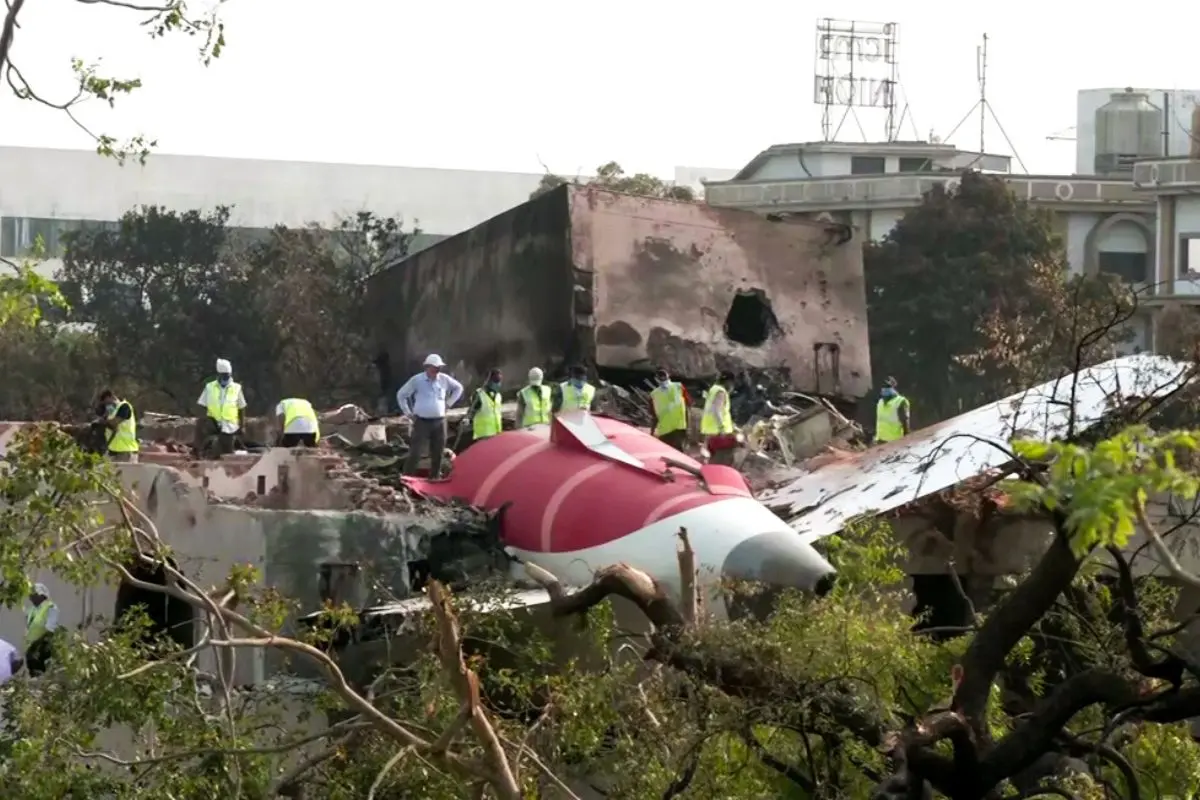
New Delhi: The Air India Boeing 787-8 crash on June 12, which tragically killed 260 people, has a new lead. A preliminary report from the Aircraft Accident Investigation Bureau (AAIB), released on Saturday, indicates the aircraft's fuel control switches were turned off and then on just before the crash. Notably, the AAIB has issued no immediate recommended actions for Boeing 787-8 operators, as the investigation continues into the highly anticipated findings.
Sequence of events:
According to the aircraft's "black box" data (Enhanced Airborne Flight Recorder - EAFR), the plane took off at 1:38:39 PM IST. Just 26 seconds later, at 1:39:05 PM IST, one of the pilots transmitted a "MAYDAY" call. Air Traffic Control (ATCO) received no further response but observed the aircraft crashing outside the airport boundary, immediately triggering emergency services.
The report highlights a pivotal moment: "immediately after the aircraft achieved the maximum recorded airspeed, 'engine 1 and engine 2 fuel cutoff switches transitioned from RUN to CUTOFF position one after another with a time gap of 01 sec'." This action instantly cut off fuel to the engines, causing their power (N1 and N2) to drop sharply. Adding to the enigma, the cockpit voice recording captured one pilot asking the other why they had cut off the fuel, to which the other pilot denied doing so.
Investigation progress and next steps:
The AAIB has confirmed that all wreckage has been collected and moved to a secure area near the airport. Both GEnx-1B engines, which powered the plane, have been retrieved and quarantined for detailed examination. Initial tests of fuel samples from the refuelling trucks and airport tanks showed no issues. However, tiny samples of fuel from the aircraft's APU filter and a wing valve still need specialised testing due to their limited quantity.
Investigators are actively gathering more details based on initial clues and are meticulously analysing the data downloaded from the flight recorder. They have also taken statements from witnesses and the lone survivor. A thorough analysis of postmortem reports for the crew and passengers is also being conducted to cross-reference medical findings with engineering insights.
The probe remains ongoing, with the investigation team continuously reviewing and examining all available evidence, records, and information from relevant parties.
Both Air India and Boeing have issued statements reaffirming their full cooperation with the investigation, adhering to international aviation protocols (Annex 13). The Pilot In Command had extensive experience with over 15,638 flying hours, while the First Officer had over 3,403 hours.
The 15-page report comes exactly one month after the fatal accident. Flight AI 171, bound for London Gatwick, crashed into a medical hostel complex mere seconds after taking off from Ahmedabad airport. Out of the 241 people on board, including two infants, only one passenger miraculously survived.
With inputs from PTI