'He walked in with a knife. Nobody checked.': Mumbai local stabbing sparks fresh safety concerns
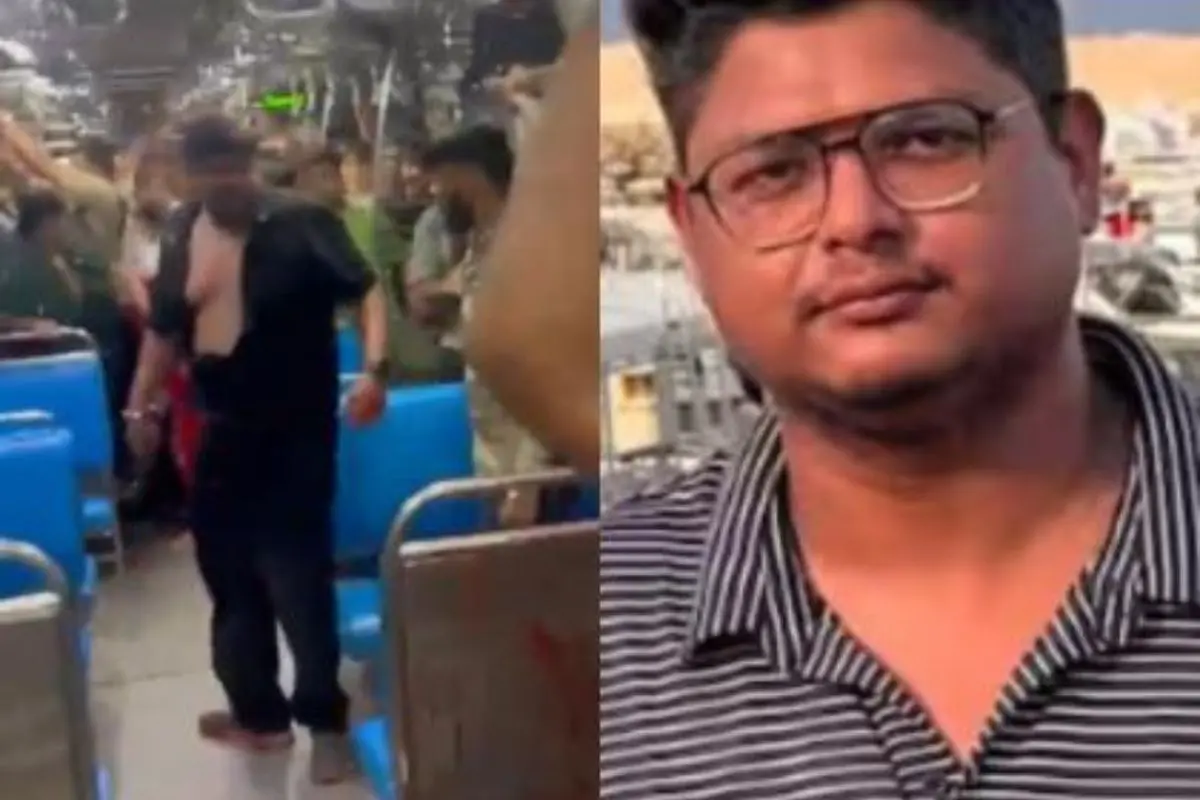
If carrying a first-class ticket is easy, carrying a knife onto Mumbai's lifeline appears to be even easier.
That uncomfortable question is now dominating public discourse after the brutal stabbing of a 22-year-old passenger inside a Mumbai local train exposed glaring gaps in commuter security.
While police have swiftly tracked down and arrested the accused, the incident has reignited concerns over just how vulnerable millions of daily passengers remain.
The victim, Mayank Lohar, was allegedly attacked inside the first-class compartment of a Churchgate-Nalasopara fast local between Goregaon and Malad stations.
He suffered multiple stab injuries before fellow commuters rushed him off the train at Borivali station and took him to the hospital.
The accused allegedly escaped after getting off at Borivali but was later traced through an extensive CCTV investigation spanning more than 400 cameras and intercepted before he could reportedly flee to Uttar Pradesh.
With the suspect now in police custody, public attention has shifted beyond the crime itself to the larger question of railway security.
Social media has been flooded with criticism over the ease with which a weapon could allegedly be carried onto one of the world's busiest suburban rail networks.
🚨 Horrific Mumbai Local Train Murder Case: Accused Arrested
In a major breakthrough, Borivali GRP has arrested the accused in the murder of a 22-year-old passenger aboard the Churchgate–Nalasopara fast local train.
🔹 The accused had fled after getting off at Borivali station… pic.twitter.com/Pl9lhNEJ7w— Megh Updates 🚨™ (@MeghUpdates) June 24, 2026
Many commuters questioned the absence of effective baggage screening, pointing out that even where metal detectors exist, passengers often pass through without meaningful checks.
Others criticised the emergency response after videos from the station circulated online, alleging that authorities appeared slow in rushing the injured man for medical treatment.
Several users also lamented that despite billions being spent on railway infrastructure and new trains, commuter safety continues to receive far less attention.
The incident has fuelled fresh demands for tighter security across Mumbai's suburban railway network, including mandatory baggage screening, stricter policing inside trains and stations, and stronger emergency response mechanisms.
For the millions who rely on Mumbai locals every day, many believe the tragedy is no longer just about one violent crime, but about whether the system is equipped to prevent the next one.