Anuparna Roy on TIME100 Next India list; says she won't make films just for money
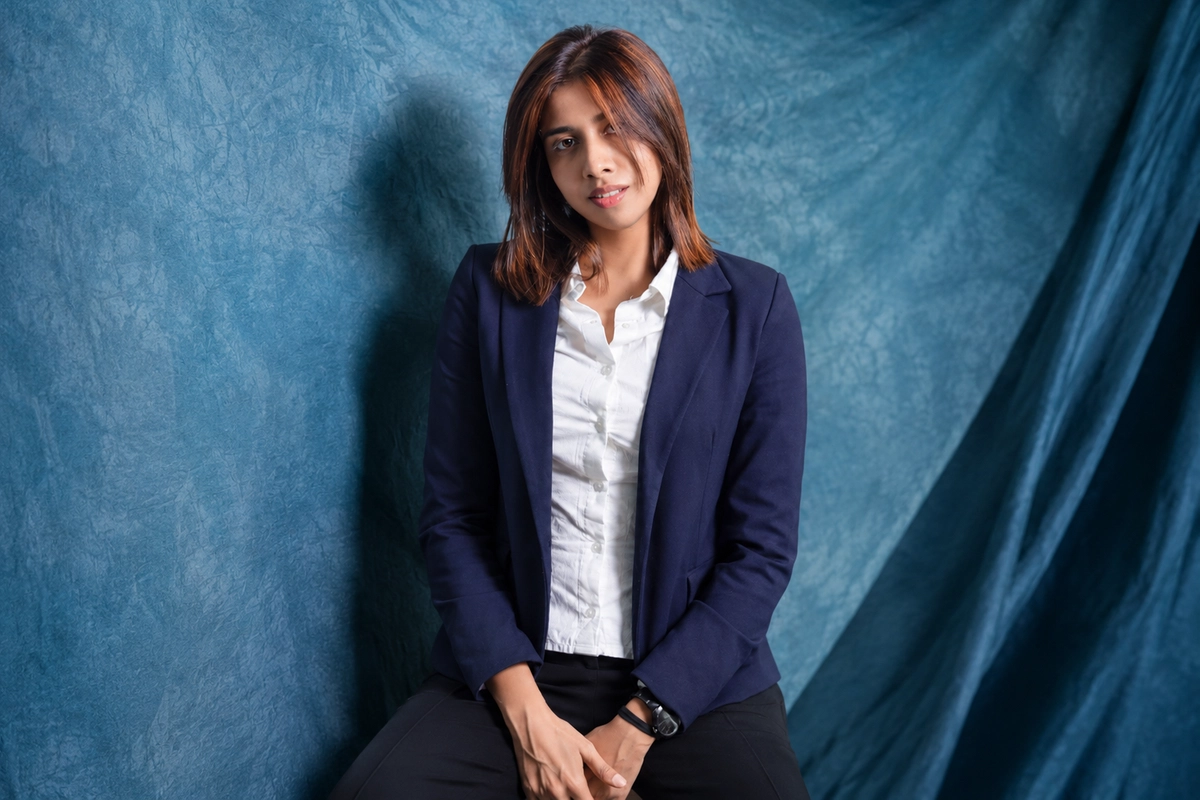
Anuparna Roy's inclusion in the 2026 TIME100 Next India list marks another significant milestone in her rapidly evolving filmmaking career.
From winning the Orizzonti Award for Best Director at the Venice Film Festival for her debut feature 'Songs of Forgotten Trees' (2025) to returning to the festival with her sophomore film 'Lovers in the Blue Night' (2026), Roy has steadily established herself as a distinctive voice in independent Indian cinema.
Yet, despite the growing recognition, the filmmaker says she has no intention of compromising on the kind of cinema she wants to make.
Calling herself a 'selfish director', Roy insists that commercial success will never dictate her creative choices.
In a telephonic conversation with Mathrubhumi, Roy spoke about her journey, creative independence, the responsibility of filmmakers and the stories she hopes to bring to the screen next.
For Roy, recognition has never been the ultimate goal. What matters is keeping the freedom to tell the stories she believes in, without letting commercial expectations dictate her creative choices.
Looking back at her journey, Roy said she would be surprised to have made it this far without losing her instinct.
Recalling the many doors that were shut during her early days, she said she would tell her younger self not to give up or negotiate with her dreams.
'I would tell her not to let other people's definitions of success determine her journey. I would also tell her that one day, the very cinema she was struggling to make would travel places she had never imagined,' she said.
Most importantly, the filmmaker said she would remind her younger self that she did not need anyone's permission to become a filmmaker.
'I don't want to make films just for money'
Roy is equally firm about protecting her creative independence. Asked whether success might make her consider making commercially driven films, she described herself as a 'selfish director' who would only make the kind of cinema she believes in.
'No matter how much I'm getting paid, or I will be getting paid, I will only make the kind of cinema I want to make,' she said.
While she is open to taking advice from her mentors, whom she credits with guiding her journey, Roy said she would never make a film simply for financial gain.
The filmmaker also believes that success has brought her two contrasting qualities: fearlessness and greater self-awareness. While international recognition has given her the confidence to pursue unconventional subjects, it has also made her more critical of her own work.
'I don't really give a damn about how my words and my actions are being taken out there as an artist, but I'm very conscious about how my films are taken there,' she said.
Crediting the Venice International Film Festival and its programming team for giving her career a significant push, Roy said the recognition gave her the confidence to approach her work without fear.
She added that the success of her debut also helped her secure producers for her second film.
'Audiences are created by filmmakers'
Roy also challenged the popular argument that independent films struggle because Indian audiences are unwilling to embrace unconventional stories.
According to her, the responsibility lies with filmmakers and the kind of cinema they choose to present.
'I believe we create audiences. We cannot blame everything on the audience. There is no such terminology as "mainstream audience",' she said.
Drawing a comparison with Iran, she pointed out how students are encouraged to watch and study films as an important art form.
She believes India needs a similar culture of engaging with cinema beyond entertainment.
Roy also rejected the idea that her subjects are deliberately uncomfortable.
Instead, she said she is interested in portraying realities that already exist around her, without romanticising poverty or suffering.
'If miseries and truths are uncomfortable, then what can I do? I have to talk about a world which is a third world and without romanticising poverty,' she said.
Coal mines and women's identities
Looking ahead, Roy has two distinct subjects she hopes to explore. Her next film will revolve around coal mines, a subject that has a personal connection through her father, who worked as a coal engineer.
She is also planning a film about a woman's sexual transition from male to female, another subject she feels personally connected to through her experiences and observations.
For Roy, filmmaking remains an extension of the world she has experienced. And if that means challenging social expectations, she appears more than willing to do so.
'I think I am going to make them more uncomfortable in future,' she said.