Why Nita Ambani’s pink silk saree is more than just an occasion wear look
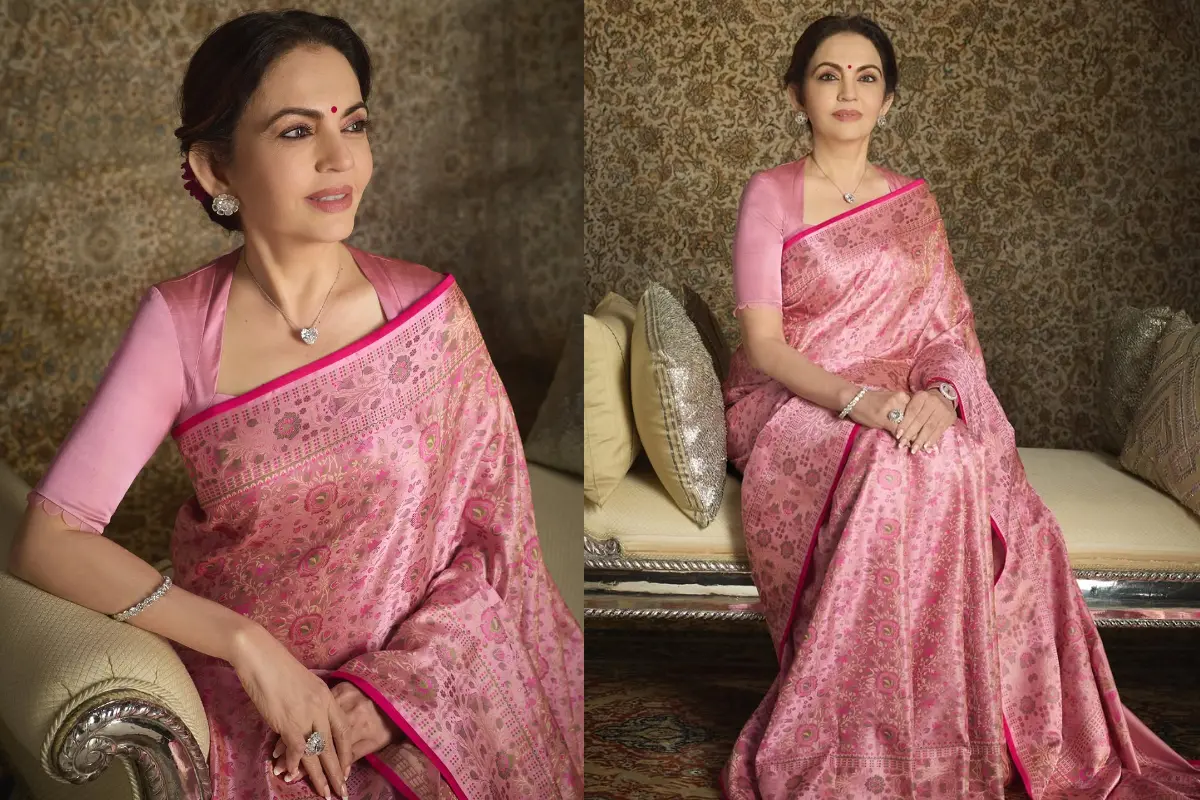
When Nita Ambani was named No. 1 on Fortune India's Most Powerful Women 2026 list, the evening was about celebrating leadership and influence. Her wardrobe choice, however, ensured the spotlight also fell on something equally significant, India's centuries-old handloom heritage.
For the occasion, the Reliance Foundation Chairperson stepped out in a blush pink Banarasi Tanchoi silk saree from Swadesh, the initiative dedicated to preserving and promoting India's traditional crafts. Rather than opting for an embellished couture look, she chose a handwoven textile that reflected the artistry of Indian weavers.
The saree featured an intricate floral pattern woven across the silk in soft ivory and antique gold, creating the understated sheen that has become synonymous with the Tanchoi weave. Its delicate craftsmanship did the talking, proving that heritage textiles can be every bit as impactful as contemporary occasion wear.
She paired the drape with a matching blouse featuring a structured square neckline and scalloped sleeves. Diamond jewellery, including a pendant necklace, floral earrings, a bracelet and a statement ring, completed the ensemble, while a neatly styled bun kept the focus on the saree.
The significance of the look extended beyond its elegant appearance. Tanchoi is one of the most intricate silk weaving techniques, known for producing elaborate woven motifs without loose threads on the reverse.
Although the craft traces its origins to Chinese weaving traditions, it evolved over time before becoming closely associated with Banaras, where artisans have preserved and perfected the technique for generations.
ALSO READ: Nita Ambani’s antique mauve Chikankari saree by Swadesh is a masterclass in quiet luxury
According to Swadesh, the saree was handcrafted over nearly two months by master artisans Arushi Lohia and Krishna Lohia, underscoring the painstaking craftsmanship behind every detail.
As one of India's most influential women accepted a major honour, her choice of attire quietly celebrated another enduring legacy, the country's rich textile traditions. In a room filled with achievements, the Banarasi weave found its own moment of recognition.