Why doctors must learn the local language: A growing demand for linguistic sensitivity in healthcare
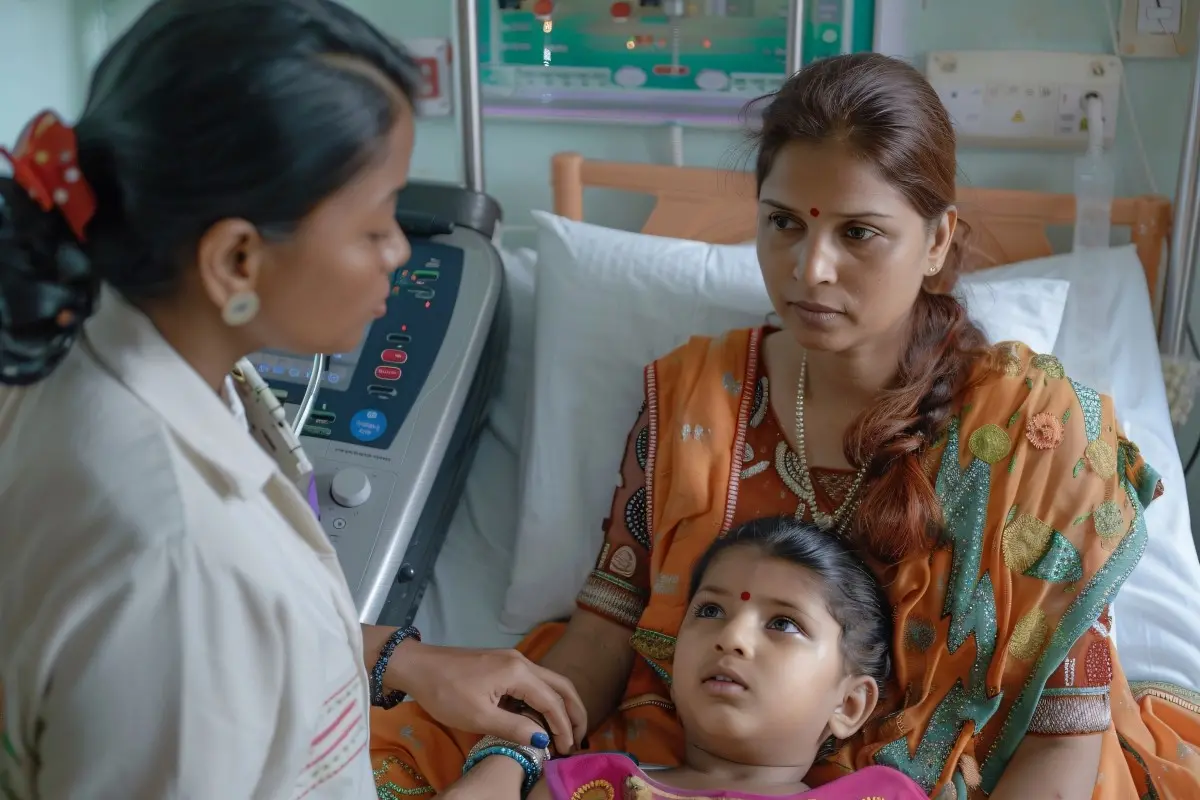
In India’s increasingly complex healthcare landscape, a new conversation is gaining traction—one that goes beyond prescriptions, diagnoses, and stethoscopes. It’s about language. While the Odisha High Court’s January 2024 directive mandating doctors to write legible prescriptions, preferably in capital letters or typed, made headlines for improving clarity in medico-legal cases, a deeper issue has quietly emerged beneath the surface: the urgent need for doctors to learn and use the local language of the communities they serve.
For decades, the focus of medical education in India has been on rigorous training in anatomy, physiology, pharmacology, and diagnostics. But as urban and rural health centres bustle with linguistic diversity, a glaring gap in the system has become too large to ignore. Most doctors, trained in English and sometimes Hindi, are often unable to communicate effectively with patients who speak only regional languages—be it Odia, Malayalam, Bengali, Tamil, Telugu or Kannada. This communication gap doesn’t just hinder trust; it obstructs the diagnosis itself.
Emphasising the need for effective communication in healthcare, Dr Lakshmy N V, Medical Officer with the Vayomithram Project under the Kerala Social Security Mission (KSSM), has said that doctors must learn the local language spoken by their patients.
“It is very important because taking a patient’s history accurately is vital for correct diagnosis,” she said. “Language also plays a crucial role in giving clear instructions that patients can understand and follow. This ultimately improves the effectiveness of treatment.”
Dr Lakshmy’s remarks come amid growing discussions around the need for linguistic sensitivity in medical practice, especially in diverse regions like Kerala where doctors often encounter elderly patients who speak only Malayalam.
“In a profession where every word matters, not understanding your patient can lead to misdiagnosis, mistrust, and even medical errors,” says Dr. Sunita Rao, a general physician based in Hubballi, Karnataka. “I’ve often had to rely on a nurse or attendant to translate. But translation is never perfect. It misses emotions, nuances, and context—things that can be vital to diagnosing the real problem.”
The implications are alarming. When a doctor cannot comprehend the language in which a patient describes their symptoms, pain levels, past illnesses, or medication routines, the entire medical consultation becomes fragile. Not only does it slow down the diagnostic process, it also increases the risk of incorrect treatment. In a high-stakes environment like healthcare, there is little room for ambiguity.
For instance, consider a situation where a tribal patient in rural Kerala describes a chest pain that worsens with exertion but uses metaphors and idioms rooted in local dialects. A doctor unfamiliar with those expressions may dismiss it as indigestion or fatigue, potentially missing early signs of angina or a heart attack. Similarly, in Tamil Nadu’s rural belts, where patients often express bodily discomfort in cultural idioms, a non-Tamil-speaking doctor may struggle to grasp the emotional and psychosomatic layers of the complaint.
This is not just a rural issue. Even in urban centres like Mumbai or Hyderabad, where migrant patients flood government hospitals, doctors often encounter patients who speak languages from different parts of the country—Marathi, Telugu, Urdu, or even tribal tongues. These patients frequently feel intimidated or marginalised when they sense that the doctor cannot understand them. It undermines confidence in the healthcare system and erodes the doctor-patient bond that is essential for successful treatment.
Unfortunately, this critical link between medicine and language has long been overlooked by medical education authorities. Language studies are not part of the medical curriculum in India. While MBBS students study medicine in English and occasionally interact with patients in Hindi or a regional language during their internships, there is no structured training in communication or regional linguistics. This blind spot now demands urgent policy attention.
Medical students are taught to interpret lab reports, read ECGs, and memorise drug interactions. But when it comes to understanding the language and culture of the patient sitting across from them, they are left to fend for themselves. As a result, many young doctors enter practice unprepared for the reality of multilingual India.
Take the case of Dr. Akash Mehta, who completed his MBBS in Delhi and took up his first posting in a community health centre in rural Bengal. “I knew English and Hindi, but not a word of Bengali. I couldn’t even ask if the patient had a fever. It was frustrating. I felt like I was failing my job,” he recalls. “Over time, I picked up key phrases, but I kept wondering—why aren’t we taught local languages as part of our training?”
His question is now echoing across the healthcare policy corridors. Several state governments, including Tamil Nadu and Kerala, are reportedly considering proposals to introduce basic regional language modules in the final year of MBBS. In Karnataka, a few private medical colleges have already piloted workshops in Kannada for interns. The aim is not to turn doctors into linguists but to ensure they can handle basic interactions without an interpreter.
Critics, however, argue that language training could overburden an already intense medical curriculum. “Medical students are under immense academic pressure. Adding compulsory language training may affect their performance in core subjects,” says Dr. Muralidhar Reddy, a medical educator based in Hyderabad. “Instead, we could offer optional language classes or encourage state-level certification programs that reward linguistic competence.”
That may be a middle path, but for patients, the question is far simpler: can my doctor understand me?
The ethical dimension of the issue also cannot be ignored. Medical ethics demand informed consent, accurate history-taking, and empathetic care—all of which are deeply tied to communication. If a patient cannot fully express their concerns or comprehend the treatment options, their right to make informed decisions about their body and health is compromised. This violates both medical ethics and the legal rights of the patient.
Moreover, during sensitive consultations involving sexual health, mental illness, or chronic conditions like diabetes and cancer, trust and comfort are paramount. Patients often open up only when they feel the doctor is listening—not just with their ears but with genuine understanding. Language becomes a medium of healing, not just information.
In legal and medico-legal cases, too, the inability of a doctor to communicate clearly in the patient’s language may become a liability. A patient’s complaint or refusal to follow instructions due to miscommunication can be misinterpreted as negligence or non-compliance, potentially leading to lawsuits.
It is worth noting that the World Health Organization (WHO) emphasises cultural and linguistic sensitivity as part of universal health coverage goals. India, with its massive linguistic diversity—over 22 official languages and hundreds of dialects—must confront this issue head-on.
Beyond prescriptions, beyond technology, beyond hospital infrastructure, lies the quiet but powerful tool of language. A prescription may cure, but it is a conversation that heals.
So what can be done?
Experts suggest a multi-pronged approach. Medical colleges could partner with language institutes to offer short-term local language modules. Internships in rural areas could include cultural immersion and communication practice. Hospitals could employ trained interpreters where feasible and encourage doctors to pick up phrases through digital learning tools. Most importantly, the Medical Council of India could revise its curriculum to include communication and empathy training with a regional language component.
Technological tools can help. Apps like Google Translate or AI-powered diagnostic assistants can offer real-time translation support. But these are only aids. They cannot replace the human nuance and trust that comes from speaking directly, heart to heart, in a language both doctor and patient share.
The future of Indian healthcare doesn’t just lie in robotics, gene editing, or telemedicine. It also lies in something far simpler and more human—language. For a country that thrives on diversity, its doctors must become multilingual healers, not just medical experts. Because every patient deserves to be heard—and understood.
In a nation where a single word can mean a world of difference, it's time we ask: should medical degrees come with a language lesson too?