Turkey's Hurjet takes to the skies: How India's Tejas trainer stacks up
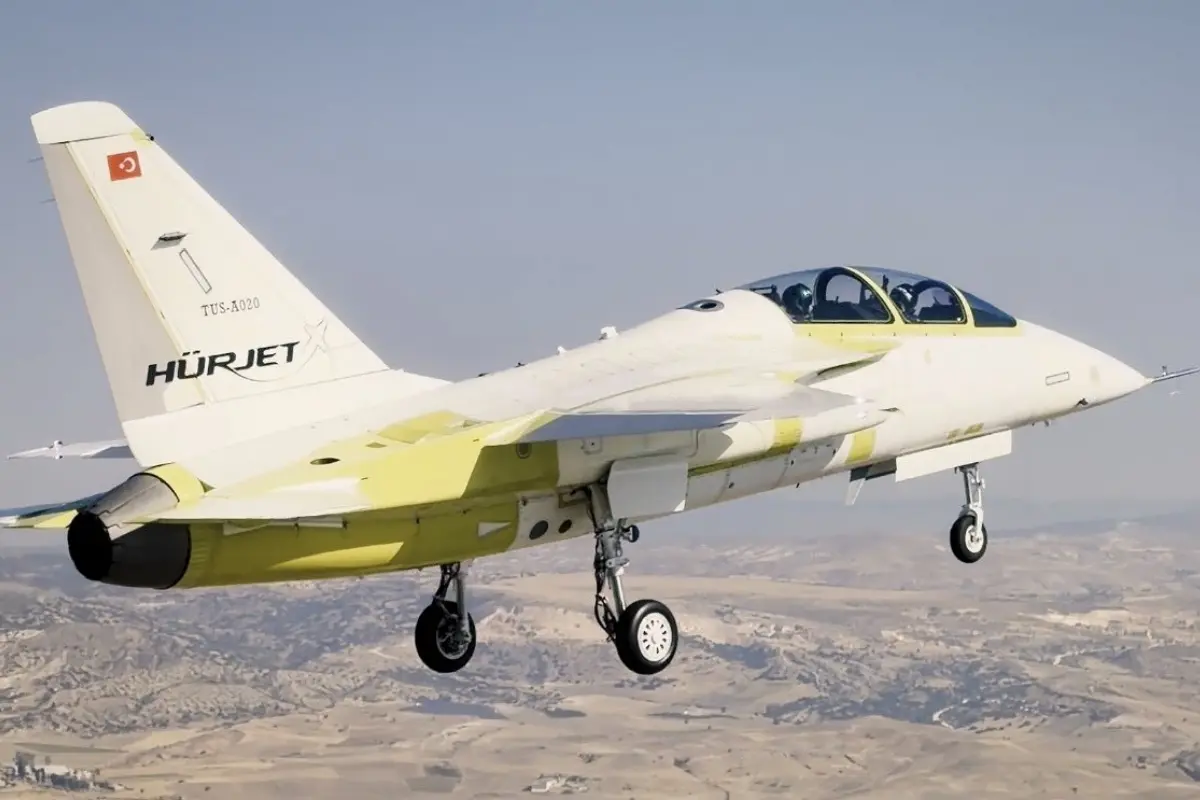
On 30 August 2026, while Turkey was celebrating Victory Day, something quietly historic happened on an airfield. The first factory-built Hürjet jet trainer finished its ground checks and taxi runs, then lifted into the sky for eighteen minutes, with an older prototype flying beside it. Eighteen minutes may sound short, but in aviation that small flight means a great deal. It shows a country has moved past hand-built test jets and can now produce aircraft on a proper factory line, ready for air force squadrons on daily duty.
The story began in 2017, when Turkish Aerospace Industries set out to design a modern trainer with two cockpits, one behind the other, so an instructor can sit behind the learner. The name honours Vecihi Hürkuş, an early Turkish aviator, and the word "Hür" itself means free. Learning to fly a fast fighter is never a one-day job. A trainee first flies simple propeller aircraft, then an intermediate jet, and finally needs a machine that feels close to a real fighter. The first Hürjet prototype flew on 25 April 2023, and later test flights proved it could travel faster than sound.
ALSO READ: Wings over Rajasthan: Japan's F-2A 'Viper Zero' touches down for the first time
Now come the numbers that truly define an aircraft. Hürjet measures 13.6 metres from nose to tail, spans 9.5 metres from wingtip to wingtip, stands 4.1 metres tall, and has a wing area of 25 square metres. Wing area matters because it decides how much air the aircraft can push against, and therefore how well it turns and lands. Inside sits a single American General Electric F404 engine with an afterburner, a device that burns extra fuel in the exhaust to give a sudden push. This engine produces roughly 78 to 80 kilonewtons of thrust with the afterburner lit. A kilonewton is simply a measure of push, and eighty of them can shove nearly eight tonnes forward. With that power, Hürjet reaches about one and a half times the speed of sound and climbs to 14,000 metres. In a tight turn, it pulls eight times the force of gravity, giving a young pilot the same strain a fighter pilot feels. It has seven places under the wings and body that can carry about 3.4 tonnes of fuel tanks, bombs or practice weapons, putting it beside South Korea's T-50 and Italy's M-346.
Turkey's first batch is six aircraft for its own air force, with deliveries planned through late 2026 and 2027. Some early jets may join the Turkish Stars aerobatic team. Spain has chosen 30 Hürjets for its combat training system, with first deliveries aimed at 2028, marking Turkey's first jet-trainer sale to a NATO country. Factory planners say two aircraft a month can roll out at full speed. For a nation that trained pilots for years on ageing American T-38 and F-5 jets, this is a clear step towards a home-built training fleet.
ALSO READ: Indian Navy Leases MQ-9B Sea Guardian Drones to Bridge 2029 Gap
This step invites a comparison with India's twin-seat Tejas trainer, designed and built by Hindustan Aeronautics Limited in Bengaluru. From the ground, the two look alike. Both seat two pilots, one behind the other, both use the same American engine family, and both carry weapons. Behind that likeness sit two different ideas shaped by two different needs.
The Tejas trainer is not a brand-new classroom jet. It is India's Light Combat Aircraft with a second seat added. The fighter first flew in 2001, the production two-seater flew in April 2023, and the Air Force received its first in October 2023. By early 2026, HAL had handed over six of the first eight, and later contracts take the total to about 47 aircraft. Here the figures tell an interesting story. Tejas is slightly shorter at 13.2 metres and narrower at 8.2 metres across the wings, yet taller at 4.4 metres. Its huge triangular delta wing covers 38.4 square metres, more than half again the size of Hürjet's wing. That broad wing carries fuel and weapons and gives lift at high altitude. Its engine is the more powerful Indian version of the same American engine, pushing out about 85 kilonewtons. That extra thrust over a bigger wing yields nearly twice the speed of sound, a ceiling of 16,000 metres and a weapons load near five tonnes.
These numbers decide daily use. The Air Force uses the two-seat Tejas mainly to teach pilots how to fly the single-seat Tejas fighter, because the cockpit, radar and weapons are the same. A full combat jet costs more to fly every day than a dedicated trainer, so the Air Force keeps cheaper British Hawk jets for routine practice and has sought about 150 new advanced trainers. Turkey, from the first drawing, built Hürjet as an affordable trainer that can also fly light-attack missions.
ALSO READ: Behind India's mega stealth fighter gamble
Both programmes show national skill. Turkey has proved how fast a focused trainer can move from first flight to factory and foreign order. India has proved it can fly a combat-capable trainer on its own bases. Hürjet is longer and wider in span; Tejas has the bigger wing, greater thrust, higher speed and heavier punch. Both nations must now keep engines flowing, factories humming and squadrons ready.
(Girish Linganna is an award-winning science communicator and a Defence, Aerospace & Geopolitical Analyst. He is the Managing Director of ADD Engineering Components India Pvt. Ltd., a subsidiary of ADD Engineering GmbH, Germany.)