In the name of ‘Hell’: What exactly is Trump offering in 20 points
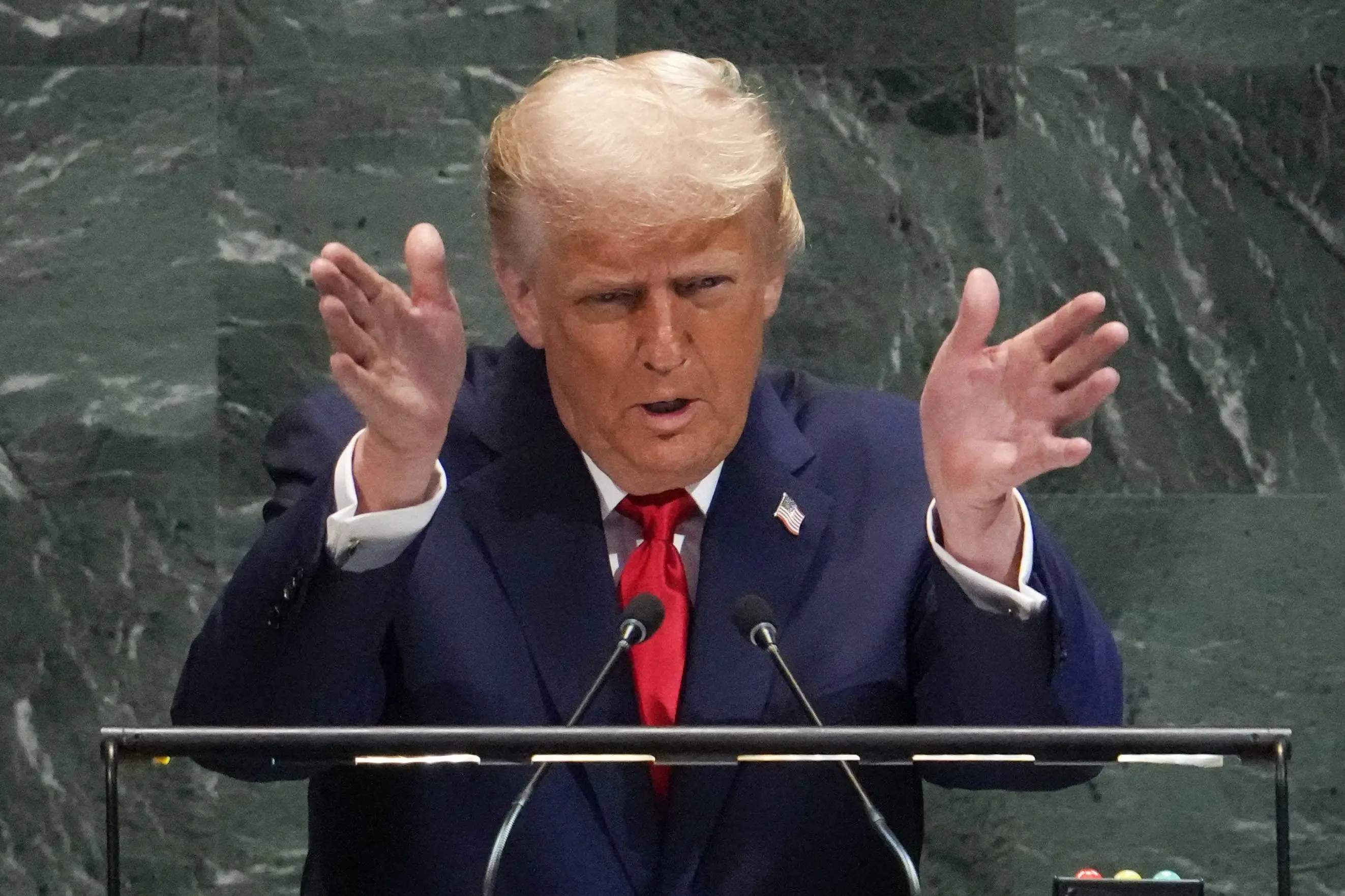
US President Donald Trump on Friday publicly instructed Israel to immediately cease the bombing of the Gaza Strip, hours after Hamas indicated it had accepted core elements of the President's proposed peace plan aimed at ending the nearly two-year war and securing the release of the remaining hostages.
In a statement posted on social media, President Trump asserted, “I believe they are ready for a lasting PEACE.” He stressed the immediate need to halt military operations, stating: “Israel must immediately stop the bombing of Gaza, so that we can get the Hostages out safely and quickly! Right now, it's far too dangerous to do that. We are already in discussions on details to be worked out.”
The development came swiftly after the President had threatened a greater military onslaught if Hamas did not agree to the deal by Sunday evening.
Hamas Signals Acceptance of Key Elements
Hamas issued a statement Friday confirming it had accepted key elements of the Trump plan, notably agreeing to relinquish power and release all remaining hostages. The group indicated its willingness to return captives according to a specific "formula," which is understood to refer to a prisoner exchange involving the release of hundreds of Palestinian prisoners.
The organization also reiterated its openness to transferring governing authority over Gaza to a politically independent Palestinian body. However, Hamas noted that certain aspects concerning the future of the Gaza Strip and broader Palestinian rights require further consultation to achieve a "unanimous Palestinian stance" across various factions and to align with international law.
Significantly, the Hamas statement made no mention of disarming, a crucial and non-negotiable demand included in the original Trump proposal.
The success of the proposed deal now rests on the negotiations of these outstanding details, particularly concerning Palestinian prisoner releases and the future political structure of the region.
Trump's Ultimatum: Peace or ‘All Hell’
This cautious response comes against the backdrop of US President Donald Trump's final deadline to Hamas. Had Hamas refused, Trump had warned that "all hell will break out." This was not diplomatic posturing -- it was a direct threat backed by American military power.
Trump offered what he called one last chance: Hamas must release all Israeli hostages, accept the peace terms, and stop fighting. He said there will be "peace one way or the other," meaning peace through agreement or peace through overwhelming military action.
The October 7 Shadow
The background to this ultimatum traces back to October 7, 2023, when Hamas launched what Trump called a brutal massacre against Israel. Hamas terrorists killed babies, women, children, elderly people, and young men and women in coordinated attacks that shocked the world.
Since that attack, Israel has responded with devastating force. Trump claims that more than 25,000 Hamas fighters have already been killed. But Trump wants to end the conflict completely, and he is using both threats and promises to achieve it.
In his message on Friday (October 3, 2025), Trump spoke directly to ordinary Palestinians in Gaza, warning them to move to safer areas because they are in the line of fire. But his message to Hamas fighters was uncompromising: "As for the rest, we know where you are" and warned they will be "hunted down and killed."
The 20-Point Plan: Ambitious Vision or Impossible Dream?
What exactly is Trump offering? His peace plan contains twenty comprehensive points.
First, both Israel and Hamas must agree to stop fighting immediately.
Second, Israeli forces will begin to pull back from Gaza.
Third, Hamas must release all hostages within 72 hours after Israel accepts the plan. In return, Israel will release Palestinian prisoners, including women and children held since October 7, 2023.
The plan also includes transformative long-term changes for Gaza. Trump wants to establish a temporary government run by experts, not by Hamas – a provision that directly conflicts with Hamdan's insistence on Palestinian self-governance. This administration would be supervised by an international "Board of Peace" chaired by Trump himself, including leaders like former British Prime Minister Tony Blair. This board would control aid distribution, manage reconstruction, and ensure Hamas relinquishes both political and military control.
Other provisions include deploying an international stabilization force, massively increasing humanitarian aid, and creating economic programs to rebuild Gaza's shattered infrastructure. Trump envisions Gaza becoming a "terror-free zone," with guarantees that no one will be forced to leave their homes.
The Credibility Gap
But will this plan work? Hamas's partial acceptance, coupled with its rejection of foreign administration and silence on disarmament, suggests the gap between Trump's vision and Hamas's reality remains wide.
Many experts remain doubtful. Hamas has a decades-long history of refusing to give up its weapons. For the organization, armed resistance is central to its identity and legitimacy. Asking Hamas to disarm completely is asking it to surrender its very reason for existence.
Moreover, many elements of Trump's plan echo previous ceasefire proposals that failed because Israel and Hamas could not agree on fundamental terms. The cycle of proposal, rejection, and violence has repeated itself for years.
The Deadline Dilemma
Adding to the confusion, there appears to be uncertainty about the deadline itself. The White House indicated that Trump will ultimately decide how much time Hamas gets, and the deadline "may or may not be enforced." This ambiguity undermines the ultimatum's credibility and raises questions about whether Sunday's deadline represents a genuine red line or negotiating theater.
Trump's approach breaks from traditional diplomatic practice. Most peace negotiations involve careful, quiet diplomacy conducted away from public scrutiny. Trump is doing the opposite -- making public threats, setting hard deadlines, and personally inserting himself into Gaza's governance structure.
What Happens Next?
The question everyone asks is: what happens if Hamas definitively says no? Or if its partial acceptance falls short of Trump's demands? Trump has made clear that military action will follow. More airstrikes? A ground invasion? Targeted assassinations of Hamas leadership? Trump has not specified, but his language suggests overwhelming force.
For ordinary people in Gaza -- already enduring unimaginable suffering -- this creates fresh fear and uncertainty. For Israelis, especially families of hostages who have waited in agony for over two years, this brings both desperate hope and deep anxiety.
Hamas's conditional response suggests we are entering a critical phase of brinkmanship. Hamdan's willingness to negotiate on some points while drawing red lines on others indicates Hamas is testing Trump's resolve. Will the US president accept a compromise that leaves Hamas partially armed and politically influential? Or will he follow through on his threat of military action?
Breakthrough or Breakdown?
By Monday morning (October 7, 4:30 am IST), the world will know whether Trump's unprecedented approach leads to breakthrough or breakdown. Hamas has moved -- but perhaps not far enough. The international community watches anxiously as the deadline approaches.
The tragedy is that ordinary Palestinians and Israelis will bear the consequences either way. If diplomacy succeeds, they gain a chance at peace and reconstruction. If it fails, they face another cycle of devastating violence.
Trump's Gaza gambit represents either bold leadership or dangerous brinkmanship. By dawn on October 7 -- two years to the day after the massacre that started this latest conflict -- we will have our answer.
The author is a Defence, Aerospace & Geopolitical Analyst.