Eat more, weigh less: Why nutrient-dense eating matters for PCOS/PMOS and sustainable weight loss
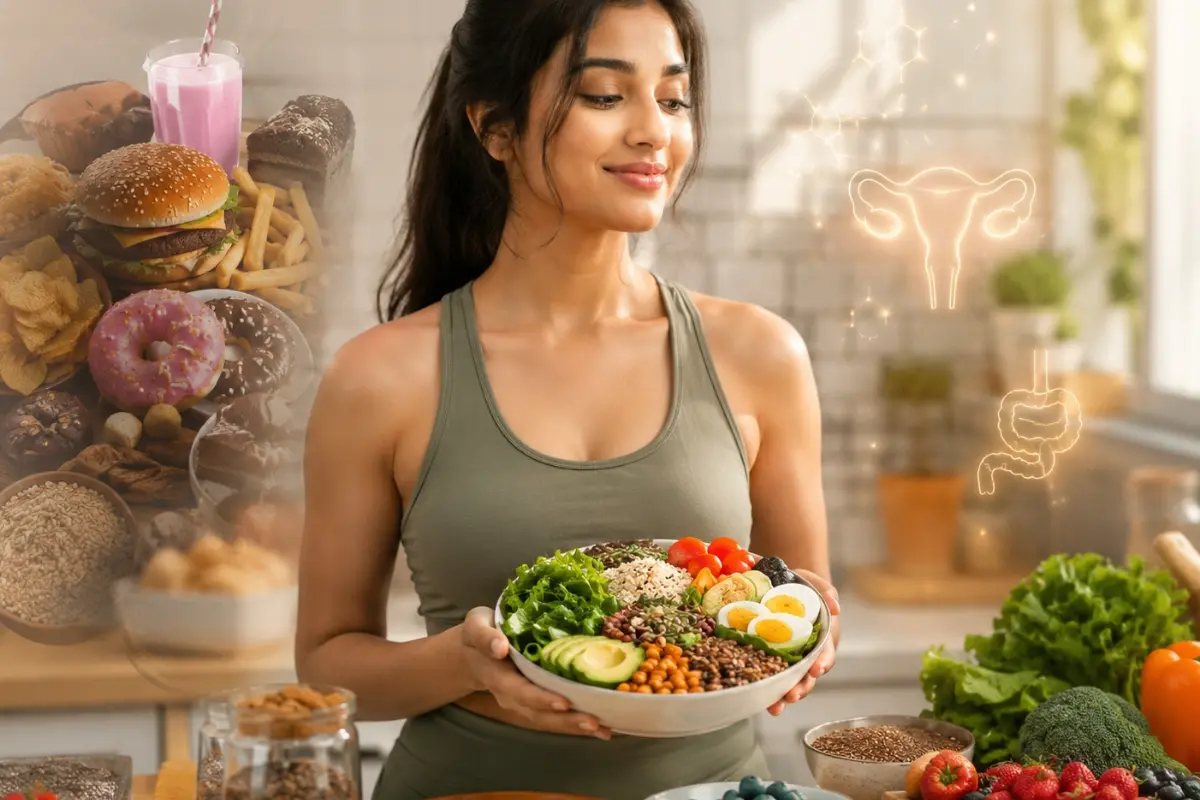
One of the biggest myths in the world of weight loss is the belief that eating less automatically leads to better results. In reality, constantly undereating, skipping meals, surviving on salads alone, or eating tiny portions often backfires, especially for women dealing with PCOS, insulin resistance, hormonal imbalance, fatigue, or chronic cravings.
The body does not simply respond to how little you eat. It responds to what you eat, how balanced your meals are, and whether your food is nourishing enough to keep hormones, blood sugar, digestion, and appetite signals stable. This is where the concept of nutrient-dense eating becomes incredibly powerful.
Nutrient-dense meals are foods that provide high amounts of protein, fibre, vitamins, minerals, antioxidants, and healthy fats without being excessively calorie-heavy. These foods nourish the body deeply while keeping you fuller for longer periods, naturally reducing overeating and constant snacking. Instead of fighting hunger all day, you begin working with your body rather than against it.
For women with PCOS, this shift is especially important.
PCOS is strongly connected to insulin resistance, inflammation, unstable blood sugar, increased cravings, and hormonal imbalance. When meals are heavily based on refined carbohydrates such as white bread, sugary cereals, biscuits, bakery products, or processed snacks, blood sugar rises quickly and crashes soon after. This cycle increases hunger, fatigue, irritability, and fat storage, particularly around the abdomen.
Nutrient-dense meals work differently.
When protein, fibre, healthy fats, and slow-digesting carbohydrates are combined together, digestion slows down naturally. Glucose enters the bloodstream more gradually, insulin spikes become less dramatic, and the body stays fuller for much longer after eating. This creates steadier energy, fewer cravings, and better appetite control without needing extreme dieting.
The goal is not to starve the body. The goal is to satisfy it intelligently.
Imagine the difference between eating two biscuits and drinking tea versus eating a savoury moong dal and ragi pancake with vegetables, curd, flaxseed, and healthy fats. The second meal contains more nourishment, more fibre, more protein, and more satiety. It keeps the body satisfied for hours rather than minutes.
This is the true meaning of “eat more, weigh less.”
Meals that support PCOS and sustainable weight loss are often built around ingredients that increase fullness and metabolic stability naturally. Protein-rich foods such as lentils, eggs, curd, paneer, tofu, chicken, fish, and Greek yogurt help preserve muscle mass while reducing hunger. Fibre-rich ingredients such as oats, vegetables, millets, seeds, fruits, and legumes improve digestion and slow glucose absorption. Healthy fats from nuts, seeds, coconut, ghee, olive oil, and nut butters further improve satiety and hormonal health.
Tiny additions can create massive nutritional upgrades. A spoonful of flaxseed powder increases fibre and omega-3 fats. Ragi flour adds minerals and slow-digesting carbohydrates. Oats improve fullness and blood sugar control. Chia seeds absorb water and create prolonged satiety. Vegetables add volume and nutrients without adding excessive calories.
Even traditional digestive ingredients play an important role in making meals more weight-loss conducive. Ginger improves digestion and reduces bloating. Curry leaves support metabolism and gut health. Hing helps reduce heaviness from fibre-rich foods and lentils. Curd adds probiotics that support digestion, satiety, and gut balance.
This combination of nourishment and digestive support allows meals to feel satisfying without leaving the body sluggish or uncomfortable.
One of the most damaging aspects of restrictive dieting is that it often increases food obsession and cravings. When meals are too small, too bland, or nutritionally incomplete, the body constantly searches for quick energy, usually in the form of sugar, refined carbohydrates, or overeating later in the day.
Balanced meals interrupt this cycle.
When the body receives enough protein, fibre, micronutrients, and healthy fats, appetite signals become calmer. Hunger becomes more stable. Emotional eating often reduces naturally because the body finally feels nourished rather than deprived.
This is why sustainable weight loss is rarely about eating the least amount of food possible. It is about eating foods that create the maximum nourishment, fullness, and metabolic stability per meal.
For women with PCOS, this approach can be deeply empowering because it shifts the focus away from punishment and toward nourishment. Instead of fearing food, meals become tools for healing hormones, supporting insulin balance, improving digestion, preserving muscle, reducing cravings, and building a healthier relationship with eating.
Weight loss achieved through nutrient-dense eating is often slower than crash dieting, but it is also far more sustainable, realistic, and supportive for long-term hormonal health.
The body thrives when it feels nourished, not starved.
And sometimes, the healthiest transformation begins not by eating less, but by finally eating better.
(Tilottama Bose is a Delhi-based Clinical Nutritionist, Health Educator, and founder of Health with Tilottama)