Threaded in gold: How Kerala weaves its story on National Handloom Day 2025
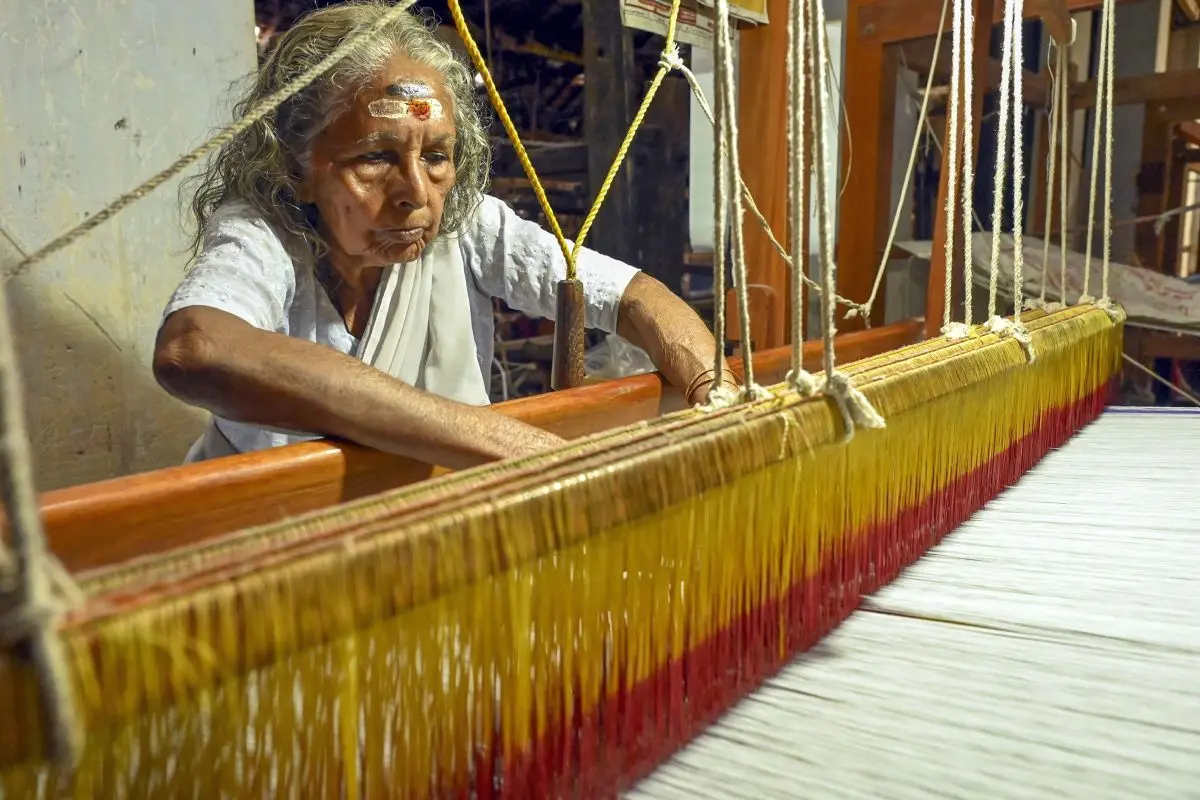
Every year, on August 7, India comes together to celebrate National Handloom Day. It is a moment of reflection on the country's rich textile traditions and the communities who continue to preserve them against the odds. First seen in 2015, the day was to honor the commencement of the Swadeshi Movement in 1905 and since then has turned into a national stage to market indigenous handloom industries. This year, the 11th edition of National Handloom Day is being observed nationwide with the theme, 'Weaving Innovation into Tradition', and Kerala, with its centuries-old weaving clusters, is at the center of this celebration.
From Balaramapuram and Chendamangalam looms to Kuthampully's delicate weaves, Kerala's handloom heritage is a testament to time, culture, and human effort. But beyond the beauty of white fabric and golden borders lies a rich tale of perseverance, reinvention, and unobtrusive resistance.
Kerala's Looms of Legacy
The beginning of Kerala's handloom tradition lies in royal patronage during the 18th century. Weavers from Tamil Nadu were invited by Travancore rulers to settle in Balaramapuram. The result was the development of the iconic Kasavu fabric: unbleached cotton, hand-woven, and with golden zari borders.
The Kasavu mundu and saree are worn on festive occasions like Onam and during religious rituals and became synonymous with Malayali culture.
In Chendamangalam, in Ernakulam district, weaving developed under the patronage of the Paliam family. Kuthampully, in Thrissur district, has Devanga weavers who came centuries ago and are renowned for their intricate temple borders and jacquard work.
All these clusters contribute to Kerala's handloom backbone. But their common heritage now faces common challenges.
Challenges at the Warp and Weft
A growing industry till recently, Kerala's handloom industry has been steadily declining for the last three decades. According to a 2024 report from the Kerala State Handloom Development Corporation, there are only 14,642 active weavers in the state.
The annual production is about 52.54 million meters of cloth. Bulk of this production comes from 539 primary handloom cooperative societies—198 factory-type units and 341 cottage-type units.
Many artisans complain of delayed wages, high yarn prices, and lack of proper marketing. The COVID-19 pandemic further hit their livelihoods. The younger generation is increasingly reluctant to take up weaving, often citing the lack of financial security.
"My son is an app developer in Kochi. He doesn't want to sit at a loom for ten hours," says Parameswaran, 58, a weaver from Balaramapuram. "But for us, this loom is all we have known."
National Focus: What the Centre is Doing
According to the Ministry of Textiles, National Handloom Day 2025 inaugurated at Bharat Mandapam in New Delhi with President Droupadi Murmu conferring five Sant Kabir Awards and 19 National Handloom Awards to weavers and designers. A week-long "Know Your Weaves" campaign was also held at the National Crafts Museum in Delhi to raise awareness about India’s diverse handloom traditions.
In a bid to modernise, the Handloom Hackathon 2025 was initiated in partnership with IIT Delhi and the National Design Centre. Solutions based on technology such as AI-driven pattern design and blockchain-based product authentication were suggested by participants. These innovations hope to engage young minds and bring about transparency into the handloom sector.
The government also added budgetary support for handloom growth to more than ₹300 crore for the fiscal year 2024–25. Schemes such as the Raw Material Supply Scheme, Weaver MUDRA loans, and onboarding of Government e-Marketplace (GeM) keep providing financial and digital assistance.
Kerala Celebrates Its Threads
In Thiruvananthapuram, the Directorate of Handloom and Textiles celebrated the day with a week-long festivity. Events ranged from exhibitions to award-giving ceremonies to senior weavers, a student fashion show by IIHT Kannur, and the inauguration of three new weaving clusters. Children of weaving families showcased their cultural performances to put on display inter-generational storytelling.
Minister of Industries, P Rajeeve, stressed integrating heritage with innovation. "Handloom has to be a part of contemporary fashion, not festive wear. We have to take our Kasavu to international ramps."
Technical sessions included workshops on GI tagging, e-commerce, stress-free weaving, and branding. Kerala government also launched an exclusive e-commerce portal, KeralaWeaves.in, through which local artisans will be directly connected with consumers.
Weaving Hope: Stories of Resilience
Hundreds of weavers from Chendamangalam lost their looms and homes after the 2018 Kerala floods. But from that disaster, there emerged a symbol of resilience: Chekutty dolls. Created from stained handloom fabric recovered from the floodwaters, the dolls were made and sold to generate proceeds for victims' families. The project placed Kerala's weaving community in the global spotlight.
Parallel to this, in Manjavilakom village, Padma Shri winner P. Gopinathan is the head of the Eco Tex Handloom Consortium, a cooperative working with more than 1,800 women. His system combines natural dyeing, organic cultivation, and training at the community level. "Our cloth is not just eco-friendly; it's soul-friendly," he proudly declares.
Designers and Global Appeal
National designers are now looking towards Kerala's handloom for inspiration. Kasavu has been reinvented in modern trends—coupled with denim, pastel silks, and even linen. Archana Kochhar and Rimzim Dadu are among the designers who have used Kerala fabrics in their designs. FabIndia, GoCoop, and Ethniq are among the brands that have made these fabrics mainstream through their online stores.
"Kasavu is simplicity with elegance. It aligns perfectly with the global trend of minimalism," says fashion curator Anjana Menon.
Women Behind the Weaves
More than 70% of Kerala's handloom weavers are women. In Kuthampully, 34-year-old Radhamani heads an all-female unit weaving delicate temple borders. "This work provided me with dignity and independence," she says. "But what we need now is regular orders and acknowledgement."
The state has tied handloom workers to health insurance and pension schemes as part of Kudumbashree, Kerala's women's self-help programme. But many continue to wait for regular salaries and improved marketing platforms.
Modernising Tradition: Youth and Technology
IIHT Kannur students are spearheading change by fusioning tradition and tech. Some have created digital pattern generators and virtual saree try-on apps. During the Handloom Hackathon, Kerala teams suggested QR code tagging for tracking provenance and AI-powered loom monitoring systems.
"We don't want to replace the artisan—just empower them," says Nimisha Nair, a graduate of IIHT. "A handloom saree should have a story, a signature, and a scan code."
Policy, Pride, and the Path Ahead
Experts feel revival will take more than passion. It will take policy. Major recommendations include:
* GST exemption for handloom products
* Special handloom centers in cities
* Handloom uniforms in schools
Kerala Minister V Sivankutty recently called upon the state to create a single showroom for Balaramapuram weaves in the recently opened high-tech market -- a move that can drastically enhance visibility and sales.
Wear the Change
National Handloom Day is more about inheritance -- it's an appeal too. In Kerala, it is about opting for a Kasavu mundu instead of fast fashion, presenting handloom during wedding gifts, or just tapping 'buy' from a certified artisan.
In each strand of fabric made by Lakshmikutty Amma in Balaramapuram or Radhamani in Kuthampully is a fragment of Kerala's story. Their looms tell a tale that cannot be manufactured en masse. As we celebrate the 11th National Handloom Day, Kerala's message is loud and clear: patronise your weavers, wear your heritage, and help keep alive a tradition as sustainable as it is spiritual.