Journalists are the new enemies of the State: Rana Ayyub
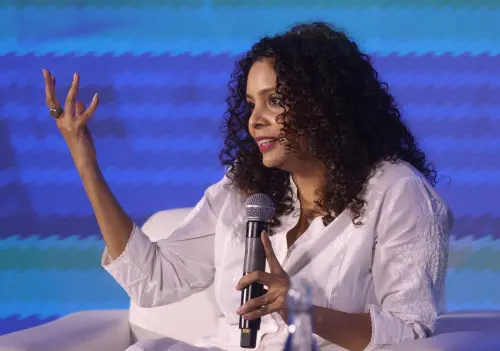
Rana Ayyub, a leading investigative journalist, Washington Post columnist, a forceful dissenting voice, makes it crystal clear that these are interesting times when journalism should shine all the more. ''Journalists should consider themselves fortunate to be reporting at a time when journalism is deemed as an act of rebellion,'' said Rana while speaking at the 'Sacred Facts,' a conclave conducted by Mathrubhumi at Kochi on October 8,2023.
Your investigation into the Gujarat riots played a crucial role in your evolution as a journalist. Will you go after 'demonetisation' and 'Pulwama' the way you went after the Gujarat riots? I think this is a relevant question in the changing media landscape of the country.
This question will also get me a sedition charge. I was in Gujarat as a relief worker in the wake of the riots. Later I stumbled upon the Gujarat fake encounters which I had to investigate. I have been investigating a story for the last five years. I am not sure if I will be able to publish this story which is linked to national security. I think one of the most important aspects that must be referred to when we speak about the media landscape is the culture of fear. The culture of fear is so intense that even when we speak at international platforms there is fear within and we are forced to exhibit patriotism. Recently I began my speech at an international conference with the words: ''I love my country.'' This was not the scenario earlier. You were not expected to wear your love for your country on your sleeves. Yesterday I was speaking to an editor who told me that his institution was training journalists on what to do when cops land at the doorsteps. If a journalism organisation is giving such training that means an emergency is right here. I hope that there will be more investigations into both demonetisation and Pulwama. We need more platforms that really cater to investigative journalism. I wish I could freely write in some Indian media publications as I do in the Washington Post.
As you pointed out, fear is very much palpable.I remember Gopal Krishna Gandhi speaking at Thiruvananthapuram about the presence of fear. He referred to people asking him how he was able to criticise the government if there was fear. He brought in the analogy of air pollution to clarify his perspective. He said it was like breathing in spite of the air being polluted. ''The fact that we are still breathing doesn't mean that the air is not polluted.'' So, there is fear. But aren't we doing our best to combat the element of fear?
We all are trying. But sometimes I feel that I may give up. You see, I get a number of brown envelopes from the government agencies. The Income tax department, ED and other central govt agencies keep sending me notices. I got a defamation notice recently for the article I wrote in 2009. The allegation is that I am a practising Muslim and hence prejudiced. It is exhausting because you don't know what utterance will land you in trouble. Last time ED interrogated me for 13 hours. My bank account details were placed in front of me. I was asked why I was paying my doctor rs 5,000 every two weeks. I told her that I was meeting my psychiatrist and if she were a journalist in India she too would need one. It is humiliating that the ED asks you about your hundred rupees Swiggy bill. The Ghaziabad police official who was questioning me asked why I was writing only for the Washington Post and not for any Indian publication. I told him that I would be more than happy to write in an Indian publication provided he could get me an opportunity. When the NewsClick raid happened my biggest worry was about the chilling effect it will have on the young journalists. What will these young journalists think of their profession? Most of these young, independent journalists do not have any legal cover. They are doing the job at great risk. I feel that we have let down an entire generation of young journalists. My father was part of the progressive writers' movement. He used to tell me that if you have more than a glass of water with a politician you will be obliged to him. Now we are living in a time when editors flaunt their access to the wedding parties of politicians.
Prabir Purkayasta , the founder editor of the NewsClick, was arrested a few days back. But this has not been something new to Prabir. He was arrested in 1975 during the emergency. Then the police arrested him mistaking him to be Devi Prasad Thripati, the then JNU unit president. Now he has been arrested by another regime after a gap of 48 years. What has really changed in India during these 5 decades? Or is it simply a repetition of history?
Back then Prabir was arrested and India was under emergency. We knew that there was an emergency. But right now, we are supposed to be in a functional democracy which is not showing any democratic attributes. I will not go into the merits of Prabir's case. But two things are clear. The deployment of draconian laws like UAPA against journalists is a new low in the history of Indian democracy. And the way the phones and gadgets of the journalists are taken away is frightening. We always believed in the sacredness of the source. The police violate this fundamental character of journalism when they snatch away our phones and laptops which could easily give them access to our sources. In Press Clubs journalists are interviewing journalists. It doesn't augur well for journalism if journalists become the stories. This is the biggest casualty of the Modi era. It is a matter of grave concern that we are being treated as the enemies of the state. What happened to NewsClick could happen to any of us. As India moves into the general election there is greater danger for the journalists. Everytime one person is arrested everybody else goes into a shell. Then we will resort to self censoring. Self censoring will mean the death of all democratic ideas.
Self censorship is a key element in today's media landscape. I remember Perumal Murugan, the Tamil author raising this concern. He was assured by the High Court of Madras that he could continue writing and nobody would stand in his way. But he revealed that everytime he was searching for the accurate, precise word he was not sure if he could really use that word for fear of antagonising some readers. We journalists too face this in our day to day lives. Quite often we keep away from using the exact word because we do not know if it will land us in trouble. Don't you think that this strikes at the very root of journalism?
Certainly ! It takes away our passion. There were times when we used to speak our minds. But now we are forced to use different filters. See the tweets by most of the Indians on the Israeli- Palestinian crisis. It is nauseating to see the way they express their joy at the possibility of the Palestinians being hounded out. I have not seen such moral corruption before. The moral corruption of an entire country is worse than censorship. I was about to write something about the conflict but then I held it back because if I tweet what I feel the higher ups may come after me. Some of the well meaning people too may come accusing you of what they think is an attack on the liberal values. Journalism was always to me about the oppressor and the oppressed. There are only two sides in journalism, the side of the oppressor and the side of the oppressed. The only story that you will report passionately is the story of the oppressed. If I have to dilute my story of the oppressed then I think I have lost the battle then and there. Journalism is what you write about something that you witness without any filters. But right now we are putting filters on truth. We no longer call a spade a spade. We are reading out handouts from the governments. Most of the Indians don't read independent news portals. They read the mainstream newspapers who copy the versions of the government. To them NewsClick is already the enemy of the state. It happened to the students who protested against CAA. The worship of the state made the headline. Truth became the causality.
There is this journey towards one nation, one election. Are we also heading towards one nation, one voice?
I think the attempt is to homogenise one language, the language of the government. Everybody is expected to speak a language which does not disrupt the establishment. When we resort to such a language every voice becomes one and the same. Thank God for the alternate media which function as a backlash against the backlash. We have to be up against the homogenisation of the language.
There was a mention of arguments earlier. Arguments occur whenever and wherever there is dissent. These days we don't have many dissenting voices. Most of the media have fallen in line. But still there are some dissenting voices like that of Prabir Purkayasta. So, do you think that Prabir was arrested because the regime can't tolerate even those remaining voices of dissent?
There are dissenting voices. Not all of them have ceased to exist. Otherwise the misdeeds of the government would not have been exposed. Many of us are dissenting but the true stories are not being told. We speak about NewsClick but how many of us are speaking about journalism in Kashmir? Journalists in Kashmir are undergoing a very tough time. NIA comes to their door steps every day. The internet is shut down, they are being booked under the National Security Act. We are not speaking loud and clear enough for the journalists in Kashmir and Manipur. Siddique Kappan is another example. He was behind the bars for two years. But I didn't see the kind of solidarity for Siddique Kappan that was expected of other journalists. I have the support of good lawyers, and the solidarity of the international media platforms. There are many young journalists who don't enjoy these. Rupesh Kumar Singh, a journalist from Jharkhand, has been booked under UAPA. How many of us know him? We don't speak about these journalists. We speak about journalists in the metro cities. There are many journalists who are doing an excellent job but without any cover. It is a known fact that the mainstream media is compromised. I had stopped watching the mainstream channels sometime back. But I go back to them whenever I want to report on the moral degradation of the society.I have never viewed myself as a Muslim journalist. But for the last three - four years I have been seen as a Muslim journalist. Initially it bothered me. BJP twitter handles have called me a jihadist. You are being abused for your muslimness. We are living at a time when lived experience is an asset not a liability. We should be proud of our lived experience . For instance , a sikh journalist writing about his family's experience during the anti sikh riots of 1984. I consider that as his strength. I think we are reimagining journalism these days. Rajagopal ( former editor, Telegraph)spoke about neutrality. We are living in times where there is no space for neutrality. For instance, the Delhi riots. On the one side you have ministers like Anurag Thakur who allegedly shout ''desh ke gaddaro goli maaro.'' And there is the police force who sides with the attackers. On the other hand there are people who are reacting to the situation. They are not on equal footing. Then, how do you call it a riot? We journalists have to reimagine the terminology that we use for the present times that we are living in. These are not normal times. We are living in a majoritarian time.
You spoke about the need for solidarity. You have been waging many battles. You have been traveling from one city to another to face trials in cases. At times you might have felt the need for someone standing by your side. You are writing for an international publication. So, what kind of a difference have you seen in the west and here in India vis a vis solidarity?
It is really heartening to see the solidarity with the NewsClick. But the solidarity we see right now is not that inclusive. What is happening to NewsClick right now has been happening to various individuals for the last seven to eight years. If we had spoken louder and clearer then we would not have been in this situation now. Right now I Am happy that many have come forward to stand by Newsclick. But this should have happened in the case of the poor journalists too. I had written an article in 2013 , one year before Modi became the PM saying that I am a journalist who reported on Gujarat and I know that in the next 5 years if Modi comes to power the ultimate casualty will be journalism. Here is a man in the world's largest democracy who has never addressed a press conference in the last 9 years. This is exactly what happened in Gujarat when he was the chief minister. Back then when the fake encounter deaths happened in Gujarat there were not many critical accounts. These fake encounters were used to project Modi as the Hindu hriday samrat. I will give you some trivia. I was in Gujarat and I was reporting. Everytime these fake encounters happened the Gujarat police would file FIR and these FIRs were really interesting. The first seven paragraphs were copy paste. They would point fingers at the jihadi elements in these paragraphs. This is getting repeated now. What was happening in Gujarat then is now happening in the mainstream publications. They are catering to the requirements of the state in creating enemies of the state. The top editors in the country will get solidarity. Those at the bottom are the unpopular journalists who don't get solidarity. We have to see how the young journalists who don't have these privileges will be protected. A lot of journalists are battling mental health crises. The last couple of years have taken a heavy toll on my mental health. Everytime I receive a brown envelope, a part of myself goes into a shell. You lose your day, you cannot function that day. By the time you come back from the court undergoing the harassments you won't have the bandwidth to report.
I shall give you a small instance. A Times Now journalist came to my doorstep. I opened the door, I was in my nightwear. I didn't know what they were really looking for. I was on the seventh floor and they put a camera on the seventh floor in the opposite building to post the views of my living room. I can't tell how intrusive it is. When charge sheets were filed against me I was in Chicago to teach. Again Times Now and Republic were at my doorsteps. The door was opened by my nephew and the camera was there in my family's living space. They don't deserve this, my family doesn't deserve this.
It also affects your physical health?
Yes! I had corrective surgery two years back. I started taking blood pressure medications last year. I am taking anti depressants. And I'm not complaining. This is a choice I have made consciously. But the fact is that when we make a choice we expect a level of solidarity. Not for people like me who have a space in the public. I have a national and international profile. But there are many journalists who don't have such a back up. Please understand that fighting a legal case is one thing and fighting the emotional battle is another.
When you started your career the media landscape was entirely different. Now the scene has undergone some drastic changes. Were you to start your career today, would you still opt for journalism?
I would go for it all over again. There are many reasons to be a journalist today. In fact when I started my journalism things were not that rosy. I was told by my bureau chief that I could do lifestyle, entertainment and health. I said I wanted to do political reporting. And the editor responded ''political?'' This was in 2006. He said, ''Rana, please be practical. You will have to drink with politicians, sit with them at night and then get to do the stories.'' There was some resistance to the idea of women political journalists. Back then some of us covered the Adarsh scam. The Journalists then were not in fear of the Manmohan Singh government. Yes, the Congress is not without faults. The UAPA that we face today is the gift of the Congress regime. But the kind of fear we feel today was not there earlier. Coming back to your question, I think we have interesting times now. It is one thing to be a journalist when there is not much backlash. But the kind of backlash that there is today is all the more exciting for somebody like me. It is a crucial thing to be a journalist when the state is against you. When you become the enemy of the state, that is the time when journalism shines. when there is so much oppression against journalism, and you still write dissenting notes, that is when journalism shines all the more. I feel journalists should consider themselves fortunate to live in a time when journalism is an act of rebellion.
So, you are confident and optimistic that journalism will survive?
Journalism has survived some of the worst onslaughts. I do hope the morale of the journalists is not affected. On the one hand they are out in the field getting top stories and then they see the editors cutting deals with the government. When I see some journalists taking pictures at some weddings of the children of the politicians it is cringeworthy. But I have confidence in the young journalists of this country, I have trust in the independent media outlets. They give me hope, they encourage me to go into the field to report with passion.
You see, during the emergency Indira Gandhi quite often led on her own. She didn't have the support of a well organised ideological platform. But these days we know that the regime has the backup of a well organised ideological platform that can reach out to any person anywhere. During the emergency Indira faced stiff opposition from some media. We know how the Indian Express took on her. Ideologically too the owners of these newspapers were on the opposite side. They never felt that the Indira Govt was their government. But these days some of the major newspaper establishments might feel that this government is their govt. Do you concur with this view?
I am not part of any major newspaper in India. So I wouldn't know what they feel. I don't have any idea of what is happening inside these mainstream Indian publications. Every morning I read the Telegraph and get reassured by the headlines. I see some of the editors prostrating before power. Some of them were well meaning journalists earlier. They are journalists who reported about the Gujarat carnage. There was a time when protests by citizens were seen as the expression of a democratic idea. But the mainstream media tried to demonise the recent protests against the farmers' bill and the CAA . I don't think they have an ideology. They simply want to protect their jobs and want access to the government.
Is it a question of ideology or is it a question of Faustian bargain?
I think it is a question of opportunism. When the Saudi Arabian ruler was here the Modi govt got the editors of the mainstream media to go and shake hands with him. These journalists were happy to be seen with the world leaders. It is infact a moral choice.
There is this view that the media should always be in the opposition. They should never side with those in power. What is your take?
The media should oppose power. But that doesn't mean that they should be cheer leaders of the opposition.
No, It is not that. I was referring to the concept of the media being eternal opposition to power?
It is not a question of opposing for the sake of opposing. We cannot be seen as pro establishment. That is not the very nature of journalism. The fundamental feature of journalism is to question the wrongdoings.
Do we miss this feature these days?
We don't see the questioning spirit much in the mainstream media right now.
How can we overcome this crisis?
We have to do journalism. There is no other way to overcome this crisis. The only way to counter fascism is not to give two sides of the stories. Americans are now discussing if there are really two sides of the story. The only side to be upheld is the side of the oppressed. You see there is essential evil. You talk about the essential evil first. You see a man who wants to bring in the worst kind of fascism, you see a man who openly talks about attacking migrants and minorities, you see a man who is destabilising the institutions of the country. When you see that kind of an evil there are no two sides to it. We have a government that is systematically destroying the democratic institutions. The American media has been by and large anti establishment and questioning. They have the courts supporting them, they have the protection provided by the first amendment. In India ,by the time the Supreme Court gets to give bail to a dissident , activist, or journalist it is years. Look at Umar Khalid. It has been three years since Umar Khalid has been jailed, and we are calling it due process.
Yes! The times are dark and grim. But we always search for hope. We wake up every morning with the hope that the world is going to change for the better. Which is the one silver lining you see in today's media landscape that makes you more confident and more optimistic?
The young journalists who were there in the Delhi press club to declare solidarity with the arrested journalists. The silver lining is the upcoming crop of young journalists who have gathered here for this conclave and are ready to report in spite of sedition charges and UAPA staring at them.