Wings over Rajasthan: Japan's F-2A 'Viper Zero' touches down for the first time
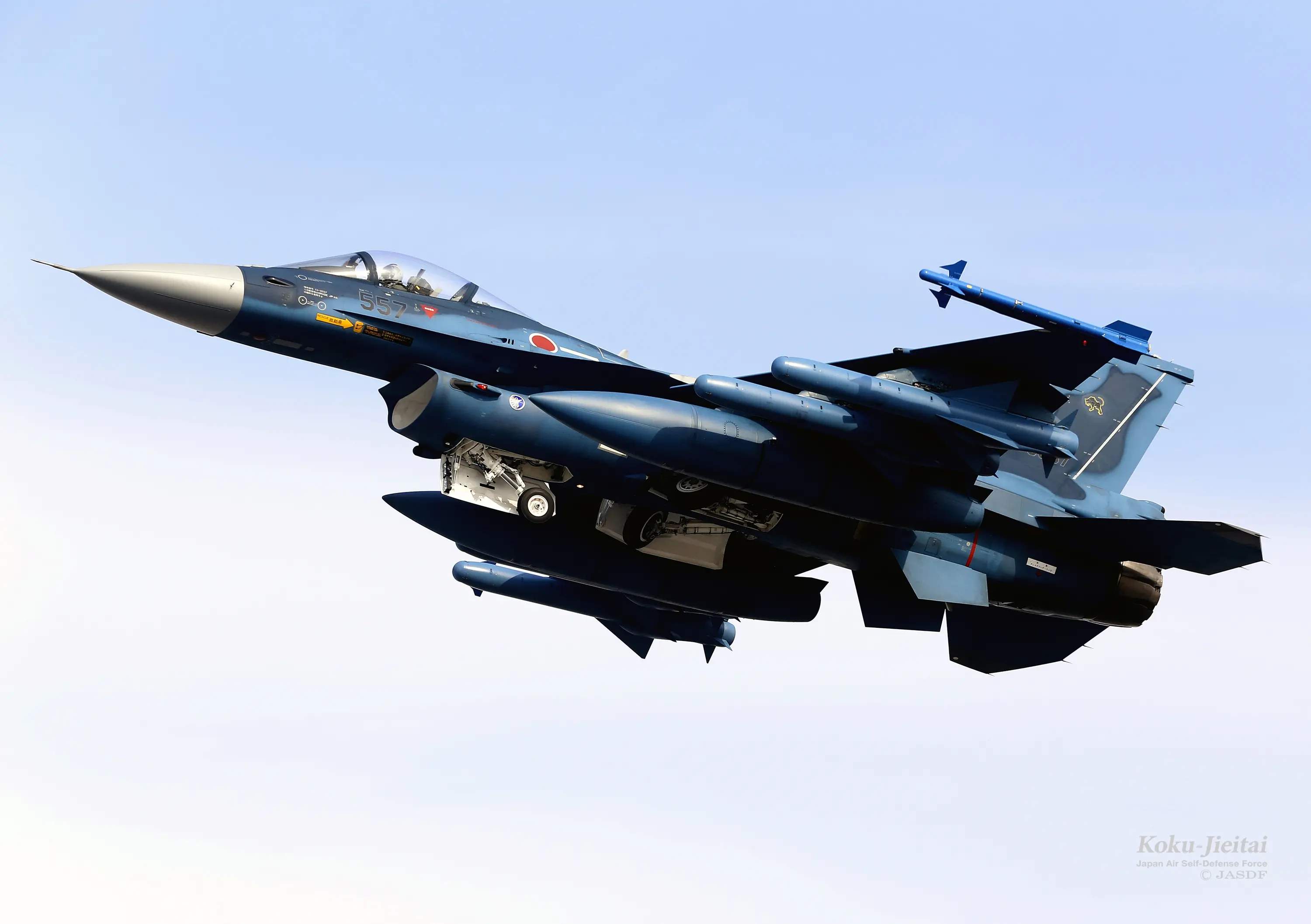
Something new will happen in the skies over Rajasthan next month. For the first time, fighter jets of the Japan Air Self-Defense Force, known as the JASDF, will fly to India to train with the Indian Air Force. It is a clear sign that India-Japan friendship is growing, and that both now trust each other deeply in defence.
On August 25, the JASDF announced this joint exercise, named Veer Guardian 26. The exercise will be held from September 9 to 21 at Jodhpur Air Force Station in Rajasthan, in north-western India, and in the airspace nearby. Counting the journey to India and the return flight, the Japanese team will be away from September 1 to 30.
Japan will send three F-2A fighter jets from its 8th Air Wing, based at Tsuiki Air Base in Fukuoka Prefecture in south-western Japan. Around 110 personnel will travel with them. The training will mainly focus on air combat between fighter aircraft, which simply means practice dogfights in the sky, where pilots learn how the other side flies.
ALSO READ: Leasing MQ-9s again: India's smart move
A JASDF spokesperson told The Diplomat that Veer Guardian 26 will be the second joint fighter exercise between the two countries. The first one, Veer Guardian 23, was held in Japan in January 2023. That time, the Indian Air Force flew to Japan with four Su-30MKI fighter jets, two C-17 transport aircraft, one IL-78 mid-air refuelling aircraft and about 150 personnel. Japan joined with four F-2 and four F-15 fighters. Now, three years later, the roles have been reversed.
The journey itself is an important part. The three F-2A jets will fly from Tsuiki Air Base to Jodhpur, halting at Naha Air Base in Okinawa and at a base in Thailand. The United States Air Force will help along the way, including with mid-air refuelling. The JASDF has not said which Thai base will be used, or which American tanker will refuel the jets.
Jodhpur is about 5,600 kilometres from Tsuiki in a straight line. That distance shows how hard it is to send jets so far from home. In Tokyo on August 25, JASDF Chief of Staff General Morita Takehiro explained why such a deployment matters.
He said that sending fighter jets to faraway places is not only about flying long distances. It also needs proper maintenance, smooth logistics and the movement of personnel, with every part planned and carried out in an organised way. It is like a family shifting house across countries, except that the luggage includes spare parts, tools and fuel. Such experience, he said, helps a unit carry out its missions more successfully.
For such long missions, the JASDF must also be ready for sudden problems like bad weather or technical faults. Morita said lessons from earlier overseas missions are being used. Backup aircraft are being arranged, refuelling support improved, halting points checked, and close coordination maintained with all countries involved.
ALSO READ: Decoding why India is selling space technology too cheaply
This exercise comes at a time when both nations are worried about China. Japan is troubled by Chinese military activity in the East China Sea and near its south-western islands, and by China's People's Liberation Army now operating beyond the First Island Chain, the chain of islands close to China's coast, deeper into the Western Pacific. India, on its side, has a long-running border dispute with China in the Himalayan region.
Now, about the star of this deployment, the Mitsubishi F-2A. Nicknamed "Viper Zero", it is a multirole fighter built jointly by Lockheed Martin and Mitsubishi Heavy Industries. It was developed in the late 1980s and 1990s from the American F-16 Fighting Falcon, with Japan funding sixty percent of the cost. The nickname comes from its likeness to the F-16 Viper and the old Mitsubishi Zero. In all, 94 were built between 2000 and 2011.
What makes this jet special? Its wings are 25 percent larger than a normal F-16 wing, giving it more lift, more fuel and more storage space. These wings use light but strong carbon fibre. It carries the Japanese-made J/APG-1, later J/APG-2, AESA radar, a modern radar that can see many targets at once, and one of the world's first in service. It has 11 hardpoints, points under the wings and body where missiles or bombs can be hung, and carries heavy anti-ship missiles along with air-to-air weapons.
ALSO READ: Decoding India's Agni missile arsenal and how it boosts strategic defence
The F-2A runs on a single General Electric F110-GE-129 turbofan engine, built in Japan by IHI, producing about 29,000 pounds of thrust with afterburner. It can touch Mach 2.0 at high altitude and belongs to the 4.5 generation, a modern jet but not the newest stealth type. Its main job is maritime strike and air defence, protecting Japan's sea lanes.
When these jets land at Jodhpur in September, it will be more than an exercise. It will be a picture of two Asian democracies quietly deciding to stand together.
The author is a Defence, Aerospace & Geopolitical Analyst