Inside Qantas airline's ambitious Project Sunrise
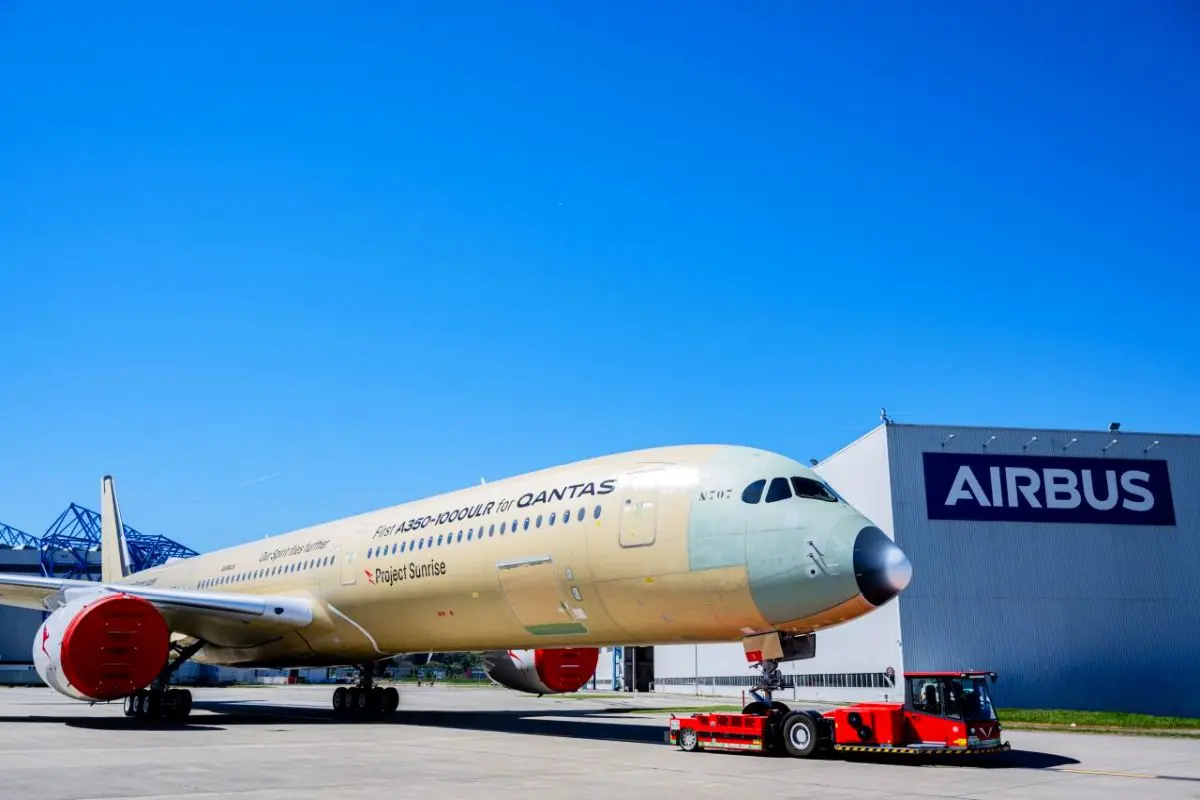
Imagine boarding a flight in Australia and stepping off directly in London or New York without any stop in between. That's exactly what Qantas is preparing to offer with its new Airbus A350-1000ULR under its ambitious Project Sunrise.
The airline's first aircraft has already been spotted at Toulouse-Blagnac Airport in France, getting ready for testing. Once it enters service, passengers will be able to fly directly from Sydney Kingsford Smith Airport to London Heathrow Airport or John F Kennedy International Airport, journeys that could last up to 22 hours. This is not just a longer flight, but a completely new way of travelling.
Today, most ultra-long journeys from Australia involve at least one stop often at Auckland Airport or in the Middle East. These stopovers may break the journey, but they also add travel time, create layover stress, and increase the risk of missed connections.
With Project Sunrise, Qantas aims to eliminate these challenges entirely. For passengers, this means no rushing between flights, no long waits at airports, and a much smoother, more predictable journey. In simple terms, you board once, settle in, and arrive at your destination without interruptions.
But can you really stay comfortable for 20+ hours?
That's the biggest concern and one Qantas has carefully addressed. Instead of simply extending flight time, the airline has redesigned the onboard experience to prioritise passenger comfort and health.
It has collaborated with experts like Caon Design Office, chef Neil Perry, and the Charles Perkins Centre to create a cabin environment that feels less tiring and more supportive for long journeys.
A special 'Wellbeing Zone' on board
One of the most unique features of the aircraft is the dedicated Wellbeing Zone. This is a specially designed area where passengers can stand, stretch, move around, and even do light exercises during the flight.
On a journey that lasts over 20 hours, sitting continuously can be uncomfortable and unhealthy, so this space allows travellers to stay active. It also offers healthy snacks and refreshments, helping passengers maintain energy and hydration throughout the flight.
Lighting that helps beat jet lag
Jet lag is one of the biggest drawbacks of long-distance travel, but Qantas is introducing smart solutions to tackle it. The aircraft will feature specially designed lighting systems with modes such as "Sunrise", "Sunset", and "Awake".
These lighting patterns are carefully planned to align with the body's natural clock, helping passengers gradually adjust to a new time zone. The goal is simple, arrive at your destination feeling more refreshed and less disoriented.
More space, more comfort
The aircraft will carry around 238 passengers, but what stands out is how the space is allocated. More than 40% of the seats are dedicated to premium cabins, including First Class, Business Class, and Premium Economy. This means fewer passengers overall and more personal space.
Even in Economy, the focus remains on improved seating comfort and better design for long-duration travel. Passengers across all cabins will also benefit from modern features such as high-speed Wi-Fi, Bluetooth connectivity for personal devices, and advanced in-flight entertainment systems.
How long will these flights take?
These flights will be among the longest in the world, with journeys from Sydney to London expected to take around 20 to 22 hours, and Sydney to New York taking up to 22 hours.
The aircraft is specifically built for such extreme distances, powered by advanced engines that allow it to travel nearly 10,000 nautical miles without stopping.
Despite the duration, the focus remains on making the journey as comfortable and manageable as possible for passengers.
Qantas is expected to receive its first A350-1000ULR by the end of 2026. After completing testing and necessary approvals, these ultra-long-haul flights will begin, starting with routes to London and New York.
Over time, the airline may expand to additional destinations as more aircraft join the fleet and the concept proves successful.
For decades, long-haul travel has meant breaking journeys into multiple segments. Project Sunrise is set to change that completely. For passengers, this shift is not just about flying farther, but about saving time, reducing stress, and enjoying a more seamless travel experience.
In many ways, this aircraft represents the future of aviation where long-distance travel becomes simpler, more comfortable, and far more passenger-friendly. Soon, flying halfway across the world in one go may feel just as routine as a short domestic trip.