Nuclear handshake: How Russian expertise is fortifying India's energy security at Kudankulam
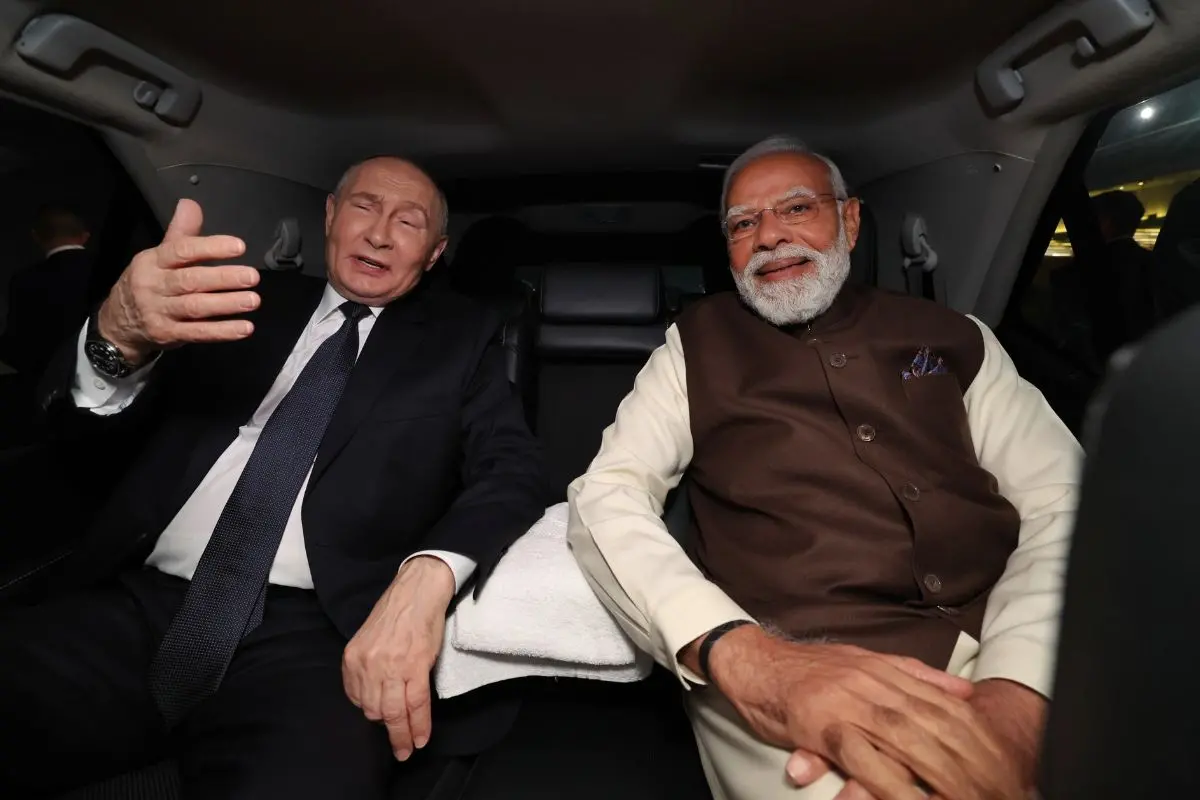
When President Vladimir Putin landed in New Delhi this week, on December 4th and 5th, for his two-day visit, something remarkable happened thousands of kilometers away in Tamil Nadu. A Russian cargo plane touched down carrying the first batch of nuclear fuel for Kudankulam's third reactor. The timing wasn't accidental—it was a statement about friendship, trust, and how nations help each other grow stronger.
Think about your home for a moment. Every fan that spins, every light that glows, every phone that charges needs electricity. Now multiply that by millions of homes, thousands of factories, and hundreds of hospitals across India. Where does all this power come from? A significant part of it comes from nuclear plants like Kudankulam, and Russia has been India's most reliable partner in making this possible.
The nuclear fuel that arrived isn't just any cargo. Inside those special containers are uranium pellets—small ceramic tablets that look innocent but pack incredible energy. When these pellets undergo nuclear fission in a reactor, they split and release tremendous heat, which eventually becomes the electricity powering our lives. It's almost magical how something so small can light up entire cities.
What makes this delivery special is what it represents. Russia's state-owned nuclear corporation, Rosatom, isn't just selling fuel to India. They're committing to a lifelong partnership. This 2024 contract promises to supply fuel for the third and fourth reactors at Kudankulam for their entire operational lifetime—we're talking about decades of reliable energy. Seven flights from Russia will bring the complete reactor core, which is essentially the heart of the nuclear plant, containing all the fuel bundles needed to keep it beating.
Let's appreciate the scale here. Kudankulam will eventually have six massive VVER-1000 reactors, producing 6,000 megawatts of power. That's enough electricity to power roughly 6 million homes continuously. The first two reactors have been running since 2013 and 2016, silently contributing to India's energy security. While we go about our daily lives, these reactors work around the clock, never complaining, never stopping, just providing clean, reliable power.
But Russia hasn't just been supplying fuel and walking away. Their engineers have been working shoulder-to-shoulder with Indian experts to make these reactors even better. Since 2022, Kudankulam has been using advanced TVS-2M nuclear fuel. This isn't just a technical upgrade—it's a game-changer. The new fuel has a stronger design, better filters to prevent debris damage, and more uranium packed inside. The real benefit? The reactors now run for 18 months straight before needing refuelling, compared to just 12 months earlier.
Imagine if your phone battery lasted 50% longer on a single charge—that's roughly what this improvement means for the power plant. Longer cycles mean fewer shutdowns, less maintenance time, and more consistent electricity for millions of people. It also means lower costs because refuelling a nuclear reactor is an incredibly complex operation involving specialized robots, deep water pools for cooling old fuel, and meticulous safety checks.
Units 3 and 4 will be the first VVER-1000 reactors globally to start with this 18-month cycle from day one, thanks to the close cooperation between Russian and Indian partners. This shows something important: Russia isn't treating India as just another customer. They're sharing their most advanced technology, the kind they use at home and have tested in China. That's what real strategic partnerships look like.
Critics often talk about international relations in terms of conflicts and competition, but the Kudankulam story tells a different tale. While some countries impose restrictions and create barriers, Russia has consistently stood by India's energy ambitions. They've provided not just hardware and fuel, but knowledge, engineering support, and a genuine commitment to India's development. When Western suppliers hesitated due to liability concerns after previous nuclear accidents, Russia stepped forward.
This partnership goes beyond business. It's about energy security in an uncertain world. As India grows economically and its power demand skyrockets, having reliable partners becomes crucial. Russia has proven itself time and again. The synchronization of the fuel delivery with Putin's visit wasn't just coincidence—it was a carefully orchestrated reminder that when India needs support for its core infrastructure, Russia delivers, literally and figuratively.
As the third reactor prepares for its first fuel loading, and with four more under construction, Kudankulam represents hope—hope for cleaner energy, hope for energy independence, and hope that international friendships can be built on mutual respect and genuine cooperation. Every time we switch on a light or charge our devices, perhaps we should remember the complex web of international partnerships that makes our modern life possible.