Are India's Rafale fighters missing their punch?
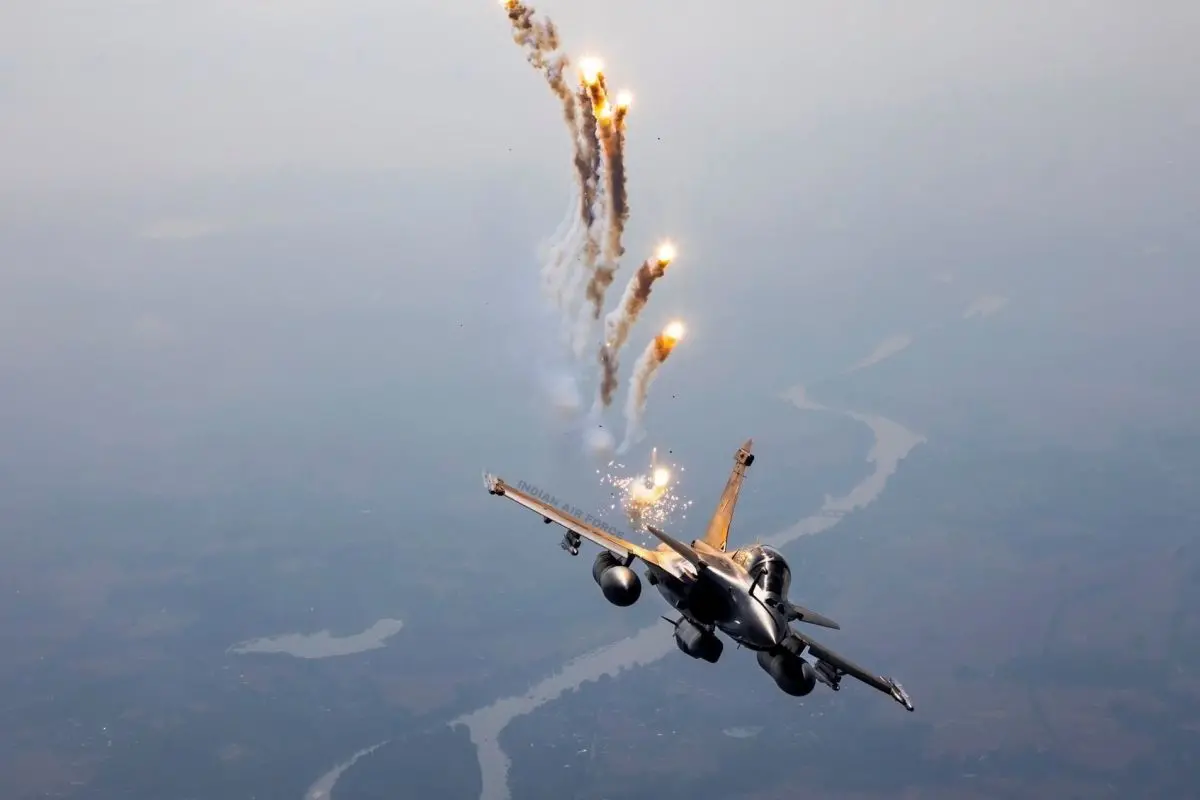
Recent news reports and expert discussions about India's air power have started important conversations in defence circles. Even though Indian authorities have not officially confirmed all the details, some international sources -- including those mentioning French intelligence -- have raised questions about how well India's fighter jets are equipped during missions.
Some of these reports, referring to 'Operation Sindoor', claim that Indian Rafale F3R jets may not have carried the Meteor missile -- India's most advanced air-to-air weapon.
If these claims are correct, it would mean India's aircraft faced a disadvantage -- especially because Pakistan is said to have used the PL-15E missile, which can hit targets up to about 145 kilometers away.
India's 2016 Rafale deal was worth €7.8 billion and included 250 Meteor missiles, along with custom upgrades known as India-Specific Enhancements (ISEs).
The Meteor missile was seen as a game-changer. It uses a special engine called a ramjet and has a large 'no-escape zone', making it very hard for enemy aircraft to dodge. Its maker, MBDA, has confirmed the missile works well with Rafale jets in many countries.
However, if the Meteor was not used in a key mission, it raises concerns. Even if the reports are not fully confirmed, they point to a larger issue -- India may be facing delays in turning its advanced purchases into fully combat-ready systems.
One reason for this could be India's approach to adding many special features. For example, India's Rafales have custom electronics, Israeli helmet sights, and changes to fly better in high-altitude areas.
While these features are useful, they also make it harder to connect new weapons like the Meteor. The missile must work smoothly with India's custom software, which takes time for testing and certification.
This is not a new problem. In the past, MBDA reportedly said no to linking its missiles with Russian or Israeli radar systems. This made it hard for India to use the missiles on planes like the Su-30MKI or Tejas Mk1.
India's strategy of buying from many different countries -- Russia, France, Israel -- is meant to stay independent. But it also makes it harder to get all the parts to work well together.
This can be risky in real combat. If the Rafales only had MICA missiles, which work at shorter distances (about 60 to 80 kilometers), they may not have matched the reach of enemy missiles.
So, even though India upgraded its jets, the full benefit may not have been available when it mattered most.
This situation points to three key problems:
1. Timeline Delays: India approved funds for Meteor integration in 2014. The Rafale F3R version was ready by 2018. But even by 2025, reports said full use of the missile was still not in place. This shows poor planning and slow execution.
2. Integration Challenges: Adding many custom upgrades to fighter jets creates more technical and paperwork hurdles. This can slow down progress and make future upgrades even harder.
3. Procurement Approach: India often buys aircraft first and then starts adding changes. This causes delays. Other countries often buy ready-to-use systems to avoid such issues.
The Indian Air Force seems to be working on solutions. It is now in talks with MBDA to fit the Meteor on India-made jets like the Tejas Mk1A. But these steps also face delays, like those seen in the delivery schedule of Tejas Mk1A.
So, bigger changes are needed.
India should reduce the number of custom features it asks for. Only the most essential ones should be included at the time of purchase. Planning for weapon integration -- like the Meteor -- must be done from the beginning, not later.
Using global standard designs wherever possible can help speed up deployment. India's homegrown missile Astra Mk3 looks promising, but it will take a few more years to be ready. That should not stop the use of already purchased weapons.
In the bigger picture, the debate around 'Operation Sindoor' is not about blaming any foreign company or Indian agency. It shows a deeper issue -- India's aim to get top-class systems must be matched by the ability to use them quickly.
One more layer to this issue is how different suppliers are treated. Concerns about foreign weapons like the Meteor are often handled quietly, while public criticism is more common when Indian firms like HAL face delays.
The Indian Air Force is right to expect timely delivery and good performance from all vendors. But this difference in how domestic and foreign companies are judged shows the complex balance between buying the best, staying independent, and being ready for battle.
As one retired Air Force officer said, the exact details of any aircraft loss are still not public. But the larger issue is already clear: India must close the gap between buying advanced systems and using them in real missions.
The real solution is not to choose between speed and high tech. India needs a system that can deliver both – on time, and without problems.
Until that happens, even the best weapons in India's hands may not be fully useful when needed the most.
The author is a defence, aerospace & geopolitical analyst.