India’s new ‘Ghost’ missile can strike 1,500 km away; Here’s why it has rivals worried
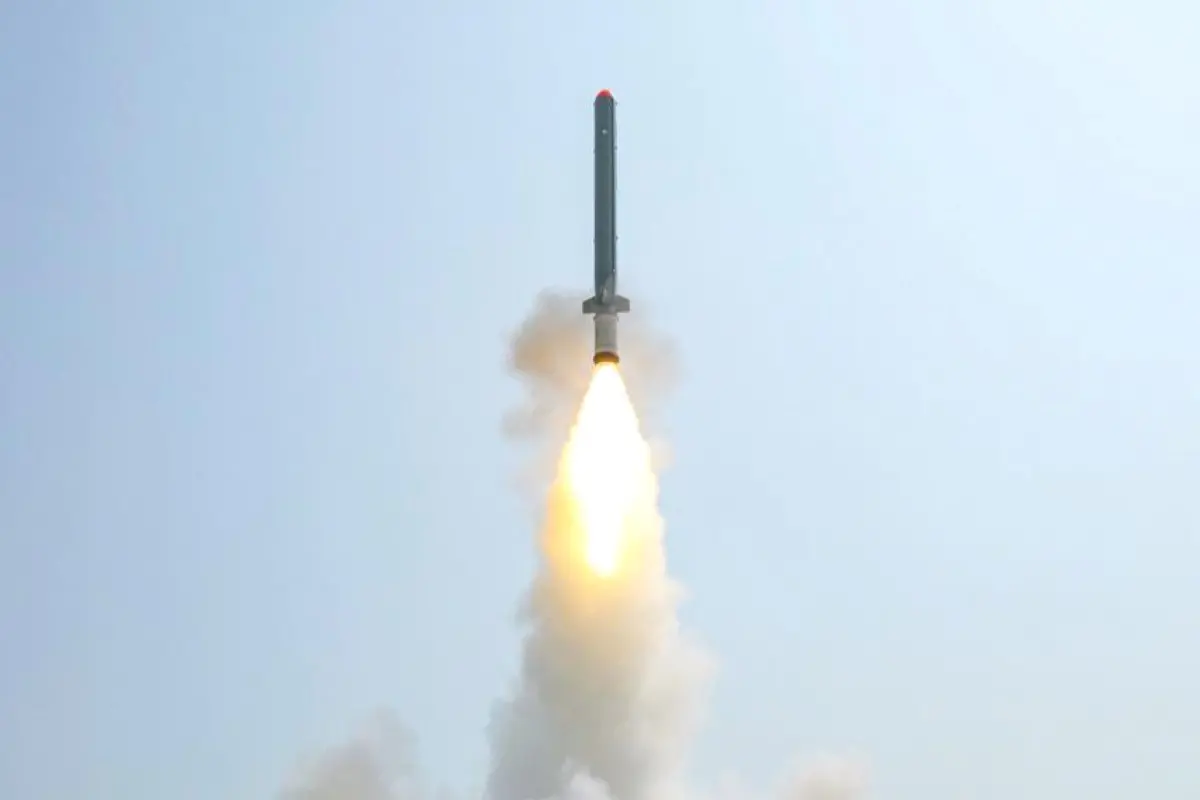
Something big and beautiful happened on the 15th of June, and every Indian heart should feel proud about it. Off the coast of Odisha, at the Dr. APJ Abdul Kalam Island, our scientists successfully test-fired a brand-new weapon called the Long Range Land Attack Cruise Missile. In simple words, this is a flying machine that carries a powerful warhead and can hit an enemy target sitting 1,500 kilometres away. To understand the meaning of this number, just remember that almost all of Pakistan now comes within India's reach, and even many of China's forward army bases in Tibet are no longer safe.
Let us understand what a cruise missile actually is. Think of it like a very smart, very fast aeroplane without a pilot. Once you fire it, it flies on its own, following a planned path, and finally crashes into the exact target you have chosen. Our new missile flies at subsonic speed, which means slightly slower than the speed of sound, but do not let that fool you. Slow does not mean weak here. It is slow, silent, and deadly.
This missile has already earned a nickname, and a very stylish one: "The Ghost." Why ghost? Because it is almost impossible to catch. It flies just 100 metres above the ground, hugging the land and skimming over the sea like it is hiding. On top of that, it does not travel in a straight line. It moves in a zigzag pattern, confusing enemy radars. So by the time the enemy realises something is coming, it is already too late. This terrain-hugging quality is so good that the missile has even passed trials in the high mountains of the Himalayas, flying smoothly through difficult mountainous areas.
The brain of this missile is also fully Indian. To find its way, it uses pre-programmed mathematical points in the sky, mapped by our very own Indian satellites. It does not depend on any foreign system. The heart of the missile is the Manik engine, a small turbofan engine made in our own country. This engine is so capable that the missile can actually circle and hover over its target before diving in for the final strike. Imagine that patience and precision in a machine.
What makes this weapon even more useful is its flexibility. It can be fired from trucks moving on roads, from warships sailing in the sea, and even from submarines hiding deep under water. Our scientists at DRDO are also building a version that will be launched from fighter jets in the sky. And it can carry either a normal warhead or a nuclear one, depending on the situation. Truly, this is a complete package.
But friends, this success did not come easily. Behind this proud moment lies almost ten years of hard work, failures, and quiet patience. The missile was developed under the Nirbhay program. During this long journey, it faced many engine failures and software problems. By the year 2020, Western media had already written it off as a failure and stopped talking about it. But our DRDO scientists did not give up. They kept working silently, fixing every problem, and today they have answered all those critics in the best possible way, with a successful flight.
Now the whole world is calling this missile "India's Tomahawk," comparing it with the famous American Tomahawk missile. But honestly, our missile is even better in many ways. The Tomahawk was first made way back in 1983 and has been upgraded fifty times, yet its body design is old and easier to detect. Our missile has a more modern body, a better navigation system, and a special seeker that cannot be easily jammed by the enemy.
There is one more very important point, and this is where India truly shines. The Tomahawk is shared with American allies like the UK, Japan, Australia, and the Netherlands. But these countries must first take permission from the White House before firing it. They are dependent on America's mood. Our missile is completely made in India, so we have full control. We decide how, where, and when to use it. No permission, no dependence, no foreign pressure.
The recent war in Iran has reminded the world how important long-range missiles have become in modern times. With this powerful weapon now ready, India does not need to depend on foreign countries for its safety. The message is loud and clear. A new and confident India is rising, building its own strength, one mighty missile at a time. Jai Hind.
The author is a defence, aerospace & geopolitical analyst.