DRDO strikes triple blow: India’s sky shield becomes reality
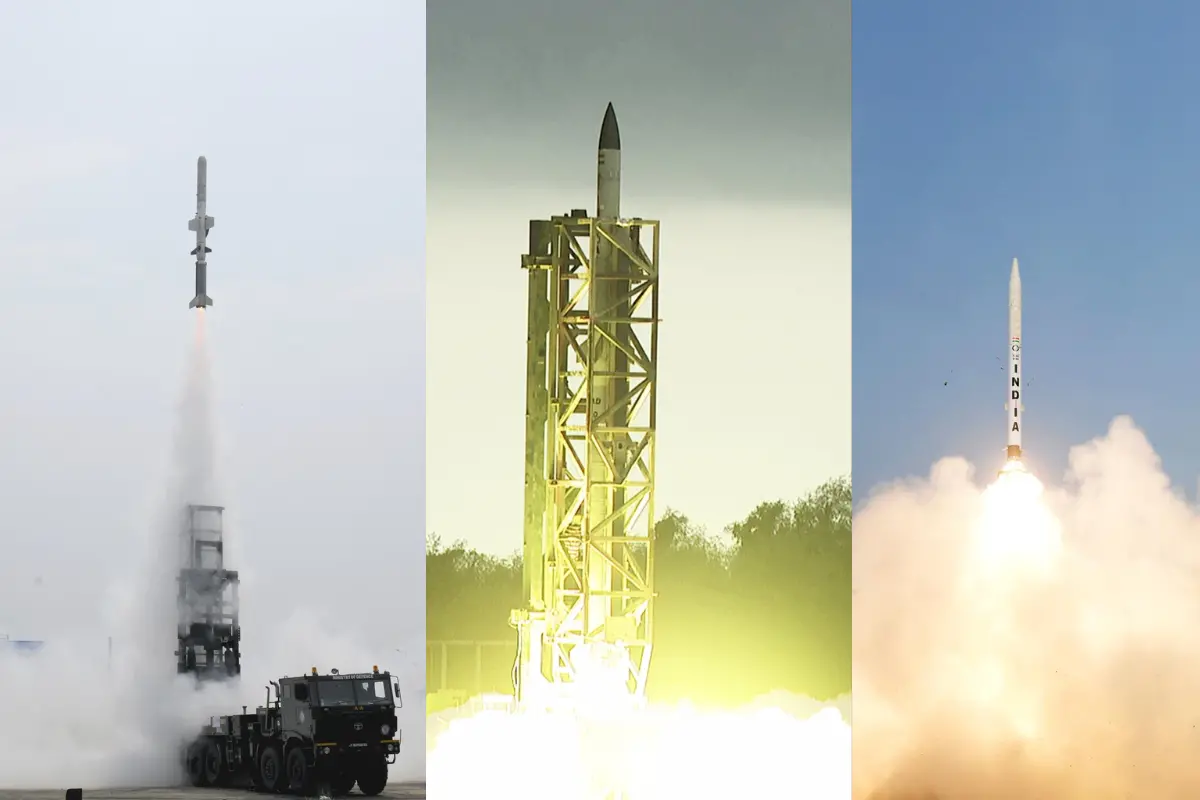
India has taken a big leap towards building its very own "Iron Dome" style air defence system. On June 10 and 11, the Defence Research and Development Organisation (DRDO) carried out three missile tests one after another, and all of them were successful. These tests proved one simple but powerful thing: India is now strong enough to shoot down enemy missiles flying through the sky and also strike enemy warships hiding deep in the sea.
Let us understand what happened in easy words.
Two of these tests were of advanced interceptor missiles, fired from the Integrated Test Range at Chandipur in Odisha. An interceptor missile is like a guard standing in the sky. Its only job is to find an incoming enemy missile, chase it, and destroy it in mid-air before it can fall on a city, an army base, or any important target. During the trials, these guard missiles detected their targets, locked on to them, and smashed them perfectly.
What makes these missiles special is their reach. They are designed to take down enemy ballistic missiles coming from very long distances, in the 2,000 km to 5,000 km class. Even better, they can hit threats at two different levels. The first is inside our atmosphere, called endo-atmospheric, which means up to about 100 km above the sea. The second is outside the atmosphere, in near space, called exo-atmospheric, which means above 100 km. So whether the enemy missile is still high up in space or coming down fast through the air, India now has an answer at both stages.
ALSO READ: India's Rafale armada turns deadly: MICA NG missile ignites new era of air dominance
The third test was of a completely new weapon, the Naval Anti-Ship Missile–Medium Range, known as NASM-MR. This was its first-ever flight test, which makes it an important milestone. This missile is made to hunt and destroy enemy warships far out at sea. It was launched from a naval platform and showed three smart skills. One, it flew very accurately towards its target. Two, it skimmed very low over the water surface so that enemy radars could not catch it easily, almost like flying just above the waves. Three, it hit its sea target with great precision. The NASM-MR is a subsonic, sea-skimming missile with a range of around 300 km, and it can be fired from warships as well as fighter jets like the MiG-29K.
Together, these three tests have shown that India now has a multi-layered Ballistic Missile Defence system, also called BMD. The word "multi-layered" simply means many levels of protection. If one layer misses the enemy missile, the next layer is ready to catch it. This is exactly how a strong shield should work.
But what is a Ballistic Missile Defence system in the first place? Think of it as a protective umbrella made up of three main parts working as a team. First, powerful radars that act like eyes in the sky, spotting an enemy missile the moment it is fired. Second, control centres that act like the brain, deciding when and how to respond. Third, interceptor missiles that act like the hands, going up and physically destroying the threat. All three talk to each other in seconds, because in war, every second counts.
ALSO READ: Vajra strikes! How India’s homemade artillery beast is rewriting battlefield rules
Such systems are a vital part of any country's safety. They guard against missile attacks by catching and destroying threats either inside the atmosphere or out in space, well before those threats can reach our soil. Without this umbrella, even one enemy missile can cause huge damage.
Here is what makes this achievement truly proud. Only a handful of countries in the world, like the United States, Russia and Israel, along with military groups such as NATO, have built and deployed such advanced missile defence systems. With these tests, India is firmly placing itself in that elite club, and the bigger point is that this technology is being developed at home, by our own scientists, under the spirit of Atmanirbhar Bharat, or self-reliant India.
The Ministry of Defence has confirmed the success of the trials, and Defence Minister Rajnath Singh congratulated the DRDO scientists, engineers and industry partners whose hard work made it possible.
In simple terms, India is no longer only depending on others for its safety in the sky and at sea. From space to the waves, the country is quietly and steadily building a shield of its own. These three tests are not just rocket launches. They are a clear signal that India's defence has become smarter, stronger and more self-reliant than ever before.
The author is a defence, aerospace & geopolitical analyst.