How a belt and blouse can upgrade your Navratri saree look: Styling tips for Saptami, Ashtami & Navami
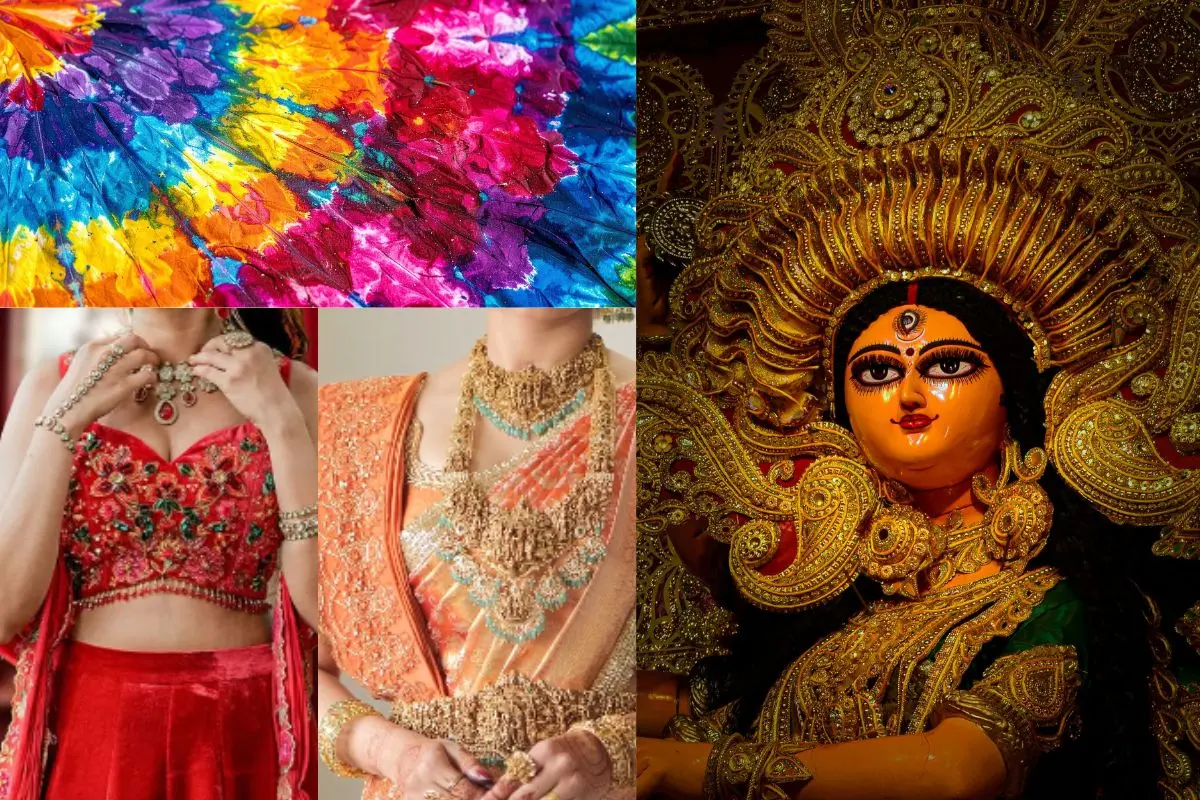
If there’s one festival in India where fashion and faith truly meet, it’s Navratri.
The air is alive with dhol beats, homes glow with lamps, and every street corner turns into a garba floor in swirls of ghagra cholis and colourful dupattas. But here’s the secret—none of it is random. Every shade, every drape, every accessory often carries the energy of the Goddess being worshipped that day.
As Navratri reaches its climax—the three most powerful days of Maha Saptami, Maha Ashtami and Maha Navami—the atmosphere grows electric. These nights are believed to be when the Goddess’s energy is at its strongest, when prayers reach her directly, and when blessings flow most freely. It’s also when fashion takes on a spiritual role, because the colours of these days—burnt orange, peacock green and pink- aren’t just fashion picks. They are moods, energies, even prayers in fabric.
Pandit Chandrabhan Pandey, priest at Shiv Kali Mandir, puts it beautifully, “On Saptami, Ashtami and Navami, these are the days of power. Whatever good you do—chanting, offerings, even wearing her colour—is accepted directly by the Goddess.”
And that’s where styling steps in.
Joel Jacob Mathew, entrepreneur and the man behind Mloft, where trending looks of stars like Ahana Krishna, Diya Krishna and Aarti Podi were created. His philosophy? Festive fashion doesn’t mean drowning in sequins. “It’s not about piling on bling...It’s about smart styling. Making what you already have feel new. That’s sustainable, stylish, and very Navratri.”
So, how do you turn Saptami, Ashtami and Navami into your most fashionable, yet meaningful, festive looks? Joel has the answers.
Maha Saptami: The Burnt Orange Glow
Saptami celebrates Goddess Kaalratri, Durga’s fiercest form, who destroys darkness and fear. Her shade is burnt orange—fiery yet grounding.
“Orange is bold, so balance it,” Joel suggests. “Think maroon accents, but keep them small—a blouse, a dupatta border, or even jewellery stones. Structure is your friend. A belt over a saree, a neatly tailored blouse—these tiny tweaks transform the look.”
If you want to stand out from the crowd of florals, Joel recommends dip-dye, shibori or even a simple plain orange saree with a printed jacket. “Even a ₹500 saree can look designer with the right full-sleeved blouse and a belt,” he said.
Maha Ashtami: Regal in Peacock Green & Blue
On Ashtami, the focus shifts to Goddess Mahagauri, who symbolises purity and renewal. The shades? Peacock green and blue—rich, elegant, timeless.
“These colours already carry royalty,” Joel explains. “So keep it classic. Use green as your base, add blue as highlights—maybe in the dupatta or layered jewellery. Antique gold ties everything together without overpowering.”
His pro hack: layering sarees. “Drape two sarees together to create a lehenga effect without cutting the fabric. It’s dramatic and instantly festive.”
Maha Navami: The Power of Pink
Navami honours Goddess Siddhidatri, who blesses with wisdom and clarity. Her shade, pink, is both playful and powerful.
“Pink is incredibly versatile,” Joel says. “It works with ivory, yellow, gold. A yellow saree with a hot pink border? Festive without being loud. Want something youthful? Pair a pink blouse with a plain drape, or throw on a floral jacket.”
His trick for making pink feel fresh: skip the heavy chokers and try a handworked belt. “It gives definition without the weight. And it’s different.”
When celebrities took cues from the goddess
Joel points out how goddess-inspired colours have often shaped celebrity looks too. “Arati Podi’s Durga-inspired red drape was regal, she wanted it that way. Diya Krishna’s Lakshmi look was in Kanjivaram, but again, we tweaked the colour palette to keep it rooted yet refreshing. People notice when you play against expectations—that’s when a look becomes iconic.”
When fabric meets faith, rituals complete the circle
While wardrobes get their festive makeover, rituals remain the heart of these nights. Devotees perform Ghatasthapana, also called Kalash Sthapana, and recite verses from the Durga Saptashati. Some pray with desires (Sakam Bhakti), others with selfless devotion (Niskam Bhakti), says Pandit Chandrabhan Pandey.
"Ghatasthapana symbolises our wishes being placed at the feet of the Mother. It’s part of Sakam Bhakti — devotion with desires. But even that, when done with faith, is pure," adds Pandit Chandrabhan Pandey.
He also adds how these days are a free pass to do any positive deed or perform any spiritual ritual. "In fact, anything done with a pure heart during this period is said to reach the divine directly."
In the end, Navratri is not just about clothes—it’s about energy.
When you wear the Goddess’s colours, you carry a piece of her strength. Even a simple cotton saree in the right shade can feel powerful. Fashion isn’t separate from faith. It’s how you live it.