F-35, Tejas and Rafale fly together in Tarang Shakti
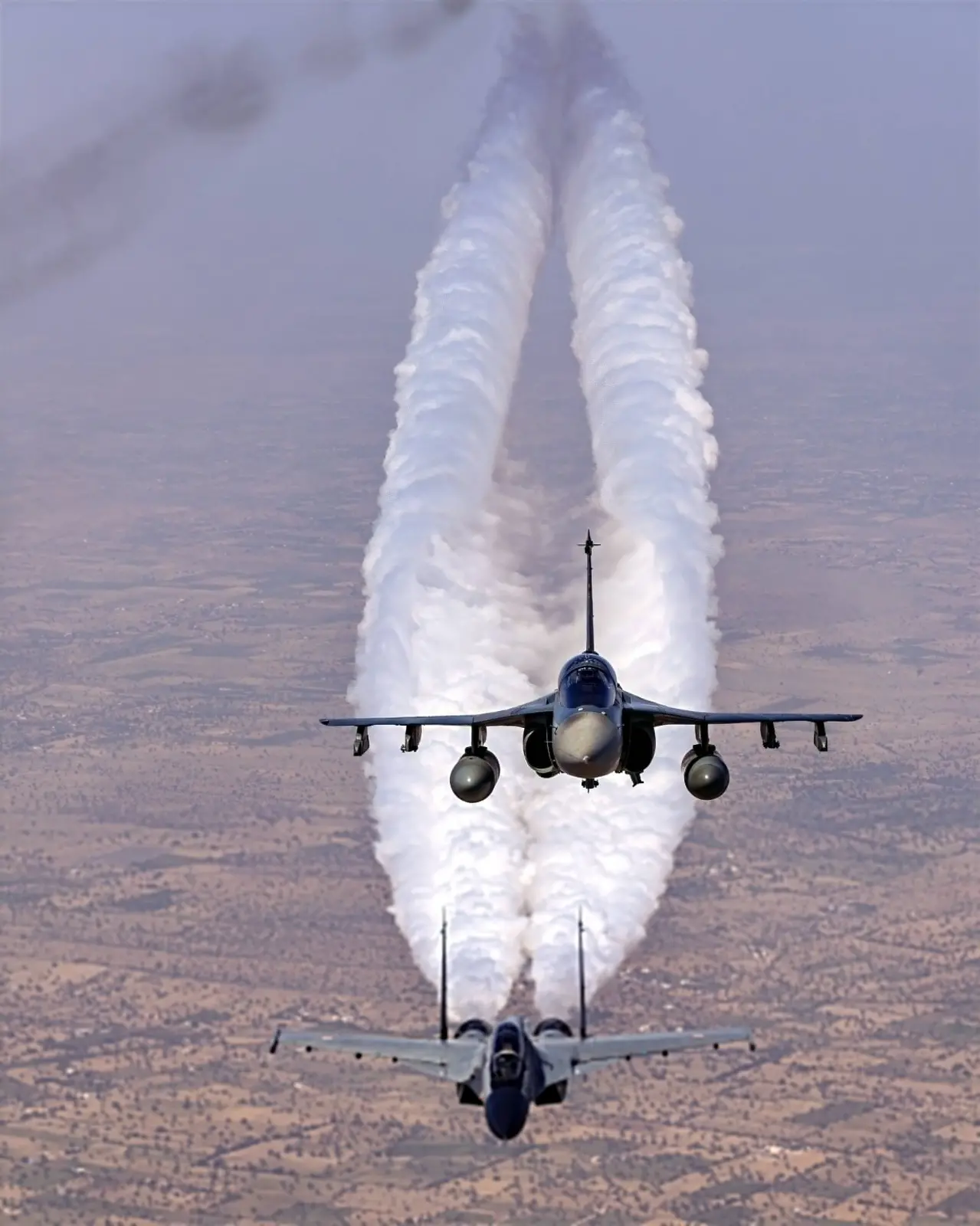
The Indian Air Force has shared a new video from Exercise Tarang Shakti 2026, showing fighter jets and other military aircraft from India and participating countries flying together in coordinated formations over Jodhpur.
One of the most striking moments in the video is the US Air Force’s F-35A Lightning II flying alongside India’s indigenous Light Combat Aircraft (LCA) Tejas. The footage also shows the Indian Air Force’s Su-30MKI and MiG-29 fighters, as well as the C-130J transport aircraft.
The video gives a glimpse of the scale and diversity of the multinational exercise, which is bringing together aircraft, aircrew, technicians and support personnel from several countries.
The IAF described the formation as a display of “trust, precision and comradeship”, using the theme of the exercise “Power in Partnership” to underline the importance of cooperation between participating air forces.
F-35 flies alongside Tejas
The appearance of the F-35A alongside Tejas is particularly significant because the US fifth-generation fighter is participating in an Indian air exercise for the first time.
The F-35 is a stealth fighter designed around advanced sensors, networking and low-observable characteristics. Tejas, meanwhile, is India’s indigenously developed light combat aircraft and forms an important part of the country’s effort to build its own aerospace and defence capabilities.
The two aircraft represent very different approaches to fighter development, but their participation in the same multinational exercise provides an opportunity for aircrew from different countries to operate together and understand different aircraft, procedures and operational practices.
The latest video also captures other Indian platforms, including the Su-30MKI and MiG-29, highlighting the variety of aircraft operating together during the exercise.
More than 80 aircraft take part
Tarang Shakti 2026 is being conducted at Air Force Station Jodhpur from September 26 to October 12. Seven foreign countries, Australia, the United States, the United Arab Emirates, France, Germany, Sri Lanka and Bangladesh are participating alongside the Indian Air Force. Several other countries are also participating as observers.
ALSO READ: Nagpur, C-390 and the Make in India test, what is at stake in India's military transport contest?
More than 80 aircraft and around 1,500 personnel, including aircrew, technicians and ground staff, are taking part in the exercise, according to officials cited in reports.
The foreign aircraft include the US F-35 and F-16, French Rafale and A400M, Airbus A330 Multi Role Tanker Transport aircraft and other transport and refuelling platforms. The exercise brings these aircraft together with the IAF’s Rafale, Su-30MKI, Mirage 2000, Jaguar, MiG-29 and Tejas fighters, as well as transport, helicopter and tanker assets.
The exercise covers a range of missions, including visual-range and beyond-visual-range combat training, air-to-air refuelling, air mobility and combat search and rescue.
The objective is not simply to fly different aircraft together. The participating forces are also exchanging operational experience and working on how their aircraft, personnel and procedures can operate together more effectively. The Ministry of Defence has said that professional interaction between aircrew, mission planners and operational support personnel is a key part of the exercise.
France brings Rafale experience to Jodhpur
France is also playing an important role in the exercise through its participation in Mission PEGASE 26.
The French contingent taking part in Tarang Shakti includes Rafale fighters, A330 MRTT tanker aircraft and A400M transport aircraft. The deployment forms part of France’s wider long-range PEGASE 26 mission, which is travelling through the Arctic, Indo-Pacific and Middle East regions between September and October.
ALSO READ: Should planes have cockpit cameras? The flydubai incident revives the debate
French Air Defence Deputy Commander Julien Sabéné described Tarang Shakti as a major highlight of the PEGASE 26 deployment. He said the exercise provided an opportunity for Indian and French air forces to exchange operational lessons, particularly because both countries operate the Rafale and have experience using the aircraft in real-world operations.
The presence of Rafale aircraft on both sides also creates an opportunity for the two air forces to compare operational practices and learn from each other's experience.
France and India are also conducting air-to-air refuelling activities during the exercise. Sabéné highlighted the ability of Indian and French tanker aircraft to support each other's operations as an example of the interoperability being developed during the exercise.
Learning from different aircraft
One of the important features of a multinational air exercise is that pilots and technical personnel get to work with aircraft and systems that may be very different from those they normally operate.
For the French contingent, this includes flying alongside India's Tejas and other aircraft in the IAF inventory.
Sabéné, who previously flew the Mirage 2000, also spoke about operating alongside Tejas. He said the Indian aircraft was new to him and that some of its characteristics reminded him of the Mirage 2000.
Such interactions go beyond the flying itself. Aircrew and technical personnel can discuss aircraft operations, maintenance practices, mission planning and safety procedures while working together during the exercise.
ALSO READ: Is Hotan the answer to India’s new air route as Pakistan airspace restrictions continues
The IAF has also placed emphasis on interaction between personnel from the participating air forces, with the exercise designed to strengthen professional relationships and improve understanding of each country's operational methods.
India's indigenous aerospace capability on display
Tarang Shakti is also providing India with an opportunity to showcase its growing domestic aerospace and defence industry.
Foreign contingents participating in the exercise are being exposed to India's defence manufacturing capabilities through planned visits to industrial facilities, including Hindustan Aeronautics Limited (HAL) and Bharat Electronics Limited (BEL). The visiting personnel are also scheduled to see the C295 production line in Vadodara.
The wider objective is to demonstrate India's growing ability to develop and manufacture aircraft, sensors, weapons, unmanned systems and other defence technologies.
The IAF has described indigenous capability and international cooperation as complementary elements of India's aerospace and defence strategy.
Beyond fighter aircraft
Although fighter jets have attracted much of the attention surrounding Tarang Shakti, the exercise involves a much wider range of capabilities.
Transport aircraft, aerial refuelling platforms, helicopters and other support assets are participating alongside fighter aircraft. This allows the exercise to cover missions that require several different types of aircraft to work together.
Air-to-air refuelling, for example, allows fighters to operate for longer distances and periods, while transport aircraft support air mobility missions. Bringing these capabilities together helps participating air forces practise the coordination required for complex operations. The exercise also includes training involving high-value aerial assets, dynamic targeting and combat search and rescue.
A larger lesson from Tarang Shakti
The latest IAF video may show aircraft flying together in a formation, but the exercise itself is about much more than a formation flight.
Tarang Shakti is designed to provide participating air forces with opportunities to train together, exchange operational knowledge and understand each other's capabilities and procedures.
For India, the exercise also provides an opportunity to demonstrate the capabilities of a diverse fleet that includes both foreign-origin aircraft and indigenous platforms such as Tejas. For the participating foreign air forces, it provides exposure to India's operating environment and its growing aerospace ecosystem.
As Tarang Shakti continues in Jodhpur until October 12, the exercise is bringing together aircraft that represent different generations, technologies and approaches to military aviation while placing the focus on how those different capabilities can operate together.
And that is perhaps the clearest message from the IAF's latest video, different aircraft may have different technologies and roles, but effective air operations increasingly depend on how well people, platforms and systems work together.