Why electronic warfare may matter more than missiles in the next conflict
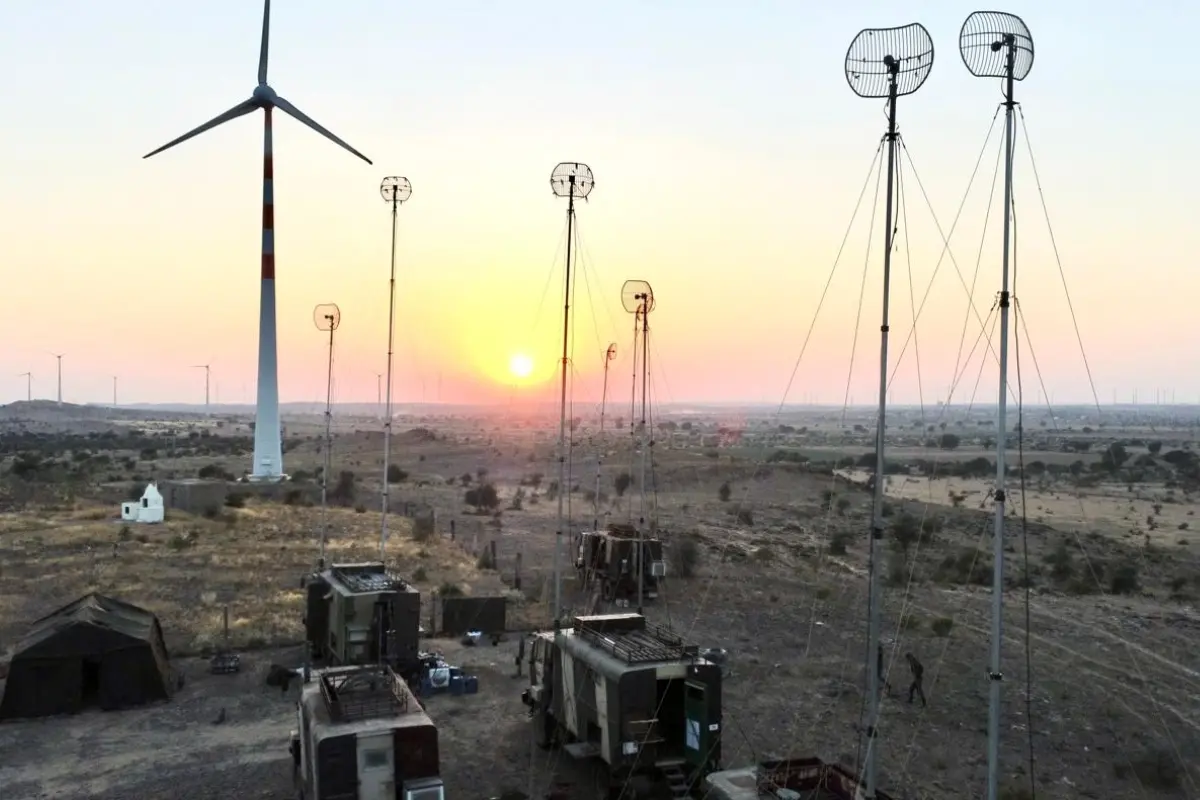
Earlier this year, European aviation authorities issued another cautionary notice to airlines operating near parts of Eastern Europe and the Middle East. Satellite navigation signals, they warned, were being jammed or spoofed with increasing regularity. Aircraft could expect degraded GPS reception, false position data, or, in some cases, a complete loss of satellite-based navigation.
It was not framed as a military alert. It did not mention war. Yet the implication was unmistakable. A tool once associated with high-end conflict was now disruptive enough to intrude into civilian airspace. That alone should prompt a rethink about how modern wars are likely to be fought.
For decades, military power has been measured in visible terms. Missiles, aircraft, warships and armoured formations dominate strategic conversations because they are tangible, countable and dramatic. Precision strike capabilities, in particular, have become a shorthand for deterrence and technological superiority.
Range, speed and payload are treated as proxies for effectiveness.
What receives far less attention is the environment that allows these systems to function in the first place.
Modern weapons do not operate in isolation. They depend on an invisible but crowded domain, the electromagnetic spectrum, through which data is exchanged, targets are located, navigation is maintained, and commands are issued. Electronic warfare operates in this domain. Rather than destroying platforms outright, it interferes with the conditions that make those platforms useful.
This distinction matters. A missile may be physically intact, but if its guidance is degraded, its targeting data delayed, or its launch platform forced into silence to avoid detection, its operational value diminishes sharply. The effect is rarely spectacular. Instead, it manifests as uncertainty, delay and friction — the very things modern militaries work hard to eliminate.
Recent conflicts make this dynamic difficult to ignore. In Ukraine, electronic warfare has become a constant presence rather than an episodic tactic. Navigation signals are disrupted persistently.
Communications are contested. Drones that once loitered freely now struggle to maintain links or accurate positioning. Both sides respond by modifying equipment, adjusting tactics and seeking technical workarounds, only to face renewed interference.
The result is not a technological stalemate, but continuous adaptation. Each side expends time, resources and attention simply to keep its systems functional. This, in itself, is a strategic outcome. Even when weapons remain available in large numbers, their effective use becomes more constrained.
What is especially revealing is how this contest has spilled beyond the battlefield. Reports of civilian aircraft and commercial vessels experiencing spoofed navigation signals are no longer rare anomalies. When ships appear on tracking platforms, to sail across land or circle airports, the underlying message is clear.
Electronic interference does not respect neat boundaries between military and civilian domains.
This is why electronic warfare increasingly rivals missiles in strategic importance. Missiles are finite. Each launch consumes inventory and imposes a replenishment burden. Electronic warfare, by contrast, is persistent.
A well-positioned jammer or spoofing capability can affect multiple systems simultaneously, over time, without a single explosive being used.
Just as importantly, electronic warfare reshapes how decisions are made. Commanders operating in a contested spectrum must assume that information may be incomplete, delayed or misleading. Sensor data becomes suspect.
Communications require verification. Coordination across units and services slows. Even modest levels of interference can impose a psychological and organisational tax that far exceeds the apparent scale of the attack.
None of this suggests that missiles or kinetic force are losing relevance. Physical destruction remains essential to impose outcomes in war. But it does challenge the assumption that better missiles alone translate into battlefield dominance. Precision weapons are only as effective as the information environment that supports them.
For militaries planning for future conflict, this has uncomfortable implications. Electronic warfare can no longer be treated as a specialist function, confined to a few platforms or units. Nor can resilience be an afterthought. Forces must be trained to operate under degraded conditions, with alternative navigation methods, disciplined emissions and redundant communications assumed rather than improvised.
The civil aviation advisories issued today offer a glimpse of this future. They show how easily spectrum interference can become routine, how difficult it is to contain once it begins, and how disruptive it can be even without open hostilities.
For armed forces, the lesson is straightforward, if unsettling.
The next conflict may still be decided by missiles, ships and aircraft. But whether those systems perform as designed will increasingly depend on who controls, or at least survives, the electromagnetic environment in which they operate.
Electronic warfare will not replace missiles. It may simply determine how many of them matter at all.