Explainer: The debate over India's new carrier fighter aircraft
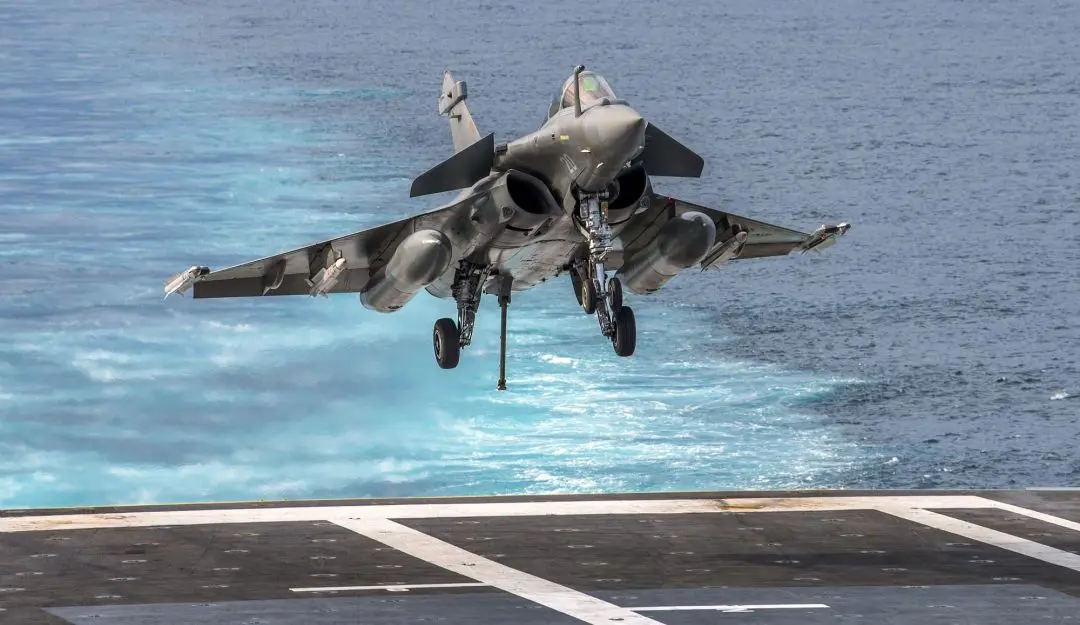
The excitement surrounding India’s decision to buy the French Rafale-M carrier-based fighter jet has now settled. However, early criticisms have started to surface. Officials have expressed doubts about whether the Rafale-M is truly suited for aircraft carrier operations. They compared these concerns to past challenges faced with the MiG-29K acquisition.
The Rafale-M has fixed wings with foldable wingtips, which makes it less manoeuvrable and takes up more deck space on India’s aircraft carriers, the INS Vikramaditya and the INS Vikrant. It means that fewer jets can be accommodated on board. Another drawback is that the two-seat training version of the Rafale-M is not designed for carrier landings. So pilots cannot train directly on the carriers. Instead, they have to rely on simulators, which may not fully prepare them for real-world carrier operations.
The MiG-29KUB is a two-seater trainer version of the MiG-29K, designed for carrier-based operations. This set-up allowed pilots to train in a more realistic environment at sea. However, the MiG-29K, itself, has a history of crashes, which led to an increased reliance on flight simulators for training. An officer explained that the Rafale-M was selected, similar to the MiG-29K, because the Indian Air Force (IAF) already operates the Rafale.
The design adjustments in the Rafale-M could affect the navy’s ability to stay fully prepared for operations. This situation highlights the difficulties of using foreign aircraft for carrier-based missions. To address these challenges, the Indian Navy may have to make modifications to the aircraft, or invest more in training facilities, to ensure smooth operations.
Why the delay in buying weapons?
India’s slow process of buying weapons -- despite careful planning -- is influenced by a mix of bureaucratic hurdles, strategic concerns, and historical factors.
A key reason for these delays is the complex approval system within the country’s defence procurement process. Decisions must go through several levels -- starting with the military branches, then moving through the Ministry of Defence (MoD) and, sometimes, even reaching the Cabinet Committee on Security and the Finance Ministry. This lengthy process often causes delays and, at times, mistakes in decision-making.
India’s multi-step approval process for defence purchases was created to ensure transparency and prevent corruption, especially after such past scandals as the Bofors case in the 1980s. However, this system often causes long delays. One major issue is the absence of a single authority responsible for decision-making. Since approvals go through multiple officials and departments, the process becomes slow and repetitive, with decisions getting stuck at various levels due to duplicated efforts and delayed responses.
The slow progress is also due to the lack of a clear, unified plan. Each branch of the military has traditionally followed its own strategies, which often lead to uncoordinated, and conflicting, needs when it comes to buying equipment. This lack of teamwork turns the process of getting weapons into more of a reaction to urgent problems or political pressures, instead of being guided by careful, long-term planning.
However, this approach often creates new problems. Due to the fear of corruption scandals, the process has become excessively strict -- with more focus on finding faults than on ensuring that the equipment is practical and effective. This often leads to useful purchases being rejected, or choosing less suitable systems, because the requirements are too strict, or unrealistic.
India’s international relations and defence partnerships add another challenge! In the past, India had relied heavily on Russian weapons; but it is now buying from other countries, as well. This shift brings new difficulties -- such as negotiating technology transfers, handling different supplier standards and balancing the political impact of favouring one global power over another. While this change is important for strategy, it makes the process longer, and more complicated.
The slow progress is also due to India’s financial limitations and budget management. Defence spending is kept low compared to the country’s GDP, which creates funding problems for buying new equipment. Modern weapons are very expensive, and this often causes delays even after decisions are made, as there is not enough money to move things forward quickly. This makes the process even slower.
Mistakes in this process happen not only because of these systemic problems, but also due to the lack of real-time tracking and adapting to new technologies. Projects often take so long to complete that, by the time they are approved, the technology may already be outdated, or close to becoming obsolete. This results in poor investments, or the need for quick and expensive upgrades.
Indian Navy's choice: Rafale-M
The Indian Navy has made a clear choice to strengthen its carrier-based air power by selecting the Dassault Rafale M. This decision came after a long and detailed evaluation process, where it beat Boeing’s F/A-18E/F Super Hornet in a tough competition.
In 2017, the Indian Navy launched its Multi-Role Carrier Borne Fighter (the MRCBF) programme to equip the newly built INS Vikrant with modern fighter jets. Trials were held at the navy’s Shore-Based Test Facility in Goa, where both competing jets showcased their abilities with dramatic ski-jump takeoffs and arrested landings.
In July 2023, the Defence Acquisition Council approved the purchase of 26 Rafale M fighter jets, marking an important step in the process. This decision was not just about choosing a fighter jet, but also planning smartly. It took into account the advantage of sharing operations and maintenance with the IAF’s existing Rafale jets.
The Rafale-M is specially designed for the tough conditions of aircraft carrier operations. It is having a ‘fixed delta wing configuration with foldable wingtips’, and stronger landing gear to handle the challenges of operating from India’s STOBAR carriers, which do not use catapults for takeoff.
The negotiations involved a lot of back-and-forth discussions and tough bargaining. By September 2024, India successfully secured a major price reduction, finalizing a deal worth around Rs 63,000 crore (about $7.6 billion). The deal was not just for the fighter jets -- it also included advanced weapons, such as Meteor long-range missiles, Exocet anti-ship missiles and SCALP cruise missiles. Additionally, the package covered logistics, training and special modifications to meet the Indian Navy’s needs.
This deal is not a regular arms purchase; it is a government-to-government agreement, similar to the 2016 contract for the IAF’s Rafale jets. The order includes 22 single-seat jets and 4 two-seat trainer aircraft. There is also talk of acquiring a few pre-owned Rafale-M jets for initial training, which would benefit both the French and Indian navies.
This purchase serves as a temporary solution until India’s homegrown Twin Engine Deck-Based Fighter (TEDBF) is ready, which is expected by 2031. It is not just about strengthening India’s naval power, but also about building a stronger defence partnership with France, especially in the increasingly tense Indo-Pacific region.
The debate over MiG-29K
The Indian Navy’s plan to switch from the MiG-29K to the Rafale-M has started a lively debate. The MiG-29K, a fighter jet with Soviet roots and Russian design, has been a key part of India’s naval air operations. It has served aboard both the INS Vikramaditya and the newly commissioned INS Vikrant. On the other hand, the Rafale-M, known for its advanced technology and French engineering, offers the potential to significantly boost the Indian Navy’s combat capabilities.
The MiG-29K has been a reliable fighter jet for the Indian Navy since it was introduced in 2010. Built to handle all kinds of weather, this multi-role aircraft is specially designed for carrier operations, featuring a stronger undercarriage and foldable wings. However, its journey has not been entirely smooth. The MiG-29K has faced such challenges as maintenance issues, difficulty in getting spare parts and several notable crashes, which have raised concerns about its ability to meet modern naval needs. Despite this, it is appreciated for its agility and versatility, capable of handling both air-to-air and air-to-surface missions. Its RD-33MK engines also give it a decent payload capacity.
The Rafale-M, on the other hand, comes with a modern design specifically built for carrier operations. Its advanced RBE2 radar, which uses active electronically scanned array (AESA) technology, offers much better detection and engagement range compared to the radar system on the MiG-29K.
The Rafale-M is built with a stronger structure to handle the demands of carrier operations. It features a tail hook for arrested landings and a jump strut (a device that helps during ski-jump takeoffs), making it well-suited for India’s aircraft carriers. A jump strut is a device on carrier-based aircraft that helps push the nose of the plane upwards during ski-jump takeoffs, making it easier to lift off the deck.
The Rafale-M is not just built to survive in combat. It is designed to dominate! Its advanced weapons, such as the Meteor missiles that can hit targets from long distances, give it a big edge in modern air battles. The jet also has better electronics and a stronger system for electronic warfare, making it a tough rival in any fight. The Rafale-M may have a slightly better range and payload capacity, but the MiG-29K has shown its strength in certain combat situations, especially in close-range dogfights, where its agility stands out.
The discussion is not just about combat power. It is also about logistics, training and long-term use! The Rafale-M could benefit from the IAF’s existing Rafale fleet, which may make maintenance, and operations, easier and cheaper. On the other hand, the MiG-29K, despite its challenges, has been a part of the navy for over a decade, giving the team valuable experience and familiarity with the aircraft.
Both jets are tied to India’s naval goals in the Indian Ocean, where balancing cost, capability and long-term use are crucial. The MiG-29K may soon be replaced by the Rafale-M…not because it performs poorly, but because the Rafale-M brings newer technology and strategic advantages. But the switch to Rafale-M will not be easy. Pilots will need time to adjust to the new aircraft and it will take efforts to fit it into the navy’s current aviation plans, according to BulgarianMilitary.com.
The author of this article is a Defence, Aerospace & Political Analyst based in Bengaluru.