Jobs or social progress? Kerala migration fuels Tejasvi Surya-John Brittas face-off at MBIFL 2026
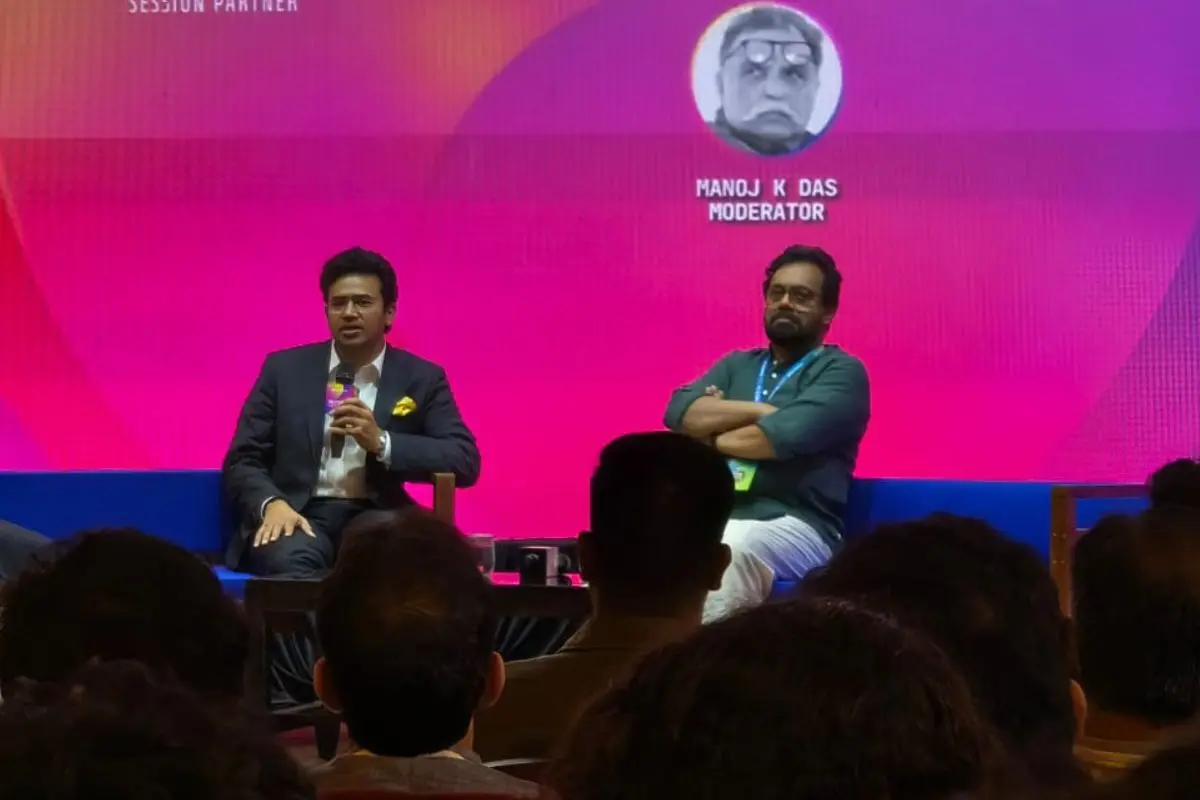
Migration from Kerala to other Indian cities, particularly Bengaluru, emerged as a central theme during the “Left, Right and Centre: The Paradox of Positions” session at MBIFL 2026, where BJP MP Tejasvi Surya and CPI(M) MP John Brittas offered sharply contrasting readings of the same demographic trend.
Tejasvi Surya framed migration as an outcome of economic constraints within Kerala, arguing that the state has struggled to create adequate employment opportunities for its educated workforce. “I haven’t met a Malayalee who doesn’t want to return if the right opportunities exist,” he said, suggesting that out-migration reflects deeper structural issues, including a weak enterprise environment and policy choices under successive Left-led governments.
Brittas rejected the idea that migration should be treated as evidence of governance failure. He argued that migration from Kerala mirrors global labour patterns rather than a state-specific crisis. “The world rests on migration,” he said, noting that Bengaluru itself has been shaped by waves of migrant workers and professionals, including large numbers from Kerala. To frame migration as an exodus, he argued, overlooks the agency of workers seeking opportunity and experience.
To counter Tejasvi Surya’s economic critique, Brittas pointed to Kerala’s social development record, including lower infant mortality rates, higher life expectancy and long-term poverty reduction. These indicators, he said, demonstrate the outcomes of a governance model that prioritises human development and social security, even as people move across regions for work. Migration, in this view, coexists with rather than negates social progress.
As the discussion unfolded, the debate over migration intersected with questions of electoral politics and community alignment, particularly among minority groups. Tejasvi Surya claimed that Christian communities in Kerala were showing greater openness towards the BJP, attributing it to increased engagement and the party’s stance on institutional and governance reforms. He cited issues such as Waqf-related reforms as examples of what he described as a consistent constitutional approach across institutions.
Brittas disputed the claim of any significant political shift, arguing that electoral data from local body elections did not support the idea of a broader realignment. He also cautioned that reform debates, including those around Waqf governance, risk becoming polarising if framed through partisan lenses rather than administrative necessity.
By the end of the session, the disagreement had moved beyond migration statistics to a more fundamental divide over how development itself is measured — whether primarily through employment generation and economic opportunity, or through social outcomes and human development indicators. Migration from Kerala, the exchange suggested, has become not just a demographic reality but a political lens through which competing visions of governance, reform and electoral strategy are increasingly contested.