Why Periyar cannot be read without contradiction; Jayamohan explains
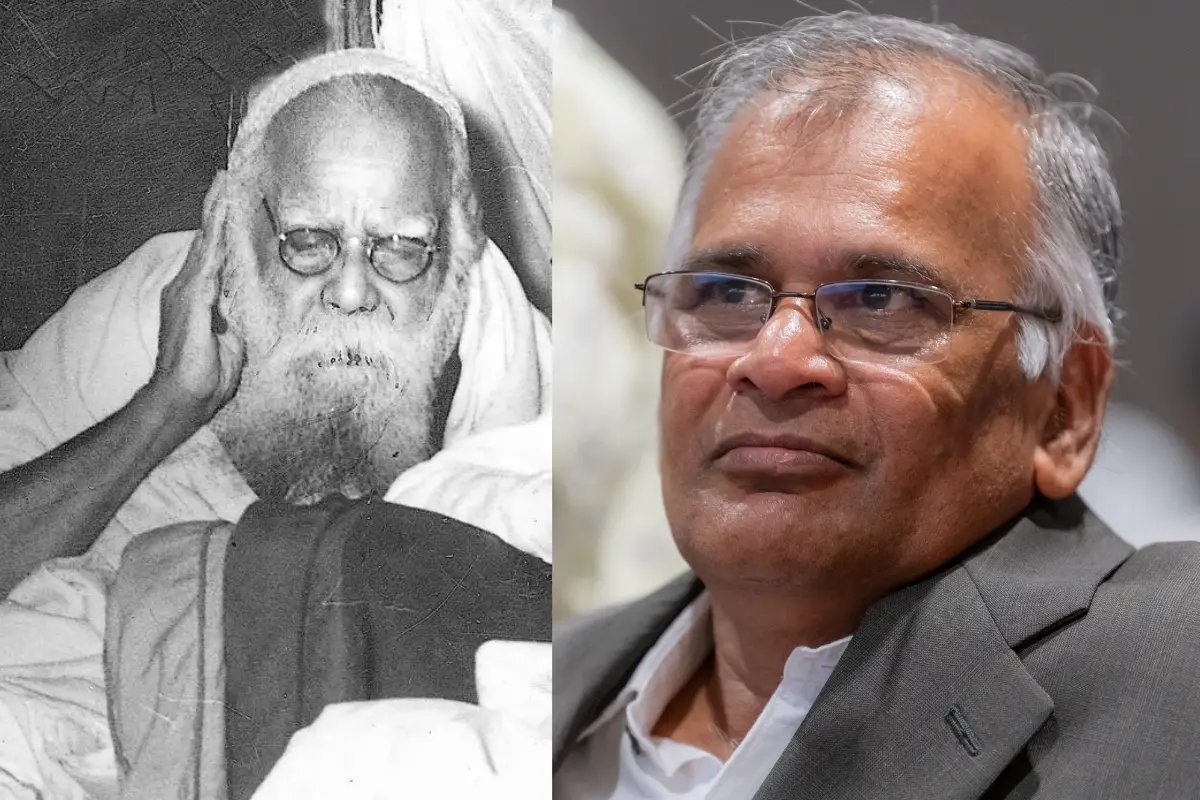
Speaking in a solo session titled Tamizhile Periyar Malayalathil Ozhukumo? at the seventh edition of MBIFL 2026, B. Jayamohan approached history not as legacy or reverence, but as inquiry. From the outset, he rejected the language of icon worship that often surrounds political figures in Tamil Nadu.
“I do not use the word Periyar. I do not use the word Mahatma. I only use names. Their actual name...” he said, arguing that sanctified titles obstruct critical thought and turn history into ritual.
Jayamohan positioned E.V. Ramaswamy, commonly known as Periyar, as a historical figure shaped by context, conflict and contradiction, rather than as a fixed moral authority. Central to his argument was the claim that Tamil political history has been selectively narrated, with Dalit-led movements systematically erased.
He pointed out that the earliest organised political mobilisation in Tamil society emerged from Dalit intellectuals in the mid-19th century, long before the Self-Respect Movement. Figures such as Panditha Ayodhya Dasa, Rettamalai Srinivasan and M.C. Rajah, he said, articulated what he described as an “Adhakritha nation”, rooted in dignity, education and historical selfhood. Ayodhya Dasa, Jayamohan noted, was the first to introduce the term Dravidan into political discourse, even naming his newspaper Dravidan decades before later political appropriation.
According to Jayamohan, this Dalit intellectual tradition was displaced by the rise of the Justice Party, which he described as a movement led by upper-caste landlords aligned with colonial power. He linked this displacement to material history, tracing how the Great Deccan Famine between 1850 and 1870 forced Dalit communities into cities like Madras, where they built colonial infrastructure before being evicted from urban spaces.
“Even today, one in three Dalits in Chennai traces their presence to that forced migration,” he said, connecting historical erasure to present-day social realities. He added that his novel Vellai Yaanai emerged from an attempt to fictionalise this buried history of labour and dispossession.
Situating E.V. Ramaswamy within the Congress era, Jayamohan highlighted the linguistic tensions of the Madras Presidency, where Tamil, Telugu and Malayalam competed for political dominance. When Congress shifted from English to regional languages, he argued, questions of linguistic leadership intensified, shaping Ramaswamy’s eventual break from the party and his alignment with the Justice Party.
While acknowledging Ramaswamy’s courage in opposing Brahminical dominance and advocating rationalism, self-respect and women’s rights, Jayamohan remained critical of what he saw as the limits of his politics.
“He was brave. He fought. But bravery does not cancel contradiction,” he said.
Ramaswamy’s politics, he argued, were largely oppositional, dismantling symbols without engaging deeply with economic structures, and often relying on support from landlords and businessmen despite aligning rhetorically with the oppressed.
“I am anti-Brahminism,” Jayamohan clarified, “but I do not like hatred. I oppose Brahminical value systems, not human beings.”
Turning to later figures, Jayamohan described C.N. Annadurai as more balanced and constructive, capable of translating ideology into governance. He also cautioned against what he termed state-manufactured iconography, particularly attempts to equate Periyar with B.R. Ambedkar.
“Ambedkar is not a regional figure. India stands on the dual pillars of Gandhi and Ambedkar,” he said, warning that forced equivalence distorts history rather than honours it.
On Periyar’s role in the Vaikom Satyagraha, Jayamohan challenged popular narratives that position him as its central figure. While acknowledging his participation and arrest, he emphasised that the movement’s ideological leadership lay with T.K. Madhavan, Sahodaran Ayyappan and Kerala’s broader reform tradition shaped by Sree Narayana Guru.
The session concluded without resolution. Jayamohan expressed discomfort at how easily political figures are absorbed into cultural pride and protected from scrutiny, warning that history loses meaning when it becomes inheritance rather than investigation.
By refusing reverence and embracing contradiction, Jayamohan’s MBIFL session left the audience with an unsettling but deliberate reminder: history, honestly examined, is rarely smooth, unified or comforting.