India’s delimitation debate explained: Who gains and who may lose
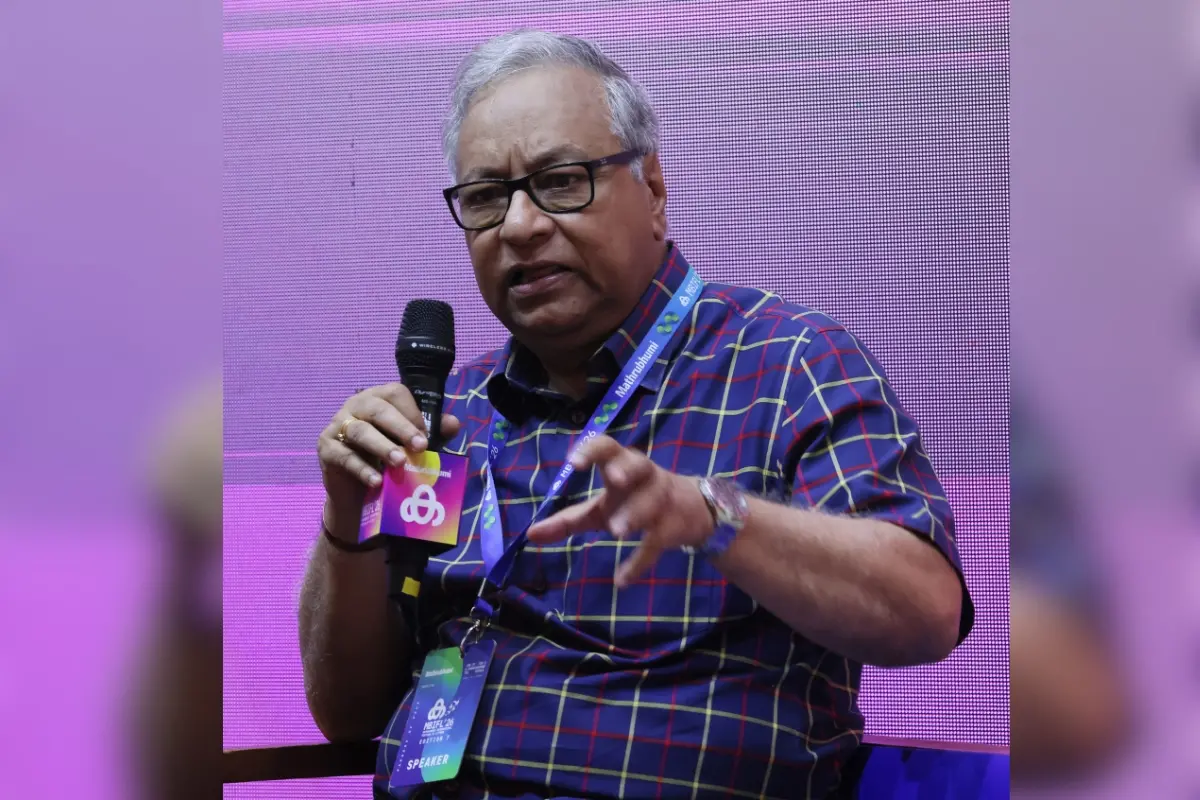
India’s democracy is approaching a critical moment. With a new census on the horizon, the possibility of parliamentary delimitation has reopened a long-suppressed debate: should political power be determined purely by population numbers, or should governance, equity and federal balance matter just as much?
Speaking at the Mathrubhumi Festival of Letters 2026, former bureaucrat and author Jawhar Sircar warned that a fresh redistribution of Lok Sabha seats could significantly weaken the political voice of southern states, despite their success in education, healthcare and population control.
“Delimitation is not a technical exercise,” Sircar said. “It is about power — who speaks for the country and who gets spoken over.”
The 1971 freeze and a federal safeguard
Sircar reminded the audience that India’s current parliamentary structure was shaped by a deliberate political choice. In 1971, then prime minister Indira Gandhi froze the redistribution of Lok Sabha seats based on population — a decision later extended through constitutional amendments.
At the time, southern states had aggressively implemented family planning programmes, while several northern states continued to see high population growth. Basing representation purely on numbers, Sircar argued, would have penalised states that governed well.
“The freeze was an act of political wisdom,” he said. “It protected India as a federal union, not a headcount democracy.”
What changes if delimitation resumes
If delimitation is conducted strictly on population data, Sircar warned, states such as Uttar Pradesh and Bihar could gain a large number of seats, while Kerala, Tamil Nadu and other southern states could lose influence.
“This is not speculation,” he said. “It is arithmetic.”
Such a shift would reshape national priorities — from financial allocations and welfare policies to language debates and development planning.
“A Parliament dominated by population-heavy states will reflect their interests,” Sircar said. “That is how representative systems work.”
Governance versus numbers
Sircar highlighted what he called a deep contradiction at the heart of the debate. States that invested early in women’s empowerment, education and public health now risk political marginalisation.
“We are telling states: govern well, control population — and you will lose seats,” he said. “What message does that send?”
He pointed out that many southern states consistently outperform national averages on social and economic indicators, yet face the prospect of reduced parliamentary voice.
A constitutional warning
Drawing on constitutional history, Sircar argued that India’s founders were aware of the dangers of unchecked numerical majorities.
“Ambedkar understood that democracy without balance becomes tyranny by the majority,” he said.
The problem today, he added, is that constitutional memory is weakening even as the consequences of delimitation grow more serious.
An unresolved national question
Sircar concluded by urging an open national debate before irreversible decisions are made. “Delimitation will decide not just seats, but the future of Indian federalism,” he said. “Once power shifts, it does not easily return.”
As India prepares for its next electoral reconfiguration, the warning is clear: democracy cannot be reduced to numbers alone. It must also preserve balance, fairness and trust between states.