India's 330 Advanced Light Helicopters remain grounded: Safety first
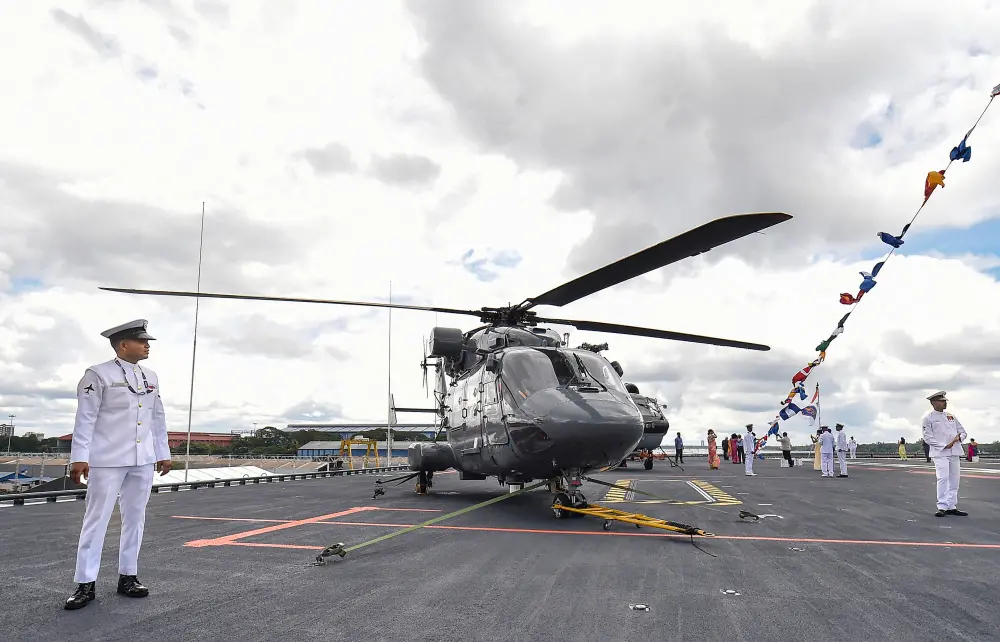
In early January 2025, an accident involving an Indian Coast Guard Dhruv Advanced Light Helicopter (ALH) in Gujarat claimed the lives of two pilots and an aircrew diver. This incident led to the grounding of the entire ALH fleet used by the Indian Army, Indian Air Force, Indian Navy, and the Coast Guard. Nearly three months on, officials have now indicated that these helicopters, numbering around 330 across the services, will remain out of service for at least another three months. The reason? Investigators are working diligently to pinpoint the exact cause of the crash, and this process is taking time due to the complexity of the issue.
For the general reader, this situation might sound alarming, but it is a testament to how seriously safety is being taken. Let us break it down step-by-step: what is causing the delay, what Hindustan Aeronautics Limited (HAL) -- the company behind the ALH -- is doing about it, and how similar challenges have been faced globally by other helicopter manufacturers.
What exactly is the problem?
The Dhruv ALH is a twin-engine helicopter designed and built by HAL, a respected Indian aerospace company. It is a versatile machine, relied upon for everything from troop transport to search-and-rescue missions. However, the January 5 crash revealed a problem with a critical component called the "swashplate".
Think of the swashplate as the helicopter's steering wheel -- it is a key part of the transmission system that helps pilots control the rotor blades, which keep the helicopter flying and moving in the right direction. When the swashplate fails, pilots lose the ability to maneuver the helicopter properly, which can lead to a crash.
After the accident, a detailed investigation found that the swashplate had fractured, causing the helicopter to lose control. But here is the tricky part: experts still don't know 'why' it broke. Was it a flaw in the material it’s made from? Did it wear out due to tough operating conditions? Or is there something else at play?
To complicate matters, a fleet-wide inspection after the crash showed that some Navy and Coast Guard ALHs also had cracks in their swashplates. This raised concerns, especially since these helicopters often operate over the sea, where salty air might weaken metal over time.
For now, the entire fleet is grounded not because the helicopters are inherently unsafe, but because safety comes first. Until the root cause is clear, no one wants to take risks with the lives of pilots and crew.
HAL's ongoing efforts: A thorough approach
The HAL is not sitting idle. The company has taken a proactive and scientific approach to solving this mystery. They have teamed up with the Indian Institute of Science (IISc) in Bengaluru, one of India’s top research institutions, to dig deeper. IISc is conducting 'fatigue testing' on the swashplate's material -- an aluminum alloy -- to see how it holds up under different stresses and conditions.
Fatigue testing is like putting the material through a workout -- it checks how much load it can handle before it starts to crack or break. This will help determine if the alloy itself is the weak link or if something else -- like how the helicopter is used or maintained -- caused the failure.
The HAL has also set up a Defect Investigation Committee (DIC) that includes experts from the Centre for Military Airworthiness and Certification (CEMILAC), the Directorate General of Aeronautical Quality Assurance, and HAL itself. This group is tasked with figuring out what went wrong and how to fix it so the ALHs can fly safely again.
IISc is expected to submit its findings by the end of April 2025, and the DIC will use that data to finalize its report by May. After that, HAL will need time -- possibly another month or more -- to inspect and repair the fleet. Depending on the findings, this could involve quick field checks or more extensive work, like bringing parts back to HAL's facilities for overhaul.
The HAL is not rushing the helicopters back into the sky; they are making sure every possible angle is explored.
How does this compare globally?
Helicopter issues are not unique to the Dhruv or HAL. Around the world, even the biggest aviation companies have faced similar challenges -- and they have handled them with the same caution and rigor HAL is showing now.
Take the Sikorsky UH-60 Black Hawk, a widely-used military helicopter made by the American company Sikorsky. In 2017, the US Army grounded parts of its Black Hawk fleet after a crash revealed a problem with the rotor system. Investigators found that a bearing in the rotor assembly had failed due to wear and tear. Sikorsky worked with the Army to test the components, identify the cause (fatigue in a high-stress environment), and replace the faulty parts across the fleet. The process took months, but it ensured the helicopters were safe to fly again.
Similarly, in 2016, the Airbus H225 Super Puma faced a crisis when a crash in Norway killed 13 people. The accident was traced to a fatigue fracture in a gear component. Airbus, a global leader in aerospace, grounded the fleet and collaborated with regulators and engineers to test materials and redesign the part. The helicopters returned to service only after extensive checks and upgrades -- again, a process that took time but prioritised safety.
Why the delay matters?
The grounding of the ALH fleet has put extra pressure on other military helicopters, like the Mi-17s, Chetaks, and Cheetahs, which are now working overtime. This is not ideal, but it is a necessary trade-off to ensure the Dhruv fleet is fully safe before it flies again. The ALH has had a few accidents in recent years -- around 15 in the last five -- but it is worth noting that helicopters, by their nature, operate in tough conditions, and no machine is immune to wear or unexpected failures.
The HAL has already shown it can adapt. In 2023-24, they completed a design review of the ALH and upgraded its control systems to boost safety. That effort came after earlier groundings and accidents, proving they are willing to learn and improve. The current investigation could lead to another round of enhancements -- whether it is a stronger swashplate material, better maintenance practices, or adjustments for salty coastal environments.
For now, the ALH fleet’s return depends on what IISc and the DIC uncover. If it is just a material issue, fixes might be straightforward. If it is more complex -- like a design tweak -- the process could take longer. Either way, the HAL's thorough approach ensures that when the Dhruvs take to the skies again, they will be ready to serve reliably.
For readers, the takeaway is simple: this is not a story of failure, but of responsibility.
The author is a defence and political analyst