Study abroad decline: Why Indian students are staying home
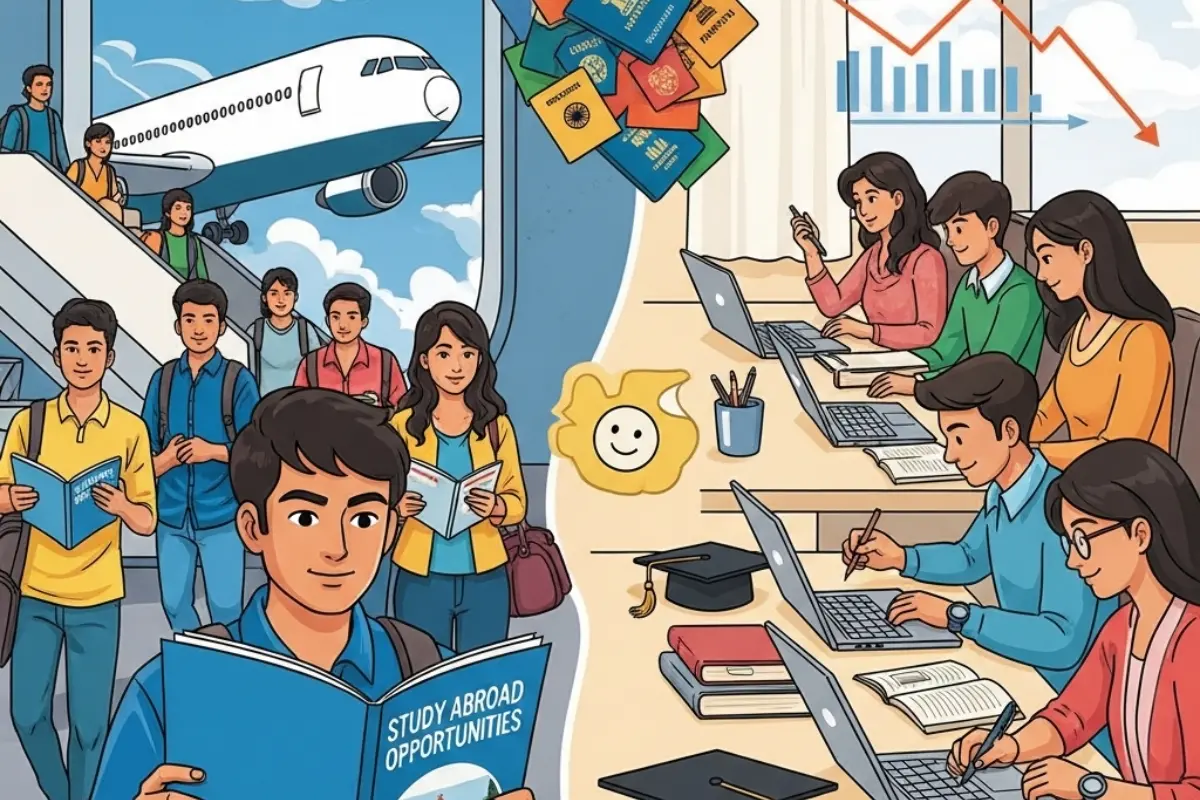
Data shared by Union Minister of State for Education Sukanta Majumdar in Rajya Sabha shows that 9.08 lakh Indian students went abroad for higher studies in 2023. This number fell to 7.7 lakh in 2024 and further to 6.26 lakh in 2025, based on figures from the Bureau of Immigration.
Experts note that while economic, social, and academic factors can influence mobility, the drop represents a clear downward trend in outbound student numbers, which could have implications for international exposure and global competitiveness of Indian graduates.
Factors behind the decline
Majumdar cited multiple reasons for the decrease, including affordability, access to loans, and personal aptitude for specific courses. Analysts, however, suggest that other factors such as the rising cost of foreign education, visa restrictions, currency fluctuations, and global economic uncertainties could also have contributed.
“The choice to study abroad is not just financial; it is also affected by perceptions of value, safety, and long-term career prospects,” said an independent education analyst.
Domestic education reforms and foreign campuses
Under the National Education Policy (NEP) 2020, the government has promoted improvements in domestic higher education infrastructure, accreditation, research, and digital initiatives. Foreign universities have also been allowed to set up campuses in India, with 14 approvals granted so far, and five universities cleared to operate in GIFT City, Gujarat.
While these measures aim to offer alternatives within India, critics point out that merely permitting foreign campuses does not address issues such as quality of faculty, research output, and international recognition compared to established overseas universities.
Implications for Indian students and diaspora
The decline in students going abroad could impact both skill acquisition and international networks for graduates. Indian students who remain domestic may face limitations in global exposure, while the diaspora might grow at a slower rate.
“Global exposure through studying abroad often shapes professional adaptability and cross-cultural understanding. A decline in such opportunities may affect future competitiveness,” said a higher education researcher.
Looking ahead
As Indian students increasingly weigh the costs, benefits, and risks of studying overseas, the trend of declining outbound mobility appears likely to continue unless domestic institutions can match the academic, infrastructural, and research standards of international universities.
Policymakers and educational institutions may need to address these challenges comprehensively to ensure Indian students are not disadvantaged in the global knowledge economy.