Samoothiri’s Malabar: A secular utopia of Hindu-Muslim harmony
A Hindu king for whom Muslims lay down their lives fighting a foreign invader; a Hindu king who insists that his numerically weaker Muslim subjects enjoy more privileges than Hindus and even encourages conversion in return for their loyalty; Muslim scholars and poets who praise his courage and compassion and condemn Muslim rulers who acquiesce before the invader; a Hindu king who appoints Muslims as military commanders, diplomats, trading chiefs and heads of ports, and grants them permission, land and money to build mosques and practise their faith; Muslims who absorb indigenous Hindu customs, rituals, architecture, festivals, food, dress and even names, indigenising their Islam while remaining committed to their faith.
This may look like a secular utopia, unimaginable in our religiously polarised times. This is the incredible story of Malabar of almost five centuries ago under the rule of the Samoothiris (Zamorin).
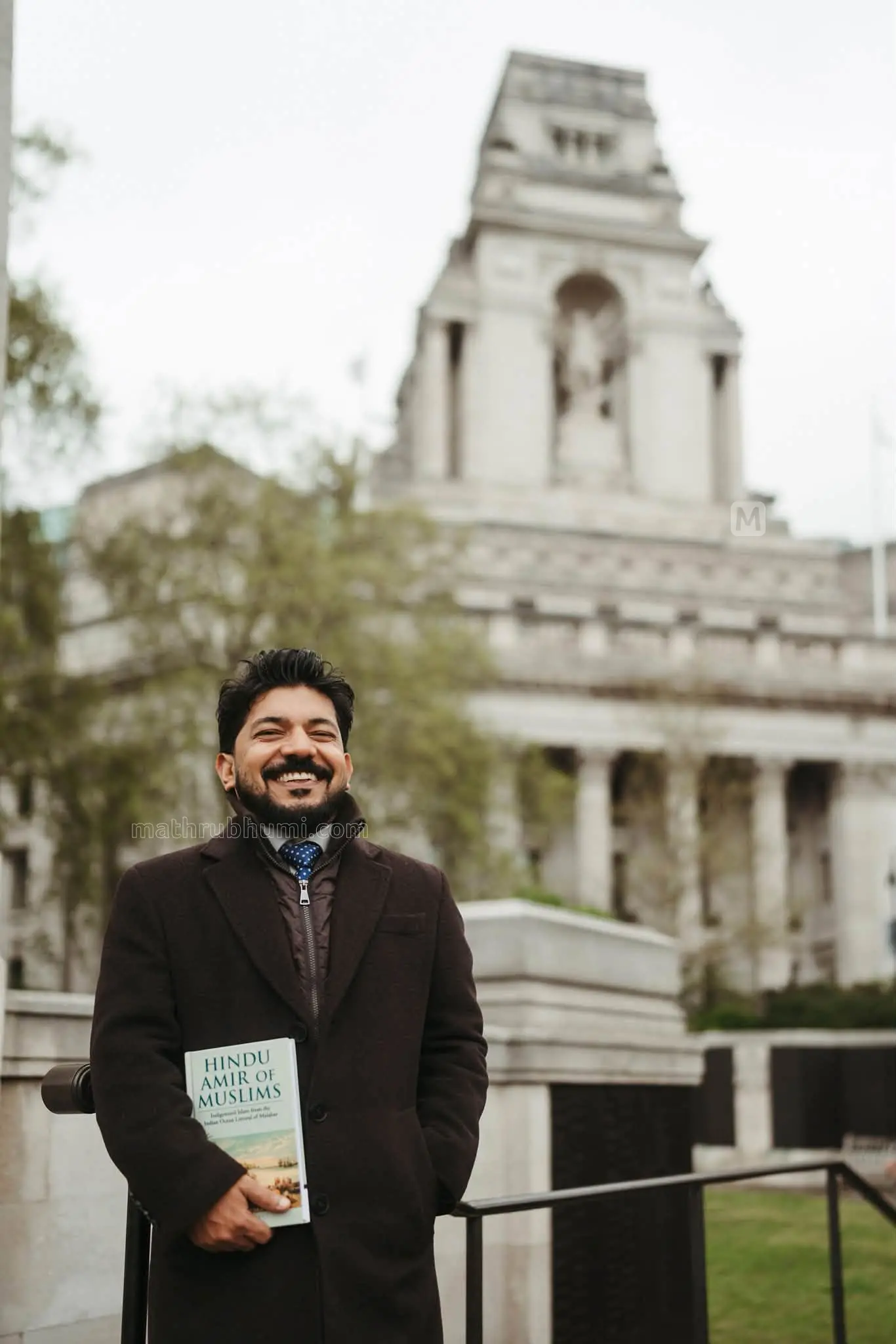
This extraordinary model of “vernacular modernity” comes through in a recent book, Hindu Amir of Muslims: Indigenised Islam of the Indian Ocean Littoral of Malabar (Bloomsbury, 2025), by Dr Abbas Panakkal, a historian from Kozhikode attached to the School of History at the University of St Andrews in Scotland.
I can see the rising eyebrows. Yes, an obvious question arises. How much of this golden era can stand rigorous historical scrutiny? Panakkal himself is realistic. “I am aware that depicting the notion of a homogeneous 'golden age' in some misty past runs the risk of papering over significant political disunity and hierarchical tensions”, he admits. Yet Panakkal affirms that the fact remains: Muslims in Malabar have always lived in communities defined by cross-confessional activities and affairs, shared economic and environmental interests, where social mixing was so normal that it was seldom considered unusual.
Even when exaggerations can't be ruled out, Kerala's history of religious harmony has been undeniable. Christianity, Islam and Judaism took root here through maritime trade, royal patronage and local integration rather than military conquest. The strongest proof of Kerala’s past is its present. Despite its many warts, the state still remains an oasis of religious harmony and pluralism in an increasingly polarised India. Minorities are better off here in every respect than their counterparts in most of the country.
Panakkal's book reinforces Malabar's history of Hindu-Muslim coexistence and the development of an indigenised Islam attuned to the regional ethos. Covering the 15th to 17th centuries, it draws on archival, literary, sociological, religious, and personal evidence, particularly manuscripts preserved in mosques and private libraries, as well as indigenous histories.
Much of India's history has been understood through categories inherited from colonial scholarship: Hindu kingdoms, Muslim invasions, European colonialism and religious conflict. Panakkal asks what happens when history is told through the experiences and writings of those who actually lived it.
Islam in Malabar certainly was not primarily a story of conquest and conversion but of ships and ports, merchants and migrants, marriages and settlements, languages and customs. Islam came from elsewhere but gradually became a religion of the place. Panakkal calls this “Sojourn Islam”, championed by traders, as an alternative to histories centred on kings and dynasties. Muslim traders had established themselves on the western coast centuries before Muslim political power became significant in northern India. The monsoon winds that brought Arab merchants also brought a religion that slowly took root among local populations. This book follows Panakkal’s earlier book -Musaliyar King- (Bloomsbury, 2024) in decolonising the historiography of South Asian Islam and joins the emerging corpus of many such works, including Sebastian R. Prange’s remarkable Monsoon Islam: Trade and Faith on the Medieval Malabar Coast (Cambridge University, 2018)
The port towns of Malabar became spaces where religions met without necessarily becoming adversaries. Muslim, Jewish and Christian merchants shared the maritime trading world. Muslims established settlements and mosques, intermarried with local communities and became part of the social fabric. Panakkal calls this process indigenisation, the book's central idea.
This argument challenges colonial historiography, which too often reduced the history of Islam in India to Muslim conquest, weaving a narrative in which Muslim rulers and invasions became the principal lens through which Islam was understood. British conquest, naturally, did not invite an equivalent interpretation of imperial violence as an expression of Christianity.
The persistence of traditions such as that of Cheraman Perumal, the Malabar king said to have travelled to Arabia and converted to Islam, is revealing. Scholars have debated the story's historicity and chronology, but its presence in Arabic, colonial and regional sources, including Hindu texts, demonstrates how deeply it is embedded in the cultural memory of Malabar Muslims.
Perhaps nowhere is integration more visible than in the kingdom of the Zamorin. Calicut was a cosmopolitan port where Muslim merchants occupied an important place in commercial life. Travellers such as Ibn Battuta and Ma Huan noted the authority entrusted to Muslim officials. The Zamorin's relationship with his Muslim subjects went far beyond passive tolerance. His Muslim admirals, the Kunjali Marakkars, fought the Portuguese in his service. Their Muslim identity and loyalty to a non-Muslim sovereign were not contradictory.
The writings of the period give this relationship an even deeper meaning. Jihad acquired a local meaning in the struggle against the Portuguese—not to establish a Muslim kingdom, but to defend the homeland and its Hindu ruler against a foreign aggressor. Kozhikode’s Qadi Muhammad's 16th-century war poem in Arabic -Fat’hul Mubin li-Samiri al-ladhi Yuhibbul Muslimin (The Victory of Zamorin of Calicut, Benevolent of Muslims) - praises the Zamorin's support for Muslims and contrasts it with Muslim rulers such as the Sultan of Bijapur, who failed to aid Muslims suffering Portuguese attacks. Shaykh Zayn al-Din II's (1530-83) famous Tuhfat al-Mujāhidīn similarly presented resistance to Portuguese aggression as a religious duty.
An evocative episode concerns Muslim soldiers who had sworn to sacrifice their lives in the battle of Chaliyam. Nayar soldiers reportedly objected that Muslims were a minority and declared that they would not be allowed to fight and die alone. They would fight alongside them.
It represents a political community in which religious identity did not necessarily determine political loyalty. The recognition of the Zamorin as Amir by his Muslim subjects reflected an accommodation between Islamic identity and the political order of a Hindu kingdom.
But political accommodation alone does not explain the character of Malabar Islam. The deeper story is cultural. Islam did not remain an Arab cultural transplant. Food, dress, architecture, marriage customs, matrilineal practices, language, literature and religious practices acquired distinctly Malabari forms.
Shaykh Zayn al-Din I (1467-1522) helped establish Ponnani as a major centre of Islamic learning, earning it the title “Makkah of Malabar”. Its mosque was famously built in the indigenous architectural style by Hindu masons. His erudite grandson, Shaykh Zayn al-Din II, adapted the Shafi'i legal tradition to the circumstances of Malabar, allowing local festivals, commercial relations and social customs to coexist within an Islamic legal framework. This was neither secularisation nor dilution of Islam, but an attempt to make Islam live within a particular society.
The same process occurred in language and culture. Arabi-Malayalam created a linguistic world that was neither simply Arabic nor Malayalam. Muslim poetry, devotional traditions, nerchas and festivals became part of Malabar's wider cultural landscape. Muslim artistic traditions interacted with indigenous forms such as Oppana, Kathakali or Thiruvathirakkali, while Hindus and Muslims participated in one another's cultural worlds. This was not necessarily syncretism in the narrow sense. Religious identities remained distinct, but they existed within a shared regional culture.
Panakkal argues that colonial rule began undermining this indigenous Islam by imposing a more rigid and Arab-centric notion of religious authenticity. Practices existing in Malabar for generations were increasingly labelled “un-Islamic”. Colonial administrators and scholars such as Logan and Innes classified local Muslim customs as deviations from orthodox Islam.
Colonial law also intervened in social institutions. The traditional marumakkathayam system gave Malabar Muslim women rights and forms of property inheritance unusual in much of the Muslim world. Colonial-era legislation progressively weakened it, eventually making patrilineal succession the norm.
Reformist and Salafi movements later gave this process a new religious vocabulary. Practices associated with Sufi traditions, devotional poetry, saint veneration, processions and local festivals came under attack. Some reformers condemned marumakkathayam as a Hindu remnant. The famous reformer Makti Thangal (1847-1912), for instance, campaigned against it and sought to “purify” Muslim society of what he regarded as non-Islamic accretions.
This produces one of the book's most provocative arguments: the colonial project of classifying and deliberately dividing communities and the reformist project of purifying religious identity, despite their very different motivations, could sometimes work in the same direction. Both weakened the older, culturally embedded identity of the Malabar Muslim. This apparently strange collusion between the Western colonialists and the indigenous “reformers” in the name of purity of Islam assumes significance in the present backdrop of Kerala’s Sunni leaders’ verdict that Muslim women’s participation in the public sphere is un-Islamic and imitating the West.
Panakkal does not deny that Malabar had inequalities, caste divisions, political conflicts and hierarchies. A thousand years of coexistence does not mean a thousand years without conflict. Yet everyday interaction among communities was normal. They shared markets, ports, occupations, festivals, landscapes and economic interests.
That history has particular relevance today. Religious and ethnic identities are resurging globally, driven by globalisation, the search for belonging and political mobilisation, all amplified by social media. In India, the rise of Hindu fundamentalism has generated anxiety among minorities and intensified attempts to cling to perceived identities and roots. Malabar is no exception. The Muslim community is increasingly looking beyond its regional inheritance towards more Arab-centric notions of religious identity. Practices once embedded in the local cultural landscape are sometimes dismissed as un-Islamic. Arabic costumes, cuisine and even names are replacing indigenous ones. The distinctive Mappila cultural identity consequently faces pressure from religious purism and from a pseudo-classicism that regards local traditions as inferior or a corruption of pure Islam.
The real question is: who gets to decide what is authentic? Is Islam authentic only when it resembles the cultural practices of Arabia? Or can Muslim culture become genuinely Islamic while also becoming deeply Malabari? The history reconstructed in this book offers a compelling answer. The two need not be opposites. The lesson is not that Malabar once had a perfect golden age. It is that pluralism need not mean erasing differences. For centuries, its people retained distinct religious identities while participating in a common regional culture created here—in the ports, marketplaces, mosques, temples and homes of Malabar.
The book's most important contribution may therefore be its insistence that this history deserves to be reclaimed from both colonial simplification and contemporary religious purism.
Islam did not merely arrive in Malabar.
Over centuries, it became Malabari.