A faltering government, a floundering opposition
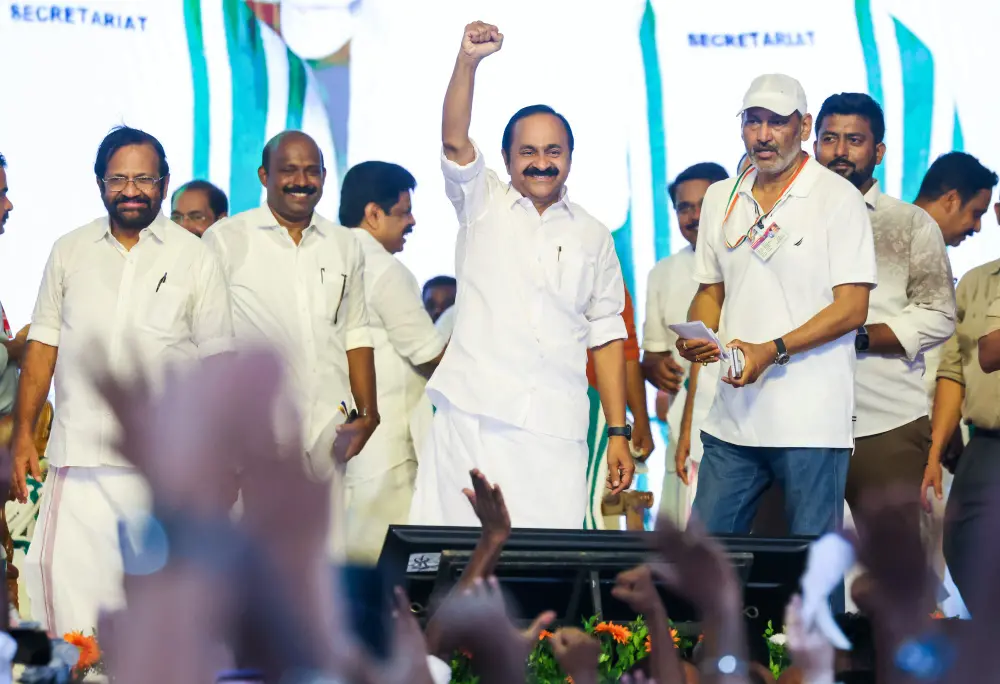
Kerala today presents an unusual political paradox: a government overwhelmed by the problems of plenty and an Opposition paralysed by the problems of paucity. Barely 100 days after assuming office with a massive mandate, the UDF government finds itself mired in one controversy after another. The LDF, on the other side, remains too stunned by the crushing defeat to perform its democratic role of Opposition effectively.
Not many governments have suffered such a short honeymoon with the people as the present one. Undoubtedly, its fate is self-inflicted and fuelled by a rush of triumphalism and overconfidence stemming from the stupendous electoral win. Ironically, this is a state starkly similar to that of the second LDF government following their unprecedented successive win in the 2021 elections.
No previous government has committed, in such a short while, so many faux pas and U-turns, or made decisions betraying the arrogance of power, or implemented measures it had fought tooth and nail while the UDF was in opposition. What can explain KPCC president Sunny Joseph appointing his brother-in-law as his private secretary on becoming a minister? Or the hasty move to nominate as the Travancore Devaswom Board’s Special Pleader, a person who was the advocate of a key accused in the sensational Sabarimala gold theft case? Remember that the Sabarimala case was UDF’s primary plank of its virulent campaign against the previous government. Didn’t UDF leaders go around during the campaign, singing that hard-hitting slogan song: "Swarnam Kattathu Aarappa?" Sakhakkal aane Ayyappa! (Who stole the gold, folks? They are the comrades, Oh, lord!)
The government's decisions to implement the PM Shri project or to introduce low-alcohol-content beverages were also issues that the UDF, while in Opposition, used to the hilt to hit the LDF government. Chief Minister VD Satheesan chose to proceed with these decisions, ignoring the widespread protests, even from within his own camp. The constant telecast by news channels of statements by Satheesan and the Muslim League’s minister, KM Shaji, against these projects while they were in the Opposition appears to have cut no ice at all. The dilly-dallying over the action against ADGP MR Ajith Kumar, the Cashew Corporation scam and Chief Minister Satheesan’s intolerance and arrogance at media conferences are a throwback to the Pinarayi era. The controversies related to the Adani group’s proposed sale of shares and the faux pas of the Tatas investment hardly helped the government’s image. Finally, the emergence of new groups within the Congress, one aligned with KC Venugopal and the other with Satheesan, and their unabashed public tantrums, bring back memories of vintage Congress.
The LDF, on the other hand, is still wallowing in the abyss into which it fell three months ago. Never before has it looked so pathetically shattered following an electoral rout. Not even after its historic drubbing in the post-Emergency elections of 1977 by the Congress-led front, which returned for a successive second term -the first time in the state's history. But this time, the CPI(M) still has yet to come out with its analysis of the defeat. The party faces ridicule from all around with that famous question in the iconic Sreenivasan film Sandesam, raised by an ordinary party worker to the leader after the latter's prolonged and convoluted theoretical analysis of the defeat: “Comrade, can you answer us in simple terms? Why have we lost?”
It is unprecedented for the LDF constituents not to have met together even once since the electoral defeat. To make things worse, an ugly spat has arisen between the two Communist parties over the extremely insignificant post of Deputy Opposition leader. It defies common sense to understand how two parties with a hoary tradition of legendary struggles and historic political engagements could squabble over such a trivial issue, especially at a time when the very existence of the Indian Left is at stake.
The CPI’s insistent public demand for the post in the wake of a humiliating defeat was quite untimely. It also gave the impression that the CPI was attempting to take advantage of the crisis faced by the CPM following the electoral debacle. It seemed strange that the CPI was plunging the LDF into a new crisis over an insignificant demand when the front badly needed to stick together after the rout.
Neither was the CPM's response dignified. True to its big brotherly style, the CPM flatly rejected the CPI’s demand, saying it had no precedent. The contempt with which Pinarayi Vijayan and Govindan publicly dismissed the fraternal party's demand displayed sheer arrogance. And that, too, when the LDF was down in the dumps.
However, although the CPI's demand seemed immature, having a brilliant debater like CPI’s K Rajan in even a slightly more important position within the Opposition in the assembly would certainly have helped the numerically weak LDF on the floor, particularly so because Vijayan has limitations in performing as an Opposition leader.
In fact, all the present crisis in the LDF stems from the CPM’s inability to address its deep-seated organisational failures. Its inability to come up with a detailed analysis of the defeat also owes to the same. The state committee recently adopted a review report which cited various reasons for the electoral setback. Besides the usual suspects such as the illicit deals between the UDF and the BJP, the Muslim League’s communal moves, growth of identity politics, misleading the minorities against the LDF or the negative campaign by the right-wing media, the state committee has made some self-critical observations. They included wrong candidate selection in seats like Payyanur and Taliparamba, erosion of the party’s vote base, controversial decisions such as reading UP Chief Minister Yogi Adityanath’s greetings at the Ayyappa Sangamam, public perception about the party’s failure to criticise Vellappally Natesan’s communal statements, and the TDB President A Padmakumar’s failure to prevent the gold heist.
However, the review has conspicuously refrained from naming the leaders primarily accountable. In fact, it should have been the first step in any exercise in introspection following such a massive electoral setback. Particularly so when the state leadership, especially Pinarayi Vijayan, had been so deeply, if not single-handedly, involved in every decision that brought about the LDF’s eventual collapse. Yet it has not happened in the CPM, despite most district committees and even sections of the Central Committee and the Politburo blaming both Vijayan and Govindan. The appointment of Vijayan as the Opposition leader, despite the magnitude of the debacle, his age, health concerns, and perceived leadership limitations, appears simply suicidal.
The CPM General Secretary, MA Baby, has admitted that the leadership believes the personal and political behaviour of leaders needs to be subjected to introspection. Yet, he hastens to add that the party has found no particular leader personally responsible for the disaster. This stand symbolises a typical failure or refusal to look truth in the face. However, the party has now decided to discuss all necessary measures to resuscitate the organisation at an expanded state committee to be held by September. Hope the party will gather the courage to make some tough decisions by then and will not pass the buck again.
It is strange to see that even the other Opposition bloc, the BJP, seems to be caught in a passive mode. This is strange because, unlike the LDF, the BJP had reaped dividends in the election in terms of seat numbers, though not in vote share. The saffron party, which had won only one assembly seat in the state’s entire electoral history until now (which too was lost in the next election), gained three this time. Yet, since then the BJP seems to have entered a maun vrat. The obvious reasons should be the BJP’s internal squabbles and the unfolding election-fund scam within the party. Several top leaders seem to have lined their pockets with the election funds allotted by the central leadership to the state party.
The overall impact of these plights in which the government and the Opposition find themselves runs counter to the state's interests. The government is constantly embroiled in problems of its own making and fails to address the state's many pressing problems, which require immediate attention. The Opposition, on the other hand, remains impotent to highlight the government’s failures.
Political parties often come to power campaigning against the mistakes of their rivals. Yet, once in power, they often repeat their predecessors’ mistakes. This is often an unfortunate flipside of parliamentary democracy. Yet, this cynical, cyclical nature of power has not been exposed within such a short while as now. This will have a dangerous fallout: a general erosion of confidence and faith in democracy. History shows such disillusionment rarely leaves a political vacuum. It is often filled with forces which are more authoritarian, more sectarian and far less democratic than those they replace. This is the real danger confronting Kerala today.