Innovation: The Shoe is on the other foot
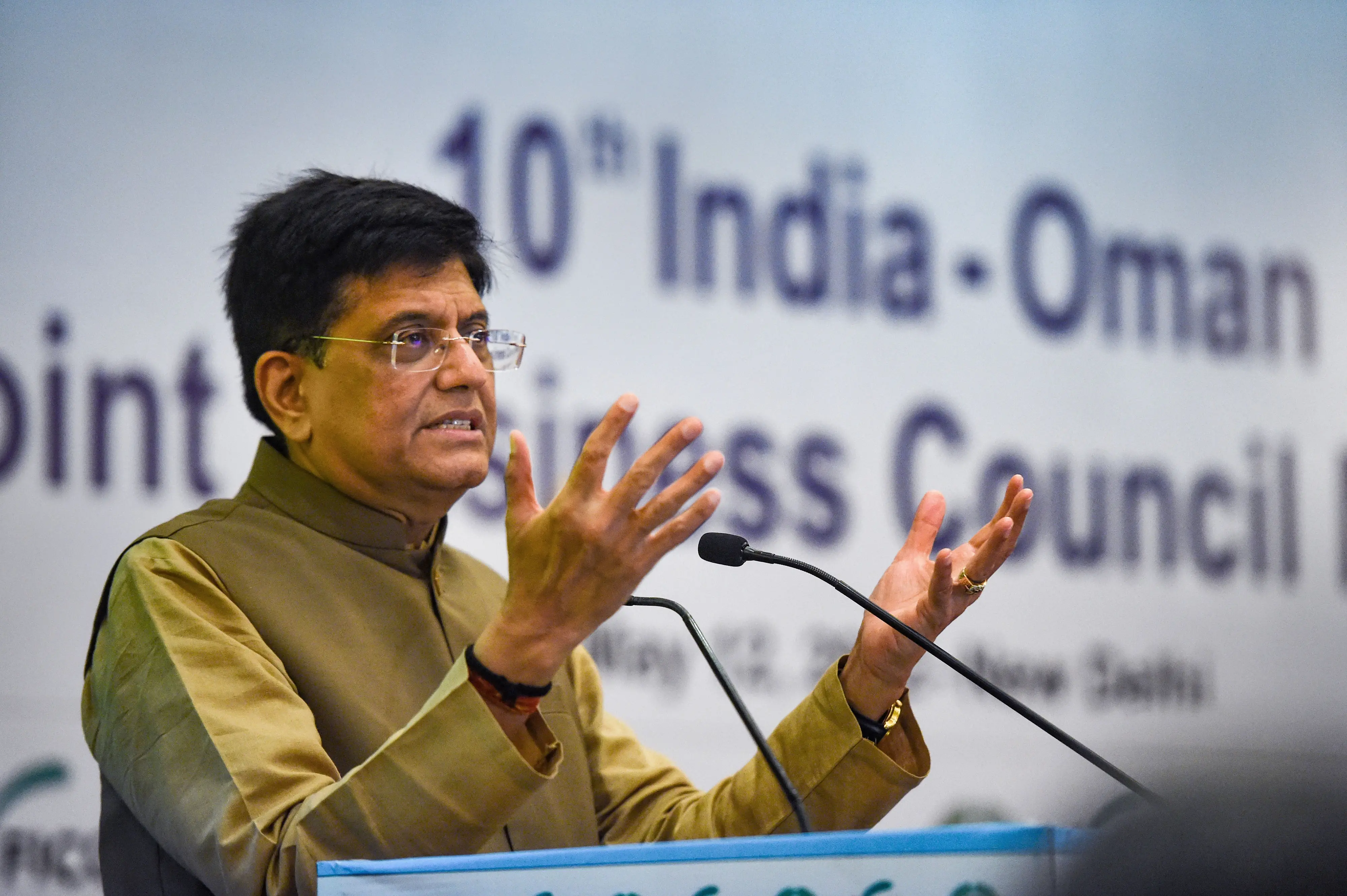
Commerce Minister Piyush Goyal recently sparked controversy with his pointed criticism of India's startup ecosystem, saying while Chinese entrepreneurs focus on artificial intelligence, microchips, and electric vehicles, Indian founders are preoccupied with “fancy ice creams” and food delivery services.
His comments ignited a firestorm of reactions across the business community – some supportive, others deeply critical. It's too late now to delve deep into the pros and cons of the argument and its merits.
Goyal’s criticism contains a kernel of truth. India’s startup scene has indeed gravitated toward service-oriented businesses rather than breakthrough technological innovation. Yet this perspective neglects the complex ecosystem required for deep tech to flourish – an ecosystem that our political leadership is responsible for cultivating.
It is somewhat ironic that calls for innovation and out-of-the-box thinking come from a section of the society that practices methods that are rooted in traditions that are decades old: politicians. So what happens if we examine Indian politicians with the same lens that Goyal used to highlight the failings of Indian entrepreneurs?
Chalk and Cheese
When we examine global political landscapes, visionaries like Nelson Mandela, Deng Xiaoping, Angela Merkel, Barack Obama, and Jacinda Ardern stand out as shining examples for their compassion, foresight, forward-thinking policies and inspiring leadership that was admired globally.
Meanwhile, India’s political system, despite producing an abundance of career politicians, struggles to generate leaders who transcend partisan divides or champion truly transformative policies.
No need to name names, but it’s hard to identify a current Indian leader whose appeal genuinely transcends borders – someone the world might look to as a model of visionary leadership.
The criticism levelled at startups and businesses that aim for a quick buck rather than long-term innovation applies even more aptly to our political establishment. The four-year election cycle dominates political thinking, making sustained, long-term policy initiatives exceedingly rare.
What’s worse, policies a party vehemently opposes while in opposition often become their flagship achievements once in power, revealing a fundamental lack of objectivity in our political discourse.
This flip-flopping approach to governance creates an unpredictable environment that discourages big ticket investments by the private sector, risk-taking and long-term investment in research and development.
Silent Killer
While Goyal criticised startups for lacking ambition, many entrepreneurs would point to the elephant in the room that most politicians fail to mention: bureaucratic hurdles.
Grand announcements of startup-friendly policies may come thick and fast at both state and central levels. But on the ground, they move at a glacial pace. Ask entrepreneurs and startup founders in Kerala who have had the misfortune to deal with the revenue department regulations and you will often hear grim stories despite the government's claim about its ease of doing business crown.
Many seasoned observers say our bureaucrats are still yoked to century-old traditions, and transform promising policy initiatives into labyrinthine procedures. As one frustrated CEO in Kerala put it, for our bureaucracy the procedural methods are so sacrosanct that everything else is secondary.
It was revealed that the frustration is not limited to entrepreneurs and private sector alone as Chief Minister Pinarayi Vijayan himself went on record recently condemning red tape that is tying down projects. When the high and mighty face such hurdles, what chance does a young startup founder have?
Widespread Rot
Red tape and bureaucratic overkill are not limited to a particular state either. A recent report by a parliamentary panel on the medical devices sector bears evidence to that fact. This is despite the medical devices sector being identified as a priority area by the Indian government under the Production Linked Incentive (PLI) scheme.
The panel’s scathing review of the Central Drugs Standard Control Organisation demonstrated how one government department can easily undermine the initiatives of another. The panel found the licensing process for medical devices “slow, opaque, and highly discretionary”, actively driving manufacturers out of India to countries like Vietnam and Malaysia.
Goyal criticised startups for not pursuing cutting-edge technologies, yet failed to address India’s abysmal research spending. The government’s own Economic Survey revealed that India invests just 0.64% of GDP in R&D, compared to China’s 2.41% and the United States’ 3.47%.
The state of Kerala’s R&D is equally abysmal. A recent study by the Gulati Institute of Finance and Taxation said that though the funds allocated by the state are higher than the inter-state average, it generates only 0.14 patent applications per Rs 1 crore of research expenditure, ranking 13th among 14 major Indian states.
How can political leaders expect world-class innovation while maintaining such a poorly funded research ecosystem? Things get even murkier if you examine institutes of higher learning like engineering colleges face existential threats from technological disruption – yet many remain shackled to outdated syllabi and teaching methods.
An enlightened political leadership should be addressing these problems with the welfare of society in mind and a vision about the future that cuts through the haze of political ideologies, religious beliefs or regional biases. But just like some businesses which aim just for a quick profit, most parties adopt populist policies that cater to their vote banks during an election.
Lack of Accountability
Perhaps most concerning is the accountability disparity. When an enterprise or a startup fails, the market delivers swift judgment and founders lose their investments, employees lose jobs, and debtors go to court. When political decisions backfire – even catastrophically – accountability rarely follows. No politician suffers personal consequences for policies that destroy wealth, foment social tensions, or drag the society backward. Even when their actions lead to loss of lives.
The political parties have transformed from a means to create a just and prosperous society into an end in itself, and are now self-perpetuating entities whose successes are measured by power retention rather than advancement of society.
If India truly aspires to join the ranks of innovation powerhouses, we need more than ministerial criticism of entrepreneurs and claims of progress based on statistics. We need a political environment that creates stable, predictable policy frameworks that encourage long-term investment rather than ones that could change after the next election.
More importantly, we should have a political system that holds itself accountable for outcomes, not just intentions. The political ideologies do not matter; the overall target of their action should be betterment of society rather than the strengthening of the party and welfare of their followers.
India’s innovation ecosystem will truly flourish when political leaders begin to embody the very qualities they urge from entrepreneurs – vision, boldness, and a willingness to break the mould.