Manmohan Singh and the Congress that never liberalised itself
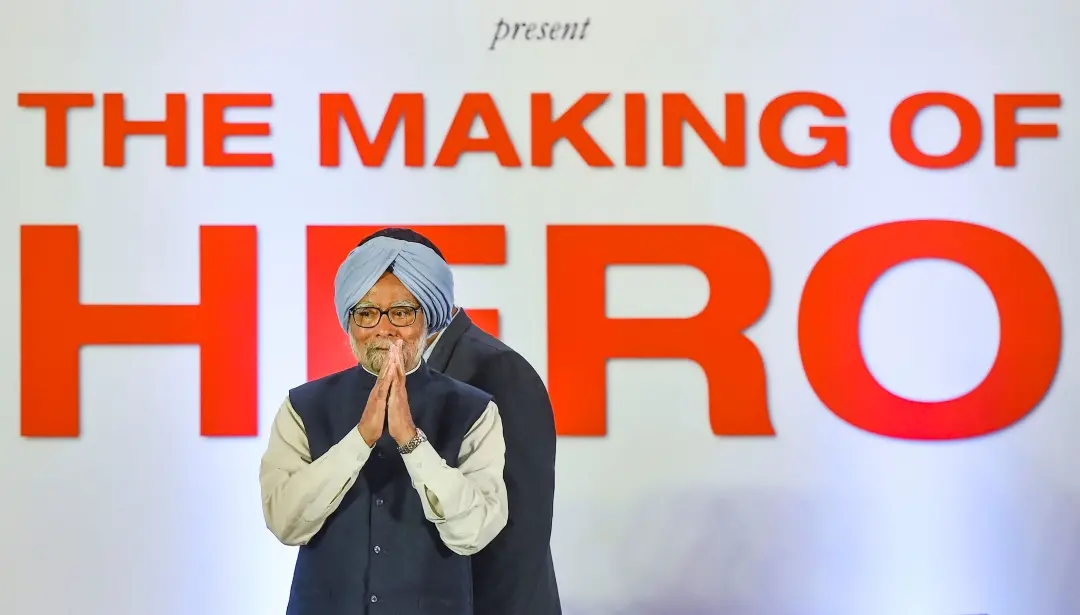
There is a delicious irony in the political afterlife of Dr Manmohan Singh. The man who helped liberate India from the Licence Raj eventually became Prime Minister of a political party that never quite liberated itself from the dynastic raj.
In 1991, as Finance Minister in PV Narasimha Rao's government, Singh helped dismantle an economic order built on licences, quotas, controls and bureaucratic permission. India was almost bankrupt, and its foreign exchange reserves were desperately low. Evidently, the old economic model had reached the end of its tether. Singh supplied the intellectual architecture for its dismantling, while Narasimha Rao provided the political authority to turn those ideas into policy.
Also Read: The rise of politics beyond political parties
It should be noted that without Rao's political backing, Singh's prescriptions might have remained what they were on paper, merely an economist's diagnosis of a crisis rather than the beginning of an economic transformation. Singh supplied the intellectual framework; what followed would transform the Indian economy and, in time, the aspirations of an entire generation.
A generation later, India was a different country. Liberalisation did not abolish inequality, inherited wealth or privilege, but it created an enormously larger space for private enterprise, professional ambition, entrepreneurship and social mobility. It helped produce a middle class increasingly accustomed to the idea that one could make something of oneself without waiting for the state, a political patron or a family name to confer permission. And precisely therein lies the great historical irony. The economy was liberalised, but the Congress party was not.
I made a similar argument in my essay, 'Manmohan Singh: The Constrained Genius', written after his death in December 2024. Singh's tragedy was not simply that he presided over the failures of UPA II. It was that an extraordinary intellect operated within a political architecture that placed obvious limits on his authority.
Sonia Gandhi has now returned to the question of Singh's legacy following the Supreme Court's acceptance of the CBI's closure report in the coal allocation case. She has argued that history will remember Singh kindly and described him as India's most consequential Prime Minister. There is much justice in the attempt to separate Singh's personal integrity from the scandals that engulfed UPA II.
The Supreme Court's decision is significant precisely because allegations of criminal culpability should not be allowed to survive indefinitely as political folklore once the legal process has found otherwise. But the judgment does not turn every decision of UPA II into a model of governance.
The 2G controversy, the Commonwealth Games mess, coal allocation and the perception of policy paralysis remain part of the historical record. Singh need not have been flawless to have been consequential, and indeed, that is precisely what makes his story interesting.
Also Read: Statutory patriotism and the Right to Silence
His first term was extraordinarily consequential. The Right to Information Act, MGNREGA, and the Right to Education Act reshaped the relationship between citizen and state. The India-US civil nuclear agreement marked a major strategic shift. India weathered the global financial crisis comparatively well, and the economy experienced years of remarkable growth. Yet the Prime Minister's authority increasingly appeared conditional.
The phrase “two centres of power” became a convenient shorthand for this arrangement. Singh occupied the constitutional office, while Sonia Gandhi exercised enormous authority within the party that sustained his government. Whatever the precise balance of power at any given moment, the public perception of divided authority became politically damaging.
Then came September 2013. Rahul Gandhi, by then Congress vice president, publicly denounced an ordinance approved by the Union Cabinet. He openly called it “complete nonsense” and said it should be torn up and thrown away. The Cabinet was forced to withdraw it subsequently.
The policy merits of the ordinance can be argued, but the political symbolism is harder to dispute. This was not an opposition politician humiliating a government. It was the ruling party's heir apparent publicly repudiating a decision of his own government's Cabinet while the Prime Minister was abroad. It was almost a constitutional satire. The Prime Minister had the office, but the heir appeared to have the authority.
A few months later came Rahul Gandhi's infamous interview with Arnab Goswami. It was billed as his first major television interview after a decade in politics. By then, he was being prepared, however formally or informally, as the future face of the Congress. The interview became a political Rorschach test. Supporters saw an inexperienced politician struggling against a hostile interviewer. Critics saw something more damaging, a politician whose inherited political stature vastly exceeded his demonstrated preparedness. Either way, the image stuck.
Politics is unforgiving about images, particularly when they crystallise a political impression. Rahul Gandhi has spent his subsequent career under the shadow of two such images: publicly tearing up an ordinance passed by his own government, and then struggling to withstand a televised interrogation by Arnab Goswami. These became anchors, and once a politician has been mentally classified as entitled, privileged or unprepared, subsequent evidence is rarely received in a vacuum. It is interpreted through the frame already established. And this is where the story of Dr Manmohan Singh becomes larger than the man himself.
Also Read: How a generation shook the cult of invincibility
Dr Manmohan Singh had no political inheritance. He accumulated authority through scholarship, expertise, public service and achievement. The man who helped create a more aspirational India was, in that sense, the antithesis of political entitlement.
The Congress, increasingly, was not. This is perhaps one of the reasons the party became so disconnected from the India that emerged after 1991. The new Indian middle class was increasingly entrepreneurial, impatient, individualistic and aspirational. It was less deferential to inherited authority, and it did not necessarily want a political family to tell it who its leaders should be.
Yet the Congress has continued to behave as though political leadership were a family heirloom. There is no need to romanticise liberalisation. It did produce winners and losers, left enormous inequalities unresolved, but it undeniably changed the psychology of aspiration in India. And the Congress failed to understand the psychological revolution it had helped unleash. Singh liberalised the economy, but the Congress never liberalised itself. That may explain more about the party's decline than the shortcomings of any single leader. It also makes the contrast with Singh particularly poignant.
The man routinely caricatured as weak may eventually be remembered as one of India's most consequential Prime Ministers. The party that regarded itself as indispensable discovered that it was not.
Was Singh the most consequential Prime Minister in India's history, as Sonia Gandhi now argues? That is harder to sustain. Nehru, Indira Gandhi, Narasimha Rao and Narendra Modi have each altered the Indian state and political order in ways of enormous consequence. But Singh's particular achievement may be stranger. He was consequential without looking like a consequentialist. He did not cultivate the theatre of power. He exercised the quieter power of ideas, institutions and policy. And perhaps that is why the historical verdict on him is changing.
The greatest irony is that Manmohan Singh helped create an India increasingly suspicious of inherited privilege, while the political organisation around him remained increasingly dependent upon it. He opened India's economy. The Congress kept its doors closed. History may yet decide that the constrained genius was never the problem, but the constraint certainly was.
The author is a National Award winner for Best Narration and an independent political analyst. Views expressed are personal.