OPINIONFrom crowd faces to stardom - The invisible lives of film ‘Extras’
Way back in 1994, I happened to watch a documentary film called The Clap Trap 1993) at the MIFF in Mumbai. She was an alumnus of FTII but stories went around that she had migrated to Canada after this film and was never heard of again in relation to the film industry.
The film featured the life stories of two major junior artistes in Mumbai, one a man with a hero-like body and the other a woman. Both of them confessed that they had entered into films with dreams of making it big. The man had also landed himself the role of hero in his first film. “But the film was never made and after waiting for another dream role for some months, I began to accept bit roles in big films,” he says. He is one among the higher hierarchy of extras and maintains a telephone in his small flat where he lives with his wife and children. “It was destiny that came in my way and who can I blame for it, tell me?” he asks, philosophically. The film shows how while ‘selecting’ females for a certain scene, the agent or his crew ignore the older women in favour of the younger ones even when older women are called for. “It’s because we cannot give it to them,” says one brutally candid old woman into the camera. And this is a pointer to the bed hopping the girls have to do in order to get that ‘bit’ role.
Do you know that Prabhu Deva and Kamal Hassan began their career as “extras”? You probably do not because over time, these two managed to step out of the crowd scenes or dance choruses to make it big and how! Who is an “extra”? An ‘extra’ is an actor who must have stepped into films with dreams of becoming “Amitabh Bachchan” but when after years of walking through the studios, greasing the palms of arrogant door-guards, being slapped around by chamchas of stars, he found himself reduced to becoming one person in a crowd in a scene shooting a “morcha” or a crowd shooting a “mill strike” or a “death” procession. No one anywhere in the film industry except some of his close colleagues, knows him by name. He lives a hand-to-mouth existence in a chawl with wife and kids and is used to the fact that he will never get even close to Bachchan in any scene featuring the mega star.
The ‘fate’ of a film extra was essayed briefly but eloquently in Hrishikesh Mukherjee’s film Guddi. It was a sub-plot that shows how a village boy, portrayed by the debut-making Asrani, with dreams of making it as hero in Hindi films, runs away with his widowed mother’s money and jewellery, only to land up as an ’extra’ in films. The etymology of names and labels is rather ironic, when it comes to junior artistes in the film industry. They are labeled ‘junior artistes’ perhaps in order to vest their disrespectful profession with some semblance of dignity. But it does not work really, because they are aware of their status in films, and out of it.
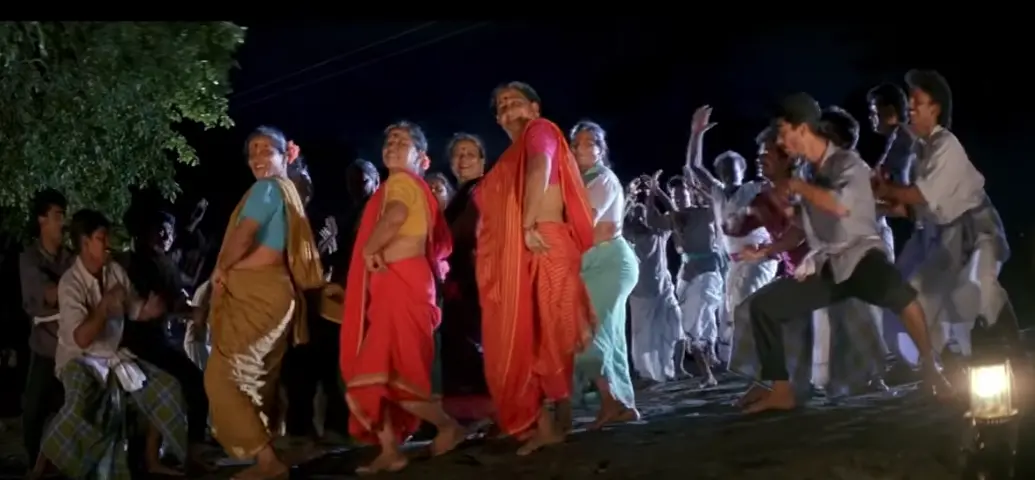
They are neither ‘junior’ nor are they ‘artistes.’ They are the ‘extras’ who dot a crowd scene or a procession, or a fight scene, or, at best remain in the background doing ambivalent gyrations in a dance scenario where the frame is hogged by the lead pair. They are men and women who will remain a part of the crowd, a dot in a morcha, may be with a short line or shout to be delivered on cue and then recede into the background. Among them are old men and women, teenage girls, some beautiful, some not and some hiding their faces behind layers of cheap make-up. They must wait for an agent outside the compound of a film studio anywhere in Mumbai, Chennai, Thiruvananthapuram, Hyderabad or Kolkata, who might make the long wait worthwhile. If the agent or ‘extra-supplier’ selects them for a particular scene or shot to be filmed on a studio floor, their prayers will be answered. The selected ones will hurriedly pat on some make-up, some will be given costumes depending on the need of the particular scene, while some will have to go back home and come again the next day, to queue up for a bit part.
Junior artistes cannot enter the industry on their own. They must first register their names with the organization which enrolls and registers them, they must pay for an identity card and then make early morning visits to the studios on a given ‘shooting’ day to wait in a queue for a call from the agent’s man. If one extra gets the chance of appearing in a marriage scene or a fight scene, well and good. If not, he/she must return empty-handed and come again the next morning.
Rajeswari Parasa in her in-depth article on ‘extras’ in Telugu cinema in The News Minute (14th April 2021) narrates the story of Mahesh Naidu who has been an ‘extra’ in the industry for over 40 years now, and lives alone in a small makeshift house on the road attached to Annapurna Studios, 7 Acres, near Krishna Nagar. He fondly recalls his first film with veteran actors NTR and Jayalalithaa. He was a child artist in the film, Kathanayakudu. When there is no work in the industry, Mahesh sells stickers in the market, placing them on an inverted umbrella. Mahesh has appeared in movies like Sye Ra Narasimha Reddy and serials like Karthika Deepam. He has played a beggar, a member of the crowd and many more such roles.
The Union Office for Telugu films in Krishna Nagar of Hyderabad gets information about all the shootings happening in the city, and the number of junior artists required for each of them. The artists go to the concerned locations based on this information, be it Film Nagar in the city or Ramoji Film City in the outskirts. Be it a crowded market scene, jatra scene or procession, Varalamma, a veteran junior artiste, is there with her co-actors in many Telugu films, invisible to the audience but necessary to give the scene its atmosphere.
Junior artists across India in the film industry today can hope to earn from ₹350 to ₹1,500 per day, though payments are frequently delayed, heavily skimmed by middlemen, or left unpaid. Most junior artists are underpaid, earning between Rs 350 to Rs 1,100 (if it's a Bollywood film) per day. On average, it is Rs 500 per day. They are afraid that if they ask for more, they may lose the next day's work. There is no guarantee that they will find work every day, and they believe it is a matter of luck. While most of them try to find work for at least 15 out of 30 days a month, they can only manage to be hired for about 10 days.
Exploitation and abuse are a part of the daily world. At a recruiting shack in a Mumbai studio, a shady character was preparing to shoot some vague film. He came to a waiting teenager, plump and a bit scared, and pinched her bottom in full view of the others. When she made a slight noise of protest, he showered a mouthful of abuses on her in his unprintable vocabulary and moved away in disgust to approach another waiting teenager. The former girl was out. But she could not remain out so she had to relent, may be to someone else to keep body and soul together. Though most of them somehow feel compelled to dole out the hefty annual fee for their membership of The Junior Artistes’ Association in Mumbai that was formed to safeguard their interests, the middle-men see to it that such ‘safeguarding of interest’ is more the exception than the rule. The Association was formed way back in 1948 and classifies members under three main categories. Four to five members of a selection committee formed by the Association scrutinizes the application forms of newcomers to the profession once a year.
There are class and racist distinctions too. White extras are paid higher fees only because they are White and young girls and muscled boys who can dance well or are trained in dance are paid higher fees than ordinary extras. We have failed to shrug off our colonial mindset even 79 years after August 15, 1947.
Officially speaking, the only acknowledged ‘extra’ who really made it big in the glossy world of commercial Hindi cinema was Mumtaz. Almost every young man and woman steps into the film world with stardust in his or her eyes, dreaming of watching his/face splashed all over the marquee and the posters. But the film world is like Ali Baba’s magic cave and if you do not know the magic word, you can never come out. So, with time, they reduce themselves to become ‘extras’ without even being aware of it. By the time they wake up to the brutal truth, it is too late to turn around and go back to where they came from. Jackie Shroff made his maiden appearance as one of the villain’s henchmen in a Dev Anand film called Swami Dada.
Children, who step into films in important roles, begin to dream of becoming stars when they grow up. Many of them are reduced to becoming extras because a childhood wasted in film studios deny them of a decent education so they cannot find work anywhere in any other capacity.
Let me end this with a tribute to the late S.M. Lakshmi, the most memorable junior artiste among all. 76 when we saw her in Mani Ratnam’s Roja, she was the same old lady who danced and lip-synced so beautifully to the song-dance number Rukmini, Rukmini and remained eternally grateful to Mani Ratnam who gave her instant stardom by featuring her as the lead in the chorus Rukmini Rukmini. After 60 years of being an extra in Southern films, she turned into an overnight star with that one song-dance number and then vanished into oblivion. Or, to the other world.