OPINIONEthanol and the Indian motorist: Who is really paying for this transition?
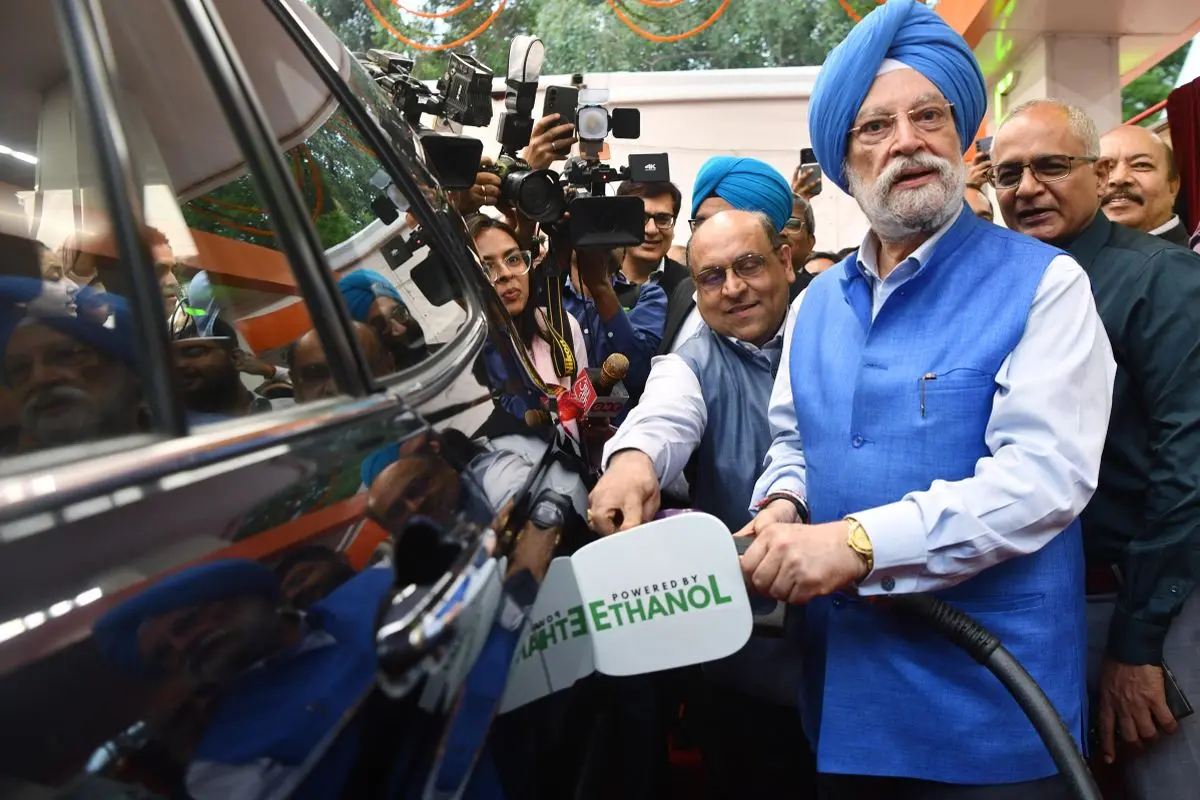
India's ethanol blending programme has been marketed as a patriotic, environmentally responsible and economically prudent initiative. The promise is seductive indeed. Lower crude oil imports, cleaner fuel, better incomes for farmers and a smaller carbon footprint. On paper, it appears to be one of those rare public policies that benefits everyone. Yet, somewhere along the way, one stakeholder has been almost entirely forgotten. The ordinary Indian motorist.
He buys the vehicle, pays the taxes, pays for the fuel and, if something goes wrong, pays for the repairs as well. Yet he has had almost no say in a policy that directly affects the fuel his vehicle consumes. That is perhaps the most troubling aspect of India's ethanol story. It is not merely about ethanol. It is actually about informed consent.
Also Read: Can E20 petrol affect your car insurance?
There is an unfortunate tendency in India to believe that once a policy objective is declared noble, every criticism of its implementation becomes an attack on the objective itself. That is a dangerous way to frame public debate.
Questioning how a policy is implemented is not the same as questioning why it exists. No sensible person would argue against reducing India's dependence on imported crude oil. Energy security is a legitimate national goal and so is reducing emissions. The real question is whether India has chosen the most prudent path towards those goals.
Brazil is frequently cited as the gold standard for ethanol blending. The comparison is convenient, but incomplete. Brazil did not wake up one morning and decide that petrol would henceforth contain large quantities of ethanol. It spent decades building an entire ecosystem around the fuel. Vehicle manufacturers redesigned engines. Fuel systems were engineered to withstand higher ethanol concentrations. Consumers understood what they were buying because the transition evolved over generations rather than through policy announcements.
Also Read: Why India won't offer pure petrol at fuel stations; Centre explains E20-only rollout
India, on the other hand, has attempted to arrive at the destination without fully travelling the road. Manufacturers today advertise many new vehicles as E20 compatible. While that certainly represents some progress, E20 compatibility is not the same as designing vehicles from the ground up to run on high ethanol blends. More importantly, what about the millions of vehicles already on Indian roads that were never built with E20 in mind?
The government's response has largely been that consumers need not worry. That reassurance would have been far more convincing had it been accompanied by a nationwide awareness campaign explaining precisely which vehicles were compatible, what owners of older vehicles should expect, whether maintenance schedules needed revision, and what effect higher ethanol blends might have on fuel economy.
Instead, most consumers learnt about ethanol blending only when they noticed new stickers at petrol pumps. That is hardly transparency. Even manufacturers have often communicated in technical language that leaves ordinary motorists more confused than informed. Compatibility has become a legal disclaimer rather than meaningful consumer education.
Also Read: Those who want 100% petrol will have to pay more: Gadkari defends Ethanol blending
Equally disturbing has been the manner in which genuine concerns have been treated. Instead of patiently answering questions raised by motorists, engineers and consumer groups, the official response has too often been to portray scepticism as opposition to national interest.
Union Ministers Nitin Gadkari and Hardeep Singh Puri have been among the most enthusiastic advocates of ethanol blending, repeatedly emphasising its strategic and economic benefits. There is nothing objectionable about ministers defending a flagship policy. What is objectionable is when criticism of its implementation is brushed aside rather than addressed with evidence.
Democracies are strengthened when governments answer uncomfortable questions with data. They are weakened when legitimate doubts are met with slogans. Then there is another issue that deserves far greater public scrutiny.
India's ethanol programme relies substantially on sugarcane and increasingly on maize. Both are resource-intensive crops. Sugarcane, in particular, is notorious for its thirst. At a time when large parts of India face recurring water stress, groundwater depletion and erratic monsoons, encouraging greater cultivation of water-intensive crops for fuel raises uncomfortable questions.
Every litre of ethanol has a story behind it, and that story includes irrigation, fertilisers, electricity, transportation and industrial processing. It also includes the opportunity cost of using scarce land and water for fuel rather than food or ecological restoration. This is not merely an environmental argument, but an economic one.
If India spends enormous quantities of water to reduce crude imports while simultaneously aggravating groundwater depletion, are we solving one national problem by worsening another? There are alternatives.
Agricultural residues, municipal organic waste, invasive aquatic weeds such as Salvinia molesta and other second-generation feedstocks deserve far greater investment. They do not compete directly with food production and impose a much smaller burden on freshwater resources. Yet they remain peripheral while first-generation ethanol continues to dominate. The irony is striking. India possesses immense scientific talent. What it appears to lack is the political urgency to move beyond the easiest feedstock.
Supporters of ethanol often argue that the programme benefits farmers. That may well be true for many producers. But every public policy produces winners and losers. The consumer deserves to know where he stands in that equation. If fuel efficiency declines because ethanol contains less energy than petrol, the consumer bears that cost. If older fuel systems experience accelerated wear, the consumer bears that cost. If maintenance becomes more frequent, the consumer bears that cost. If water becomes scarcer because thirsty crops receive policy encouragement, society as a whole bears that cost. None of these concerns can be dismissed simply because the larger objective appears desirable.
Public policy also demands transparency. Whenever governments create multi-thousand-crore markets through policy decisions, questions about commercial interests and possible conflicts of interest become both inevitable and legitimate. Questions have been raised in the public domain regarding business interests linked to members of Union Minister Nitin Gadkari's family in the biofuels sector and the rapid growth of those enterprises alongside the expansion of India's ethanol economy. Such perceptions can only be dispelled through complete transparency. Honest governments should welcome scrutiny because transparency protects public confidence as much as it protects public office.
Perhaps the greatest irony is that India did not have to choose between national interest and consumer interest. The government could have invested first in flex-fuel technologies, encouraged second-generation ethanol, mandated comprehensive consumer disclosures, established independent long-term studies on vehicle performance, and introduced E20 only after creating genuine public confidence. Instead, confidence was expected to follow compliance. That is putting the cart before the horse.
Transitions in energy policy succeed not because governments announce them but because citizens trust them, and trust cannot be demanded. It must be earned through transparency, evidence and respect for the consumer. The Indian motorist has displayed remarkable patience. He has absorbed rising fuel prices, changing emission norms and increasing ownership costs with very little complaint. Asking, in return, for complete information about what goes into his fuel tank is not an unreasonable demand.
Patriotism cannot be measured by what we pour into our fuel tanks. Nor should public policy be insulated from scrutiny simply by wrapping it in the national flag. The Indian consumer is not asking for special treatment. He is asking for something far more fundamental. Honesty before compulsion, transparency before compliance, and evidence before slogans.
The author is a National Award winner for Best Narration and an independent political analyst. Views expressed are personal.