OPINIONEnglish, confidence and the unwritten rules for women in Kerala
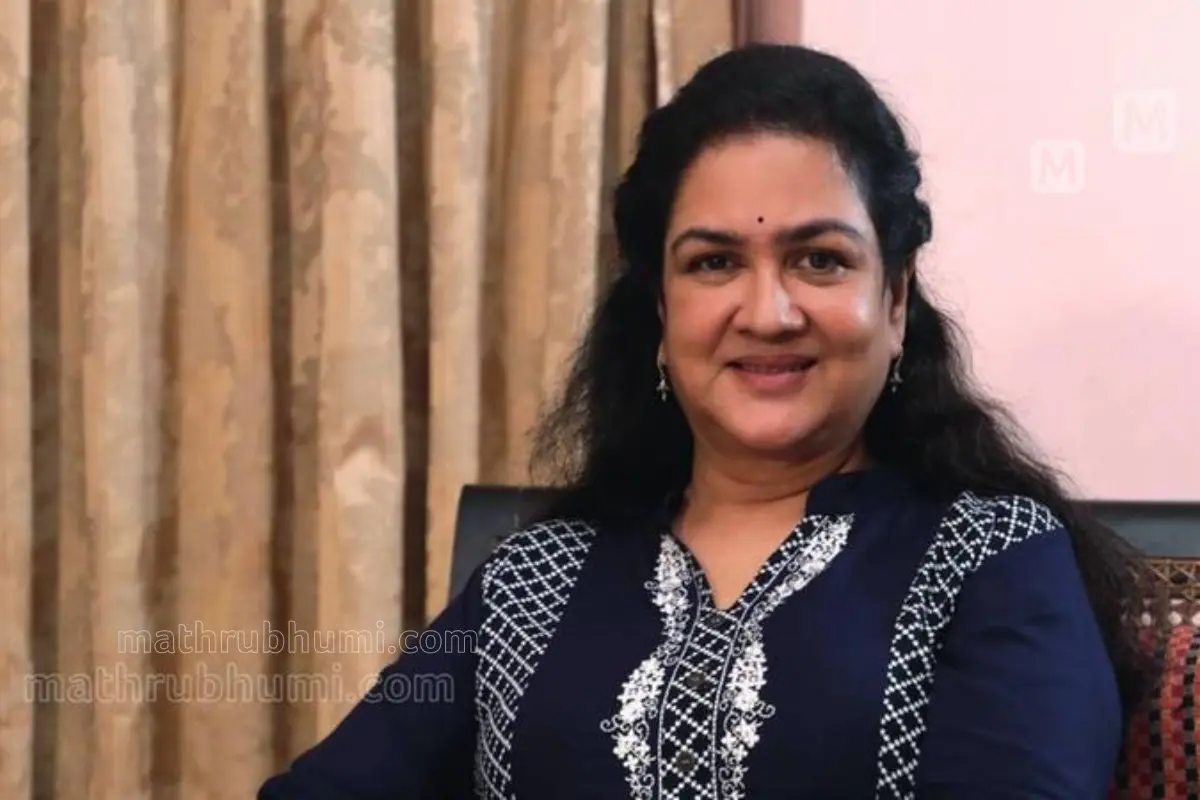
There is something wonderfully revealing about the latest little controversy involving Urvashi, Supriya Menon and the apparently unforgivable crime of speaking English in Kerala. One could almost hear the collective sigh of relief from the Malayalam police, that informal but remarkably efficient, predominantly male fraternity, supported quite eminently by representatives of the state’s own “respectable womanhood”, who have appointed themselves custodians of the Malayali woman’s tongue, clothes, manners, ambitions and, when required, her entire moral character. The original matter was rather mundane and less exciting.
At a programme connected with a Malayalam film, Urvashi apparently wondered why the proceedings were being conducted in English when the audience was Malayali and the subject was Malayalam cinema. It was hardly a matter requiring anything more elaborate than the exercise of ordinary adult judgement. She was entitled to say it as much as the compere was entitled to speak English. End of story, one might reasonably have thought. But this is Kerala, where a woman speaking English is rarely permitted to remain merely a question of language. Supriya Menon subsequently entered the conversation in response to a social media post, speaking from her own experience of being called arrogant because she is more comfortable speaking English. As far as the available account shows, she did not launch some grand assault on Urvashi. Yet before long the machinery had started grinding, and the familiar narrative appeared. Two women had to be made to fight, one of them had to be arrogant, and the assembled male commentariat had to decide which woman had violated the unwritten code of acceptable female behaviour.
This is where it gets interesting. Kerala likes to boast about literacy, education, social development and its allegedly enlightened attitude towards women. The statistics are paraded whenever Kerala wants to congratulate itself in comparison with the rest of India. And yet, beneath all this statistical sophistication, there survives a remarkably primitive little village council devoted to the regulation of women who have the temerity to appear confident in public. The vocabulary is almost ritualistic. She is arrogant and affected. She thinks too much of herself. She speaks English to show off, and she is too modern. She has forgotten our culture, and has no humility. And the best of them all, “She is over-smart.” The accusation changes with the circumstances, but the underlying offence remains remarkably constant. A woman has ceased to behave in a manner sufficiently reassuring to the male ego.
Ranjini Haridas discovered this some time ago. She had (and still has) the misfortune of being articulate, confident, professionally successful and unwilling to pretend that English was a moral defect. Her accent became public property, and so did her clothes and her manner. Her very personality was submitted for examination by a society that apparently believes every successful woman owes it an explanation for her existence. And then there was Jagathy Sreekumar. At a public programme, he chose to mock Ranjini Haridas on stage, ridiculing her manner of presentation and her accent while she was standing there doing her job. The audience laughed and applauded. Ranjini, rather than turning the occasion into a reciprocal spectacle, maintained her composure. She subsequently wrote about what had happened and explained why she found it unacceptable. That episode deserves to be remembered because it tells us something rather more consequential than whether Jagathy was funny. It tells us what happens when a powerful male performer decides that a woman is an acceptable object of public humiliation and discovers that the room is perfectly willing to join him.
There is an additional fact about Jagathy's history that should be stated with the same care the facts require. He was an accused in the Vithura sex abuse case involving a minor, was charge-sheeted and tried, and was subsequently acquitted because the prosecution failed to establish the charges. He was not convicted, all right, and it would be both legally and intellectually dishonest to suggest otherwise. But neither should one pretend that the prosecution did not happen. It did. None of that is necessary to establish that publicly humiliating Ranjini was misogynistic. The incident stands perfectly well on its own. In fact, dragging the Vithura case into it risks allowing people to evade the simpler question. Why was a celebrated male actor permitted to turn a female professional into the butt of a public joke merely because he found her manner irritating, and why did so many people find this amusing?
That question leads us back to the present controversy. A peculiar form of male insecurity in Kerala disguises itself as cultural concern. It becomes terribly agitated when a woman speaks English, dresses confidently, earns money, disagrees with a man, or simply refuses to perform humility on demand. The language of the objection is usually respectable enough. Culture, tradition, humility, Malayalam, and, not to forget, decency. But scratch the surface, and you often find something considerably less respectable lurking underneath. The woman is being reminded of her place. The irony is almost too obvious to require explanation. The Malayali male who will spend three hours discussing American politics, watch an English Premier League match, quote Shakespeare incorrectly, sprinkle his conversation with enough English to frighten a grammar teacher and complain that his children do not speak English properly suddenly becomes the guardian of linguistic purity when a woman uses the language without seeking his permission. Apparently, English becomes imperialism only when it emerges from a woman's mouth. And the moment the woman is successful, articulate and self-assured, the sanctions become more personal. The argument about language becomes an argument about arrogance, and the argument about arrogance becomes an argument about character. The argument about character eventually becomes sexualised abuse. It is an extraordinarily efficient conveyor belt, and Malayalam social media has become very good at operating it.
This is not merely misogyny in some cartoonishly obvious form. It is the everyday misogyny of a society that has become sufficiently educated to know that it ought not to sound misogynistic, while remaining insufficiently emancipated to stop behaving that way. The woman must be educated, but not intimidatingly so. She must speak English, but not with too much confidence. She must have a career, but remain appropriately modest about it. She may become famous, provided she does not acquire the dangerous habit of believing that fame gives her the right to answer back. And if she does answer back, there will always be a thousand Malayali men waiting to explain to her why she is arrogant. Perhaps the most revealing thing about all this is that nobody ever seems quite as frightened of an arrogant man. Men can be loud, pompous, boastful, aggressive and spectacularly mediocre without their character being subjected to the same forensic examination. A man who dominates a room is confident, and a woman who does the same is arrogant. A man who speaks English is educated, while a woman who speaks it too comfortably is affected. A man who insults someone is witty. A woman who objects to being insulted is difficult! It is not a language problem. It is not a culture problem. It is not even, ultimately, an English v Malayalam problem. It is the ancient and rather shabby problem of men discovering that women are not obliged to make themselves smaller so that men can feel larger.
For a state that never tires of congratulating itself on how progressive it is, Kerala still has a surprisingly large number of men who appear to locate their intellectual centre somewhere considerably south of the brain. And perhaps that is the one language reform we actually need.
(The author is a National Award winner for Best Narration and an independent political analyst. Views expressed are personal.)