Will your Internet go down? Iran warns of risk to key undersea cables
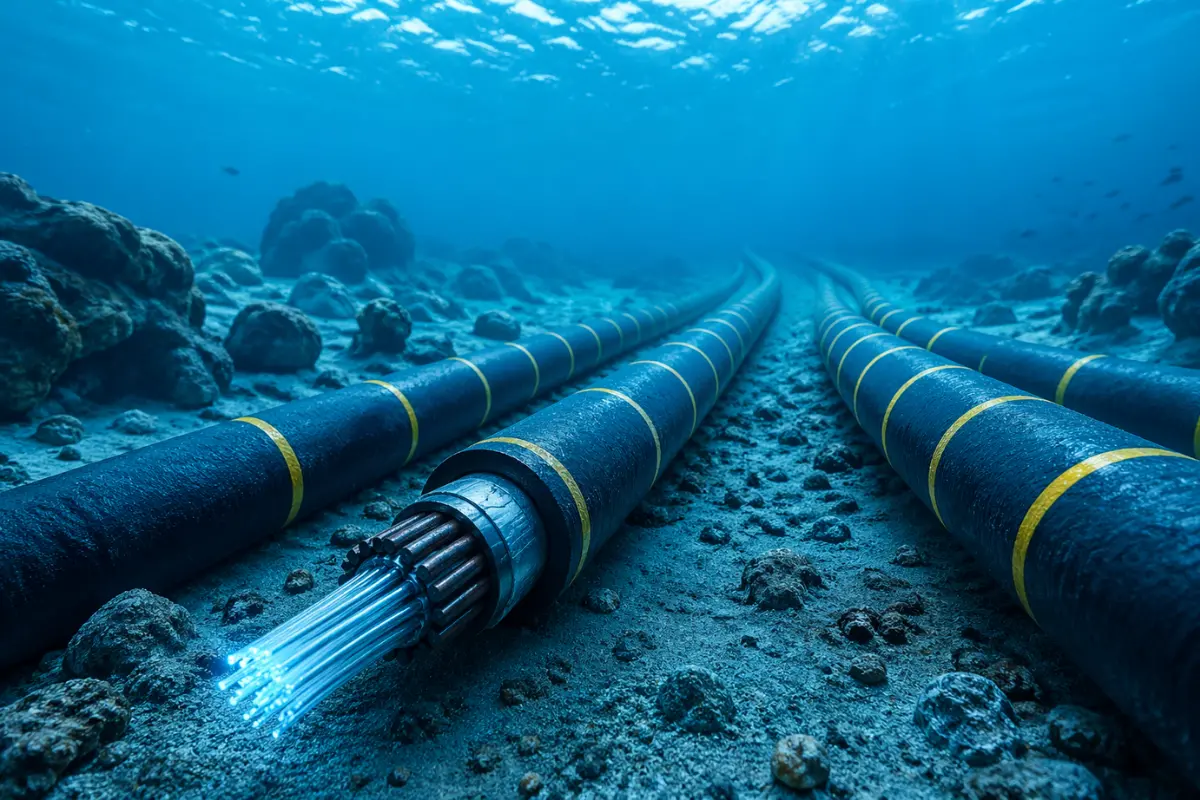
Tehran: Beneath the strategic waters of the Strait of Hormuz lies a vast and often overlooked network of undersea data cables, critical arteries of the global internet, now at the centre of rising geopolitical tensions.
Iranian news agency has reported that the country’s paramilitary Islamic Revolutionary Guard Corps (IRGC) issued a warning about the vulnerability of these underwater communication lines. The report, published by Tasnim News Agency, cautioned that "simultaneous damage to several major cables" could have far-reaching consequences.
"Simultaneous damage to several major cables - whether through accidents or deliberate action could trigger severe outages across the Persian Gulf," the agency said.
A global digital choke point
The Strait of Hormuz is widely known as one of the world’s most critical oil chokepoints. Less visible, however, is its equally vital role as a digital corridor. A dense web of fibre-optic cables runs beneath its seabed, carrying an estimated 17% to 30% of regional internet traffic and linking Asia, Europe and the Middle East.
These cables underpin everything from global financial transactions and cloud computing to everyday communication such as emails and video calls. They also support large-scale artificial intelligence infrastructure in Gulf countries, including the UAE and Saudi Arabia, backed by major technology firms such as Amazon, Microsoft and Google.
Any disruption to this network could ripple far beyond the region, affecting economies and digital systems worldwide.
Why India is exposed
For India, the risks are particularly significant. The undersea cable network connects through landing stations in countries close to the current conflict zone, including Oman, the UAE and Pakistan.
As one of the world’s largest data consumers, India’s digital economy, spanning IT services, fintech platforms and AI-driven operations, depends heavily on these international links. A disruption could lead to slower internet speeds, instability in cloud services and digital payments, and broader economic consequences.
Tensions spill into infrastructure concerns
The warning comes amid heightened tensions in the Gulf. Iran’s Foreign Minister Abbas Araghchi placed the blame for instability squarely on Washington and Tel Aviv.
"Iran, as a littoral state of the Strait of Hormuz, has adopted measures in accordance with international law and its domestic regulations to safeguard Iran's security and national interests against the US's and the Zionist regime's aggression and threats," he said.
"Naturally, responsibility for the consequences arising from this situation lies with the aggressing parties."
He also urged countries to take a firm position, calling for condemnation of the "aggression and the brutal crimes committed by the aggressors against the Iranian people", while signalling Tehran’s willingness to expand cooperation with South Korea.