Explainer: Why docking satellites in space is big deal for India
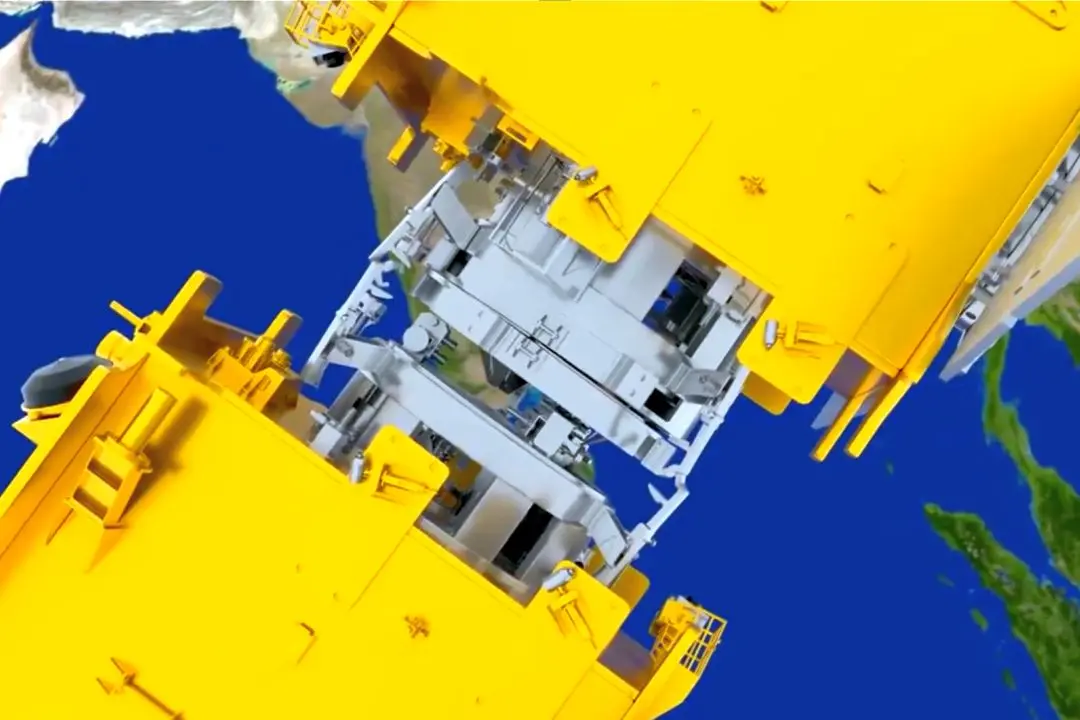
India has joined the exclusive club of spacefaring nations capable of docking satellites in orbit! The Indian Space Research Organisation (ISRO) achieved this milestone with their Space Docking Experiment (SpaDeX) mission. But what exactly does this mean, and why is it such a big deal?
Docking: A Delicate Dance in the Cosmos
Imagine trying to connect two cars speeding down a highway. That's essentially what satellite docking is, but with much higher stakes and precision. It involves bringing two spacecraft, traveling at thousands of kilometers per hour, into close proximity and then joining them together securely. This requires incredible accuracy and control.
A Look Back at Docking History
While India is the latest entrant, the history of space docking goes back decades:
1966: Gemini 8 (USA): Neil Armstrong, who later became the first man on the moon, piloted the Gemini 8 spacecraft to the first-ever successful docking with an Agena target vehicle.
1967: Kosmos 186/188 (USSR): The Soviet Union demonstrated automated docking with their Kosmos satellites.
1975: Apollo-Soyuz Test Project (USA/USSR): This historic mission saw the docking of an American Apollo spacecraft with a Soviet Soyuz spacecraft, symbolizing cooperation amidst the Cold War.
2012: Tiangong-1/Shenzhou-9 (China): China successfully docked its Shenzhou-9 spacecraft with the Tiangong-1 space lab module, a key step in their space station program.
Why is Docking important?
Mastering this technology opens doors to more complex and ambitious space missions:
* Building Space Stations: Think of the International Space Station (ISS). It wasn't launched in one go. Different modules were sent up separately and then docked together in orbit. India has similar ambitions with its planned 'Bharatiya Antariksh Station', and docking is crucial for its construction.
* Lunar and Deep Space Missions: For missions to the Moon or even further, docking allows for the assembly of spacecraft in space, transfer of crew and cargo, and even the creation of refueling depots.
India's SpaDeX Mission: A Closer Look
SpaDeX involved two satellites:
* Chaser (SDX01): This was the active satellite, responsible for maneuvering and docking with the Target.
* Target (SDX02): This was the passive satellite, equipped with the docking mechanism for the Chaser to connect to.
Both satellites were launched on December 30, 2024, and after a series of maneuvers, the Chaser successfully docked with the Target on January 16, 2025.
The Docking Process: A Step-by-Step Guide
* Approach: The Chaser gradually approached the Target, closing the distance between them in stages.
* Alignment: Using sophisticated sensors, the Chaser precisely aligned itself with the Target's docking port.
* Capture: The docking mechanisms on both satellites, designed to be compatible, made contact and initiated the connection.
* Secure: Once captured, the mechanisms retracted, pulling the satellites together and forming a secure link.
Key Sensors: The Eyes and Ears of the Mission
Several sensors played a vital role in the docking process:
* Laser Range Finder: This measured the precise distance between the two satellites.
* Rendezvous Sensor: This helped track the relative position and velocity of the Target satellite.
* Proximity and Docking Sensor: This provided crucial data during the final approach and docking phases.
India's Innovation: A Simpler Docking System
While other space agencies use complex docking systems with numerous motors, ISRO took a simpler approach. Their androgynous docking system uses only two motors for guidance and alignment. This contrasts with the International Docking System Standard (IDSS), which uses 24 motors.
This innovative design showcases India's ability to develop cost-effective and efficient solutions for complex space endeavours.
Road to Success: Not Always Smooth Sailing
ISRO's journey to successful docking wasn't without its challenges. They initially planned to dock the satellites on January 7 and then again on January 9, but technical issues caused delays. This highlights the complexity of such missions and the need for meticulous planning and execution.
What's Next for ISRO?
The SpaDeX mission doesn't end with docking. ISRO plans to conduct further experiments, including:
* Power Transfer: Demonstrating the ability to share power between the docked satellites.
* Controlled Separation: Safely undocking the satellites.
* These experiments will provide valuable data and experience for future missions, including the assembly of India's space station and lunar exploration.
ISRO's successful docking is a testament to India's growing capabilities in space technology. It's a moment of national pride that will inspire future generations to dream big and contribute to India's continued journey in exploring the cosmos.
The author of this article is a Defence, Aerospace & Political Analyst based in Bengaluru.