Not science fiction: Race to weaponize orbit and the Moon is a reality
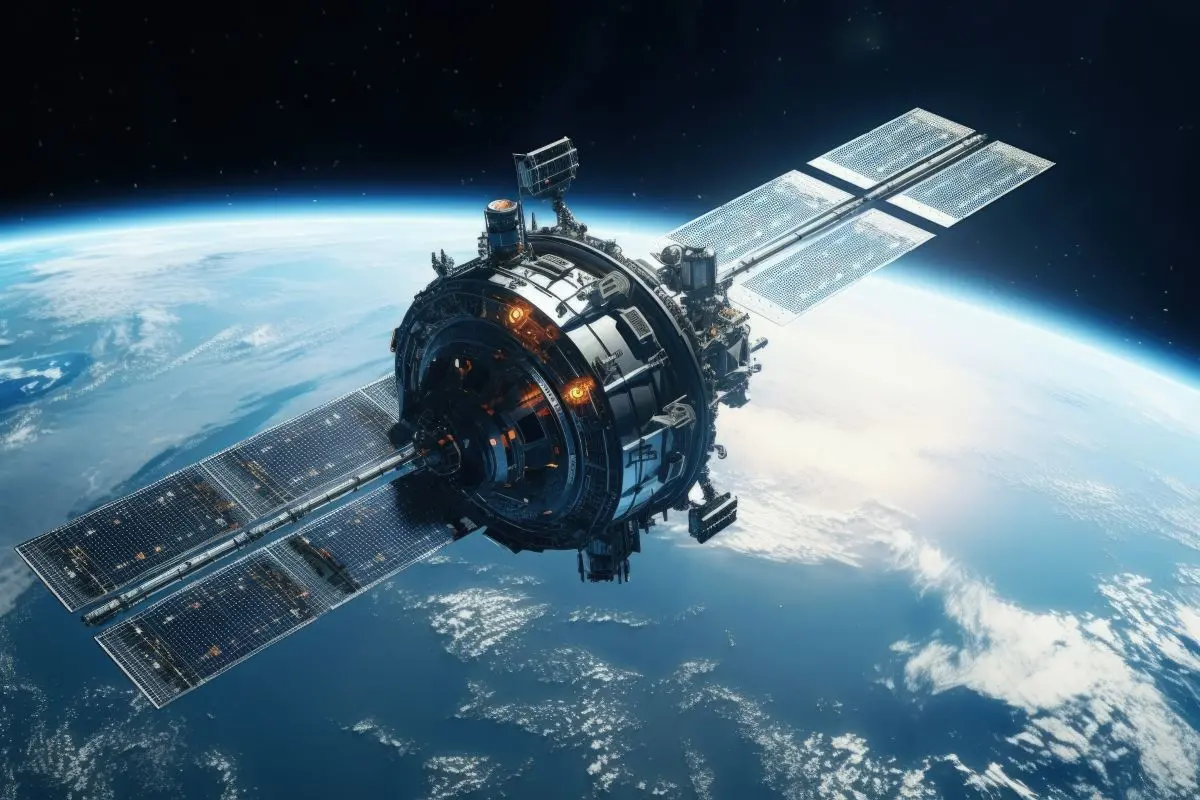
As nations race to secure their dominance in a new era of space exploration, orbiting satellites have emerged as critical military and economic targets, transforming cyberspace and outer space into a new battleground.
This year, on Russia's Victory Day, pro-Kremlin hackers reportedly hijacked a satellite providing television service to Ukraine, broadcasting Moscow's military parade instead of regular programming. The incident served as a stark reminder that modern warfare extends beyond traditional domains.
"If you can impede a satellite's ability to communicate, you can cause a significant disruption," said Tom Pace, CEO of cybersecurity firm NetRise. He added that the loss of a system like GPS could cause widespread confusion and chaos.
The Threat of Space Weapons
With more than 12,000 satellites now orbiting the planet, these assets are crucial for a wide range of functions, including military operations, navigation, intelligence gathering, and global communication. This makes them a prime vulnerability for any nation seeking to undermine an adversary.
US officials have declassified information about a new Russian nuclear, space-based weapon designed to take out virtually every satellite in low-Earth orbit. If deployed, the weapon would trigger a devastating ripple effect, destroying satellites and potentially rendering the region unusable for up to a year.
"If this anti-satellite nuclear weapon would be put in space, it would be the end of the space age," said Rep Mike Turner, R-Ohio. He compared the threat to the Cuban Missile Crisis, calling it a "Cuban Missile Crisis in space."
Russia and China would also lose their satellites in such an event, though they are believed to be less reliant on the same systems as the US.
In a statement, a spokesperson for China's Embassy in Washington, Liu Pengyu, denied Beijing's involvement in an extraterrestrial arms race and instead accused the U.S. of militarizing space. "It has kept expanding military strength in space, created space military alliances, and attempted to turn space into a war zone," Liu said.
Race for the Moon and Beyond
The competition for dominance extends to celestial bodies. Acting NASA Administrator Sean Duffy recently announced plans to send a small nuclear reactor to the moon, stressing the need for the US to get there before China or Russia.
The moon is believed to be rich in helium-3, a material that scientists think could be used for nuclear fusion to generate vast amounts of energy. Experts believe that control over such resources could determine future global superpowers.
"This isn't sci-fi. It's quickly becoming a reality," said Joseph Rooke, a London-based cybersecurity expert. "If you dominate Earth’s energy needs, that’s game over."
The US Space Force, created in 2019 to protect American interests in space, has declared space a "warfighting domain." However, US officials acknowledge that American dominance in space is no longer a given and that an aggressive response is needed to counter the new threats posed by Russia and China.