Dr EK Janaki Ammal: The forgotten Malayali botanist
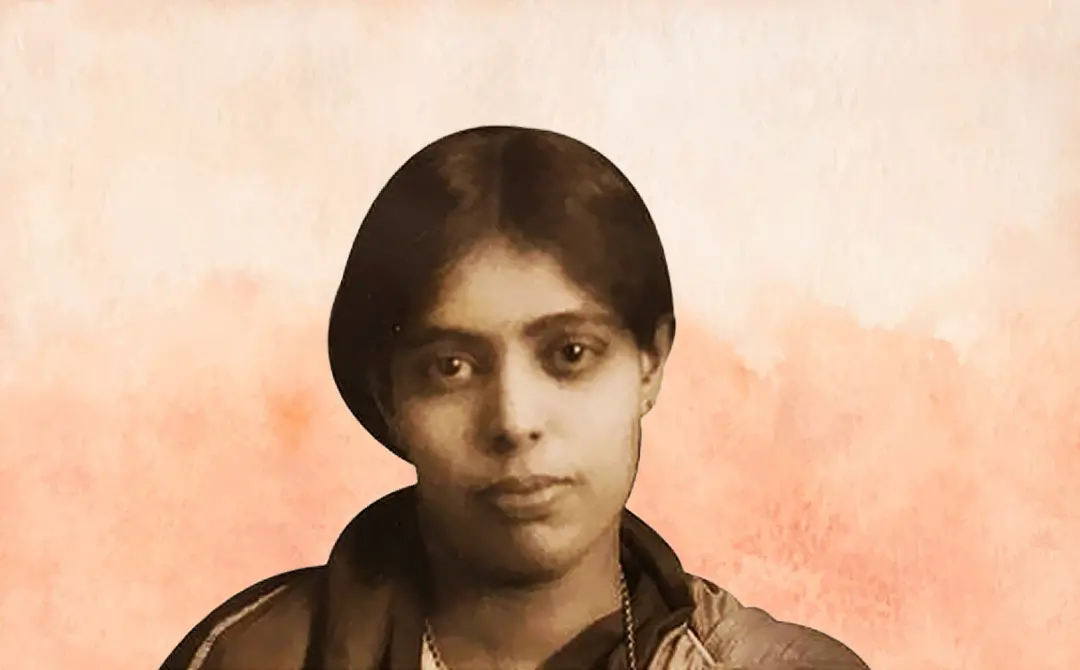
It is unclear whether majority of Malayalis today truly know about Dr Edavalath Kakkat Janaki Ammal, a woman who achieved remarkable academic success in the caste-driven early 20th century in Kerala and went on to become one of the most accomplished figures in India’s scientific community.
She was India’s first female botanist, the country’s first woman to become a botany professor, renowned for her contributions to plant breeding, cytogenetics, and phytogeography and the scientist personally invited by Prime Minister Jawaharlal Nehru to reconstitute the Botanical Survey of India after Independence.
Despite her groundbreaking contributions, she remains largely absent from mainstream discussions on India’s scientific legacy. Her name does not feature in school textbooks in Kerala, nor is she celebrated with the same reverence as many of her male counterparts.
On this Women’s Day, it is time to rediscover and honour her remarkable journey.
Early Life and Educational Journey
Born in 1897 in Thalassery, Janaki Ammal belonged to a reputed family—her father, Diwan Bahadur E.K. Krishnan, was a respected sub-judge. Despite societal norms discouraging women, especially those from marginalized communities, from pursuing higher education, Janaki’s intellectual curiosity could not be restrained.
After completing her schooling in Thalassery, she earned a bachelor’s degree from Queen Mary’s College, Madras, followed by a master’s degree from Presidency College. In an era when very few Indian women even entered higher education, she secured a prestigious scholarship --Barbour Scholarship-- to study at the University of Michigan in the United States. There, she specialised in cytology, a branch of genetics focusing on the structure and function of plant cells. In 1931, she became the first Indian woman to earn a doctorate in Botany.
After returning to India some years later, she joined the Maharaja's College of Science in Trivandrum—now known as University College, Trivandrum—as a Professor of Botany. She served as an Assistant Professor from 1932 to 1934 before moving to London to work at the John Innes Institute in Merton.
She later returned to India and joined the Sugarcane Breeding Institute in Coimbatore, working alongside C.A. Barber. Her research focused on developing hybrid varieties, including the intergeneric cross SG 63–32, which contributed to advancements in sugarcane cultivation.
A career rooted in research
Credit: BSI Kolkata
Janaki Ammal was a researcher whose work spanned three continents—Asia, North America, and Europe. She was the first to demonstrate that intergeneric hybridisation—crossbreeding between different plant genera—was possible. This groundbreaking discovery, made in the 1930s while conducting sugarcane research at the Imperial Sugarcane Station in Coimbatore, was published in the prestigious scientific journal Nature.
Her work extended far beyond India. The hybrid sugarcane varieties she helped develop continue to sweeten Southeast Asia, and the magnificent magnolia trees she cultivated still adorn landscapes across Europe. Yet, her name remains unfamiliar to many. She was also a pioneer in ethnobotany, introducing the field to India, though few recognise her contributions.
One of her most enduring legacies is The Chromosome Atlas of Cultivated Plants (1945), a comprehensive study of the chromosomes of 10,000 flowering plant species, including crops and their wild relatives. She co-authored this seminal work with C.D. Darlington while serving as an assistant cytologist at the renowned John Innes Horticultural Institution in the UK.
Over her remarkable 87-year life, Janaki dedicated more than 45 years to scientific research, making invaluable contributions to Botany. She authored numerous research papers in national and international scientific journals.
Nehru's invitation
In 1951, at the invitation of Prime Minister Jawaharlal Nehru, she returned to India to lead the reorganization of the Botanical Survey of India (BSI). As a special officer, she played a key role in restructuring the BSI, ensuring systematic documentation of India’s rich plant biodiversity.
In November 1970, at the age of 73, Janaki Ammal stepped away from official positions. She took up residence at the field laboratory of the Centre for Advanced Study in Botany at the University of Madras, where she served as an emeritus scientist. She spent the reminder of her life there.
It was only after retirement that she began studying the botanical knowledge of indigenous communities in Kerala and Tamil Nadu, marking the beginning of ethnobotanical research in India.
In 1977, the Indian government honoured her with the Padma Shri. She was also a fellow of numerous international scientific societies. In recognition of her contributions to taxonomy, the Ministry of Environment, Forest and Climate Change established the Prof. E.K. Janaki Ammal Memorial Award in 1999 to honour outstanding achievements in plant taxonomy.
To her close family, she was affectionately known as Nachi Amma. Never one to chase accolades or recognition, Janaki Ammal remained devoted to scientific research as her life’s mission. She left behind a lasting legacy of knowledge and inspiration for future generations. On February 7, 1984, she passed away in Chennai.
As we celebrate Women’s Day 2025, her story serves as a powerful reminder of the countless women whose contributions have been overlooked. Recognizing Janaki Ammal is not just about honouring her memory—it is about inspiring future generations to pursue science fearlessly, to challenge boundaries, and to leave behind a legacy as enduring as hers.
(Credits: Joseph Antony, article published in the editorial page of Mathrubhumi newspaper on October 4, 2022)