Perseid meteor shower August 12: When and where to watch in India
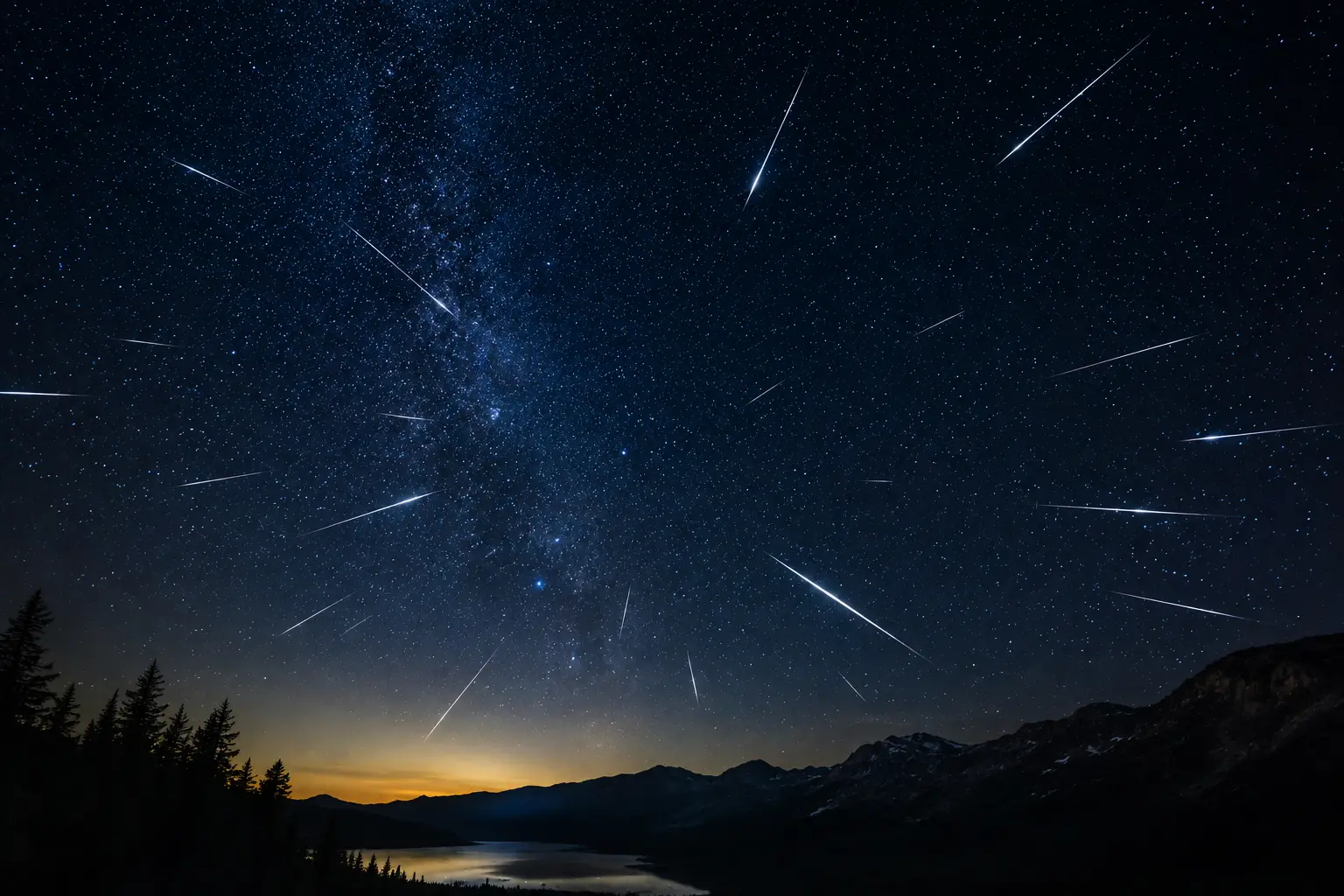
The night sky is set for one of its most anticipated annual displays as the Perseid meteor shower reaches its peak around August 12-13, 2026. Known for producing bright and fast-moving meteors, the Perseids could offer skywatchers an especially striking show this year, with the absence of bright moonlight creating darker conditions for meteor spotting.
The Perseids are active for several weeks each year, but the peak is when the shower becomes most rewarding to watch. Under dark, clear skies, observers can potentially see dozens of meteors each hour, with ideal conditions producing rates of up to around 100 meteors per hour. For viewers in India, the hours after midnight and before dawn are expected to offer the best opportunity.
What is the Perseid meteor shower?
A meteor shower occurs when Earth travels through a stream of dust and tiny fragments left behind by a comet or asteroid. When these particles enter Earth's atmosphere at high speed, friction and compression heat them until they glow, creating the brief streaks of light commonly known as shooting stars.
The Perseids originate from Comet 109P/Swift-Tuttle, a large comet that takes roughly 133 years to complete an orbit around the Sun. It last passed through the inner solar system in 1992 and is not expected to return until 2125.
The comet's orbit leaves behind a broad trail of debris. Earth passes through this trail every year, giving rise to the Perseid display.
Astronomers regard the Perseids as one of the year's most reliable and spectacular meteor showers. The meteors are also known for being relatively bright, with some leaving persistent glowing trails across the sky.
When will the Perseids peak in 2026?
Although the Perseid meteor shower remains active from July into late August, its strongest activity is concentrated around the middle of August.
The 2026 peak falls around August 12-13, with the best viewing opportunities coming during the overnight and pre-dawn hours. For observers in India, the meteor shower should become increasingly visible after midnight as the radiant – the area of the sky from which the meteors appear to originate – rises higher.
Reports citing astronomical predictions have placed the calculated peak around 8:23 pm IST on August 13. However, the precise peak time does not necessarily represent the best viewing time from India. Because of the position of the Perseid radiant, Indian skywatchers are likely to have a better chance of seeing more meteors in the early morning hours.
What time can India watch the Perseid meteor shower?
For skywatchers across India, a useful viewing window is approximately 2 am to 4:30 am IST on August 13, although meteors can be spotted earlier in the night.
The pre-dawn period is particularly favourable because the Perseid radiant will be higher above the horizon. The higher the radiant climbs, the greater the number of meteors that can potentially become visible.
Skywatchers should not expect the meteors to appear only in one small section of the sky. While looking towards the northeastern sky can help, Perseid meteors can streak across large portions of the night sky.
Why 2026 could be a good year for the Perseids
One of the biggest advantages this year is the New Moon.
A bright Moon can wash out faint meteors and make it harder to see the shower, particularly from locations that already have some light pollution. With the Moon largely absent from the night sky around the Perseid peak, darker conditions could make more meteors visible.
This does not mean everyone will see 100 meteors per hour. The often-quoted rate represents favourable conditions at a genuinely dark location. Urban lighting, clouds, haze, the observer's location and the height of the Perseid radiant can all significantly reduce the number of meteors seen.
Where can you watch the Perseids in India?
The best place to watch a meteor shower is generally somewhere far from artificial light, with a broad, unobstructed view of the sky. India's cities can make meteor watching difficult because streetlights, buildings and other sources of illumination reduce visibility.
Several destinations have become popular among Indian stargazers because of their relatively dark skies and favourable landscapes.
- Ladakh
- Spiti Valley
- Jaisalmer
- Coorg
- Andaman and Nicobar Islands
How to watch the Perseids without a telescope
You do not need a telescope or sophisticated astronomical equipment to enjoy the Perseids. In fact, the naked eye is generally the best way to watch a meteor shower because meteors can flash across a wide section of the sky.
Astronomers recommend finding an open location away from streetlights and other sources of artificial illumination. Lie back or sit comfortably and give your eyes around 20 to 30 minutes to adjust to the darkness.
Avoid repeatedly checking your phone. The bright screen can interfere with your eyes' adaptation to low-light conditions.
Rather than constantly moving your gaze around, choose a broad section of the sky and watch patiently. Peripheral vision can be particularly useful for detecting brief flashes of light.
Most importantly, be prepared to wait. Meteor showers are not usually continuous displays. There can be periods of activity followed by several minutes with little or nothing visible.
August falls within India's monsoon season, meaning clouds and rain could obscure the sky in many parts of the country. Even a particularly active meteor shower will be invisible through thick cloud cover.
Perseids are not the only attraction in the August 12 sky
The Perseid peak coincides with a particularly busy period in the 2026 astronomy calendar, with several other celestial events occurring around the same time.
A total solar eclipse will take place on August 12, with totality passing across parts of northern Russia, Greenland, Iceland, northern Spain and a small part of Portugal. The eclipse will not be visible from India.
The same period also features a New Moon, which is particularly helpful for meteor watching because the lack of strong moonlight keeps the night sky darker.
A much-discussed six-planet alignment will also be visible around this period. Mercury, Jupiter, Mars, Saturn, Uranus and Neptune will appear along the ecliptic in the morning sky. However, they will not form a perfectly straight line in space. Their apparent arrangement is largely a perspective effect created by viewing the solar system from Earth.
Some of these planets can be challenging to observe without optical equipment. Uranus and Neptune, in particular, are not easy naked-eye targets, while planets closer to the horizon can be lost in the brightening twilight.