Perseid meteor shower lights up skies after solar eclipse | WATCH
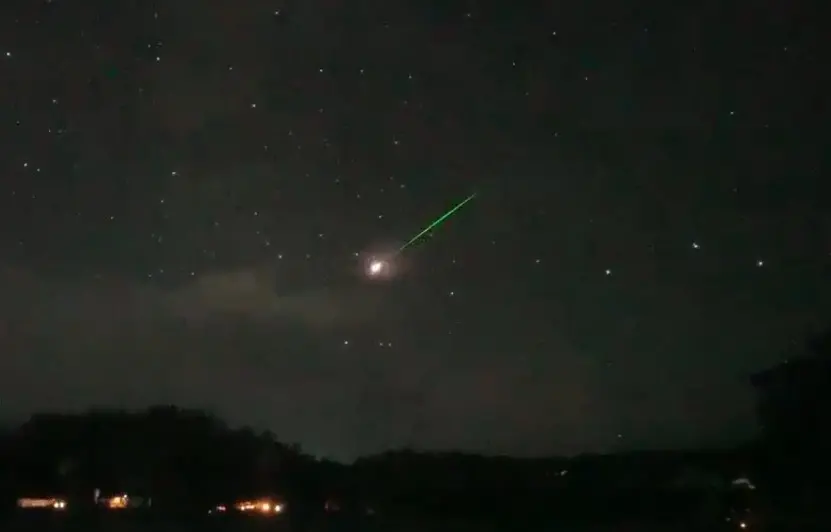
The Perseid meteor shower lit up the night sky after a day of spectacular celestial events, with the annual summer light show reaching its peak shortly after a total solar eclipse crossed parts of Spain, Iceland and Greenland.
The Perseids peaked Wednesday night into Thursday morning, giving skywatchers across the Northern Hemisphere a chance to see bright streaks of light against dark skies. The meteor shower's peak coincided with a new moon, creating especially favourable viewing conditions because there was little moonlight to wash out the fainter meteors.
As many as 50 to 100 meteors per hour could be visible under ideal conditions, according to NASA. The American Meteor Society estimated that 30 to 50 meteors per hour could be seen from rural areas with dark skies.
The Perseids are among the year's most popular meteor showers. They occur when Earth passes through trails of debris left behind by comets and, sometimes, asteroids. Those particles collide with Earth's atmosphere at extremely high speeds, producing streaks of light commonly known as shooting stars.
The Perseids are debris from Comet 109P/Swift-Tuttle, an icy body that orbits the Sun every 133 years. The comet isn't scheduled to return until 2125.
Observations of the meteor shower date back more than 2,000 years. The Perseids remain a perennial favourite because they can produce particularly bright meteors and fireballs, while summer temperatures make it easier for people to spend hours outdoors watching the sky.
“We don't have to suffer through a cold winter night to get a good view of meteors,” said astronomer Zach Vanderbosch with McDonald Observatory in Texas.
The new moon made this year's Perseid peak especially favorable for viewing. With the moon largely absent from the night sky, observers had a better chance of spotting fainter meteors.
“The moon is beautiful, but it’s such a diva,” said astronomer Aparna Venkatesan with the University of San Francisco. “New moon means we don’t have moonlight flooding the sky, and you tend to see way more meteors as a result.”
Venkatesan planned to drive to the Sierra Nevada to find darker skies and get a better view of the meteor shower.
The best views of the Perseids came between midnight and dawn, when the constellation Perseus was high in the northern sky. The meteors appear to radiate from the direction of Perseus, giving the shower its name.
Skywatchers were advised to move away from city lights and clouds and give their eyes about 30 minutes to adjust to the darkness. Astronomers also recommended avoiding phone screens, which can interfere with night vision.
Vanderbosch suggested picking a section of sky and watching patiently for a bright streak to appear, including in the corner of the eye.
“There's just something magical about it,” Vanderbosch said.
The Perseid meteor shower remains active beyond its peak, although the number of visible meteors drops rapidly after the maximum. The shower is expected to remain active through late August.
Perseid meteor shower: How to see it from India
- Best Time: Look up in the pre-dawn hours (after 2:00 AM IST) when the constellation Perseus is higher in the northeastern sky.
- Location: Head away from city lights to areas with low light pollution. High-altitude or rural spots like Ladakh, Spiti Valley, or rural outskirts offer the clearest views.
- Equipment: No telescopes or binoculars are needed; let your eyes adjust to the dark for 20 to 30 minutes