Meet Africa’s 'hell heron': Fossils of new giant Spinosaurus species unearthed in Niger
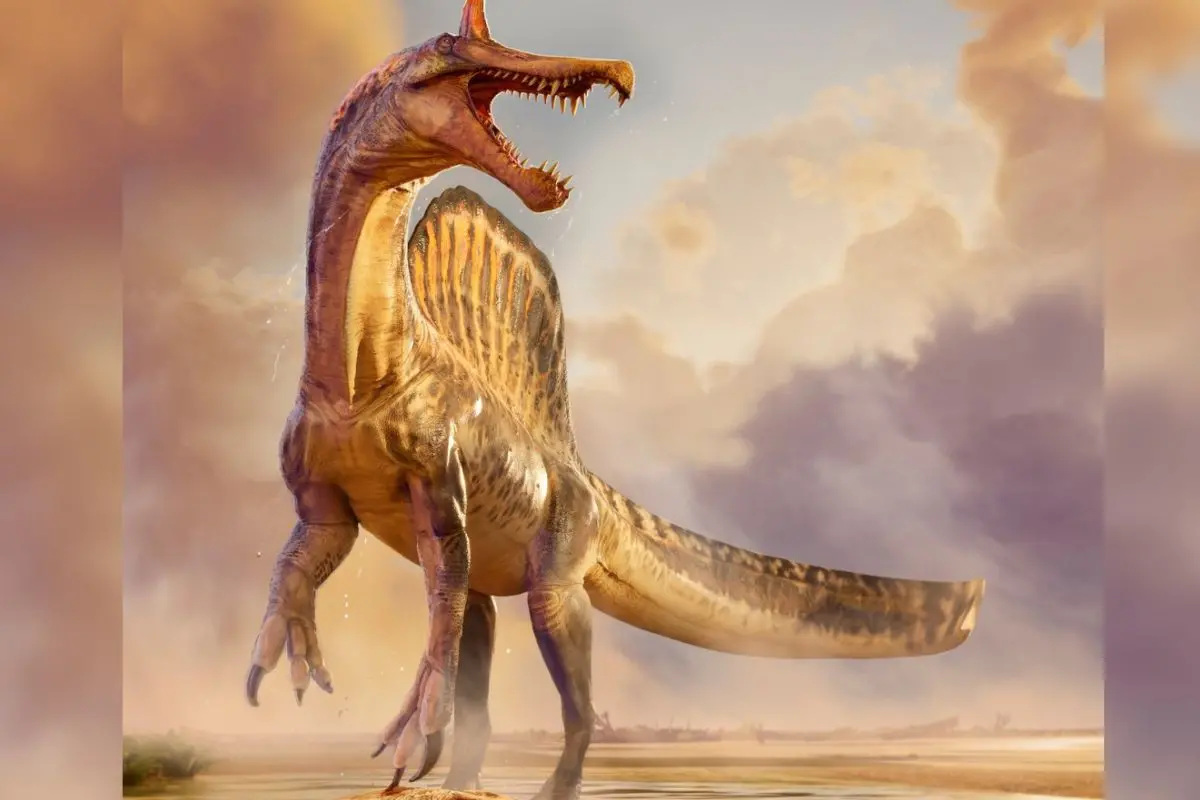
Paleontologists have discovered fossils of a previously unknown species of Spinosaurus, one of the largest meat-eating dinosaurs, at a remote site in the Sahara Desert in Niger. The new species, notable for its dramatic blade-shaped cranial crest and interlocking teeth, hunted fish in rivers and forested inland habitats about 95 million years ago.
Measuring approximately 40 feet (12 metres) long and weighing between 5 and 7 tons, the dinosaur likely prowled shallow waterways, using its elongated snout and specialized teeth to catch large, slippery fish–earning it the nickname “hell heron” from one of the researchers.
Distinctive features and fossil findings
Named Spinosaurus mirabilis, the new species adds to the existing Spinosaurus genus, which now includes only one other species, Spinosaurus aegyptiacus, first described in 1915 from Egyptian fossils. “Mirabilis” means “astonishing,” a reference to its striking 20-inch (50 cm) tall cranial crest. Unlike its relative, Spinosaurus mirabilis has a longer snout, widely spaced teeth, larger hind limbs, and a more prominent crest.
The fossils, recovered from the Jenguebi locality, include parts of three skulls and other bones. The site is a fossil-rich sandstone outcrop surrounded by vast sand dunes, reached after a challenging three-day desert expedition from Agadez.
Adaptations for fish hunting
Spinosaurus mirabilis was a semi-aquatic predator with remarkable adaptations for catching fish. Its nostrils were positioned far back on its skull, allowing the dinosaur to submerge most of its snout underwater while still breathing. Its interlocking teeth, or interdigitation, acted as a highly efficient fish trap.
“Their large conical teeth without serrations that interdigitate form a 'fish trap' that is very good at piercing and trapping slippery fish in the jaws, preventing them from sliding,” said Daniel Vidal, paleontologist and co-author of the study from the University of Chicago and Universidad Nacional de Educación a Distancia in Spain.
“Spinosaurus mirabilis has some of the most extreme piscivorous adaptations of any dinosaur, so we know it was better at preying upon fish than it would have been at preying upon other dinosaurs,” Vidal added.
The role of the crest
The massive bony crest, likely sheathed in keratin, is believed to have been used for display rather than combat. “It's about love and life—attracting a mate, defending your hot feeding shallows,” said Paul Sereno, lead author of the study published Thursday in Science. “What else could be more important?” The crest may have been brightly coloured and functioned in sexual or territorial recognition among individuals.
Insights into semi-aquatic behaviour
While fossils of Spinosaurus aegyptiacus from Egypt and Morocco suggested a marine, possibly open-water lifestyle, the inland location of Spinosaurus mirabilis—300–600 miles (500–1,000 km) from the nearest ancient coastline—indicates a preference for shallow rivers rather than full aquatic life. Sereno described the discovery as “the coup de grâce for the aquatic hypothesis.”
Long overshadowed in popular imagination by Tyrannosaurus rex, Spinosaurus is now gaining attention for its unique adaptations and size. Alongside T. rex, Giganotosaurus, and Carcharodontosaurus, it ranks among the largest carnivorous dinosaurs ever discovered.
“The journey was tough, often getting stuck in desert sand, but it paid off,” Sereno said. “It's a dino-happening.”
(With inputs from Reuters)