Repetition isn’t learning! Malayali scientist challenges Pavlov’s classic theory
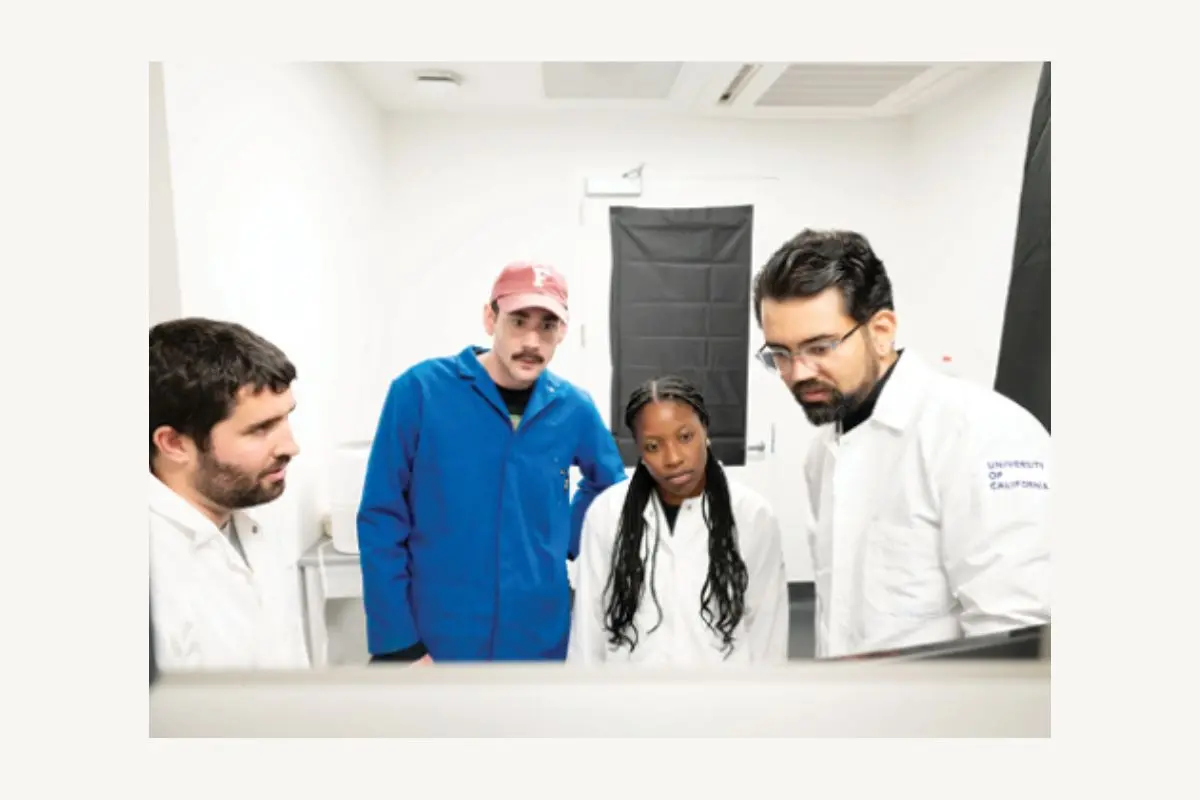
San Francisco: A new neuroscience study led by Thrissur-native Vijay Mohan K Namboothiri challenges a long-held principle of associative learning derived from Ivan Pavlov’s theory, that repetition is the foundation of learning.
The research, led by Vijay, an associate professor at the University of California, San Francisco (UCSF), found that the interval between events plays a more significant role in learning than sheer repetition. The study shows that as the time gap between events increases, dopamine production — a key neurotransmitter linked to learning and reward — also increases, strengthening associative learning.
The findings have been published in leading scientific platforms, including 'Nature Neuroscience', 'EurekAlert!' and 'The Brain Post'.
Associative learning examines how the brain links two different events — such as a sound and a reward. Pavlov’s classical conditioning experiments suggested that repeated pairing of stimuli reinforces learning.
However, Vijay’s study suggests that repetition alone does not necessarily enhance learning.
Also Read | Blood moon set to illuminate the sky on March 3: Lunar eclipse timings and visibility in India
In the experiment, researchers divided laboratory rats into two groups and exposed them to a specific sound followed by sugar water.
- The first group heard 20 sound cues over 10 minutes, followed by sugar water.
- The second group heard a single sound cue over the same duration.
After one hour, the first group had experienced the pairing 120 times, while the second group had experienced it only six times. Despite the 114 additional repetitions, both groups learned the association between the sound and sugar water to the same extent.
The results indicate that increased repetition did not produce stronger learning outcomes, highlighting the critical role of timing intervals in dopamine-mediated learning.
The findings could reshape the understanding of learning mechanisms in neuroscience, particularly in the field of classical conditioning and reward-based learning. By demonstrating that dopamine response strengthens with longer intervals between stimuli, the study provides new insight into how memory formation and behavioural conditioning occur.
The findings could have implications for educational strategies, behavioural therapy and neurological disorder research.
Vijay had previously published research questioning conventional assumptions about human cognition — particularly the idea that human thought primarily moves from cause to effect. His earlier work explored how individuals interpret events and search for underlying causes. The current study builds on that line of inquiry.
Also Read | Beyond our galaxy: WOH G64's surprising stellar metamorphosis offers supernova clues
Vijay Mohan K Namboothiri, a native of Kanattukara in Thrissur district, graduated from IIT Mumbai before pursuing advanced research in neuroscience. He is the son of former Central Excise Assistant Commissioner Kulangarakarattillam Keshavan Namboothiri and former Physics professor P B Sreedevi of Kerala Varma College.
His wife is Dr Devika. They have a daughter, Jiya Namboothiri. His sister, Indu Namboothiri, is a senior control engineer at Airbus Industries in Bengaluru.